
SubmitHub vs Groover: Which Music Promotion Platform Should Artists Try?

For independent artists, music promotion can feel like walking into a crowded room where everyone is playing their song at the same time. You have the track, the artwork, the release date, the story, and the hope that someone with an audience will care enough to listen. Platforms like SubmitHub and Groover were built to make that process less chaotic by connecting artists directly with curators, bloggers, playlist owners, radio hosts, labels, and music professionals.
But from a curator’s perspective, the real question is not simply “Which platform is better?” The better question is: which platform fits your song, your release strategy, and your expectations?
As someone looking at submissions from the curator side, I can say this clearly: both SubmitHub and Groover can help artists, but neither platform is magic. They work best when artists understand how curators listen, how competitive submissions are, and why a good song can still be rejected if the pitch, genre targeting, timing, or production quality does not match the curator’s lane.
What SubmitHub Does Well
SubmitHub is probably the more analytical and fast-moving of the two platforms. It is built around a credit system where artists submit tracks to curators, influencers, playlisters, blogs, labels, and other music outlets. Curators usually have specific genre preferences, approval rates, feedback habits, and audience details visible on their profiles, which gives artists more data before sending.
From a curator’s perspective, SubmitHub feels direct. Songs come in, the artist’s pitch is visible, and the curator usually makes a quick decision: approve, decline, or provide feedback. That speed can be useful for artists working around release dates. If your single is coming out soon and you need fast responses, SubmitHub can be efficient.
The platform also gives artists a lot of targeting control. You can filter curators by genre, outlet type, approval rate, influence, and listening habits. That matters because random pitching is one of the biggest ways artists waste money. A dark alternative R&B track should not be sent to a curator who mainly accepts upbeat indie folk. A trap record should not be sent to a synth-pop blog just because the blog has decent numbers. SubmitHub works best for artists who are organized, realistic, and willing to research before submitting. In case you’re interested in using Submithub, here is a 10% discount to launch your first campaign with
Where SubmitHub Can Frustrate Artists
SubmitHub can feel brutal because curators are selective and often quick. Artists sometimes expect a warm PR experience, but the platform is closer to a high-volume listening desk. Curators hear a lot of music, and many of them are listening for very specific things: vocal tone, mix quality, genre fit, playlist compatibility, originality, intro strength, hook impact, and replay value.
This means rejection can happen fast. Sometimes the song is not bad. It simply may not fit the curator’s audience. Other times, the issue is more technical: vocals are too loud, the master feels flat, the songwriting takes too long to develop, or the production sounds generic compared to what the curator already receives. As a curator, I would tell artists not to use SubmitHub for validation. Use it for targeted exposure and feedback. If every rejection ruins your confidence, the platform will feel harsher than it needs to. If you treat it as market testing, it becomes more useful.
What Groover Does Well
Groover feels slightly more relationship-driven. Like SubmitHub, it lets artists send music to curators, media outlets, labels, playlist owners, radio stations, and industry professionals. The platform emphasizes guaranteed feedback, which can be valuable for artists who want more than a silent rejection.
From a curator’s perspective, Groover often feels a little more editorial and conversational. The platform is strong for artists looking for blog coverage, radio opportunities, international exposure, and professional feedback. It can be especially useful for artists who want to reach curators outside their local market, including Europe, North America, Latin America, and other global music scenes.
Groover can also feel friendlier for artists who are building their first real campaign. The experience is less intimidating for some users because the platform clearly presents curators, genres, and opportunities. If you are still learning how to pitch, Groover can help you understand how professionals react to your music.
Where Groover Can Frustrate Artists
Groover’s main challenge is that guaranteed feedback does not always mean guaranteed useful feedback. Some curators will write thoughtful notes. Others may give short comments that confirm whether the song fits their taste but do not provide a deep artistic breakdown. That is not necessarily bad, but artists should not expect every response to feel like a full A&R report.
Another issue is expectation. Some artists submit to Groover hoping for instant playlist growth, press, radio play, or label attention. In reality, most campaigns produce mixed results. You may get a few encouraging responses, a blog placement, a playlist add, or some helpful criticism. But you may also get polite declines.
From the curator side, Groover works best when the artist’s song already sounds release-ready. Curators are not there to fix an unfinished demo. They are there to decide whether the track fits their audience or professional interest.
Which Platform Has Better Feedback?
If your main goal is fast, sharp, and sometimes blunt feedback, SubmitHub can be useful. It gives you a quick read on whether curators are responding to your track. The feedback may be short, but patterns can be revealing. If five curators mention the same issue — weak hook, muddy mix, slow intro, vocal tuning, or genre mismatch — you should probably pay attention.
If your main goal is broader professional feedback from blogs, media outlets, radio programmers, playlisters, and industry contacts, Groover may feel better. The tone can sometimes be more constructive, especially if you choose curators carefully.
The truth is that feedback quality depends less on the platform and more on the curator. A thoughtful curator on SubmitHub can be more useful than a lazy curator on Groover. A strong Groover contact can open more doors than ten random SubmitHub pitches. The artist’s targeting matters more than the logo on the platform.
Which Platform Is Better for Playlist Placement?
SubmitHub is strong for playlist pitching because it gives artists access to many playlist curators and lets them compare approval rates and fit. If your track has a strong hook, clean production, and a clear genre lane, SubmitHub can be a good place to test playlist potential.
Groover also has playlist curators, but it often feels stronger when playlist pitching is part of a wider campaign that includes blogs, radios, labels, and tastemakers. If you only care about Spotify playlist adds, SubmitHub may feel more direct. If you want a mix of playlist consideration and industry discovery, Groover may be more rounded.
As a curator, I would warn artists not to obsess over playlist adds alone. A playlist placement means very little if the audience is not real, engaged, or relevant. A smaller playlist with true listeners can be more valuable than a large playlist with passive or suspicious activity.
Which Platform Is Better for Blog Coverage?
Groover may have an edge for blog and media outreach, especially if your goal is written coverage, interviews, reviews, or international exposure. The platform’s network includes many editorial-style contacts, and artists can approach curators who are specifically open to media features.
SubmitHub is also useful for blogs, but the competition can feel intense because many bloggers receive high volumes of submissions. If you are pitching to blogs on SubmitHub, your song needs a clear story. Do not just write, “Here is my new single.” Tell the curator why the track matters, what makes it different, and where it fits sonically. For blog coverage, the pitch matters almost as much as the song. A curator needs an angle. Give them one.
Curator’s Honest Verdict: Which One Should Artists Try?
If you are a new artist with limited budget, start with one platform and test carefully. Do not spend your whole marketing budget in one afternoon. Choose SubmitHub if you want fast responses, playlist pitching, direct curator filtering, and quick market feedback. It is best for artists who know their genre, have a polished track, and can handle rejection without taking it personally.
Choose Groover if you want a broader campaign with blogs, radio, labels, playlists, and more conversational feedback. It is best for artists who want international reach, editorial possibilities, and a slightly more guided promotional experience.
Use both if you already have a strong release, professional visuals, a clear artist identity, and enough budget to test different audiences. In that case, SubmitHub can help with fast targeting while Groover can support wider relationship-building.
How Artists Should Pitch Better
From the curator side, most bad submissions fail before the chorus. The artist sends to the wrong genre, writes a vague pitch, uploads an unfinished mix, or gives no reason why the song should matter.
A good pitch should be short, specific, and useful. Mention the genre, mood, similar artists, release date, and story behind the song. Do not oversell. Curators can tell when an artist is trying too hard. Saying “this song will change the industry” is usually less effective than saying, “This is a melancholic alt-R&B track with warm synths, intimate vocals, and a late-night atmosphere.”
Also, submit your best song, not just your newest song. Curators do not care that it is new if it is not strong. Newness helps, but quality carries the pitch.
Final Takeaway
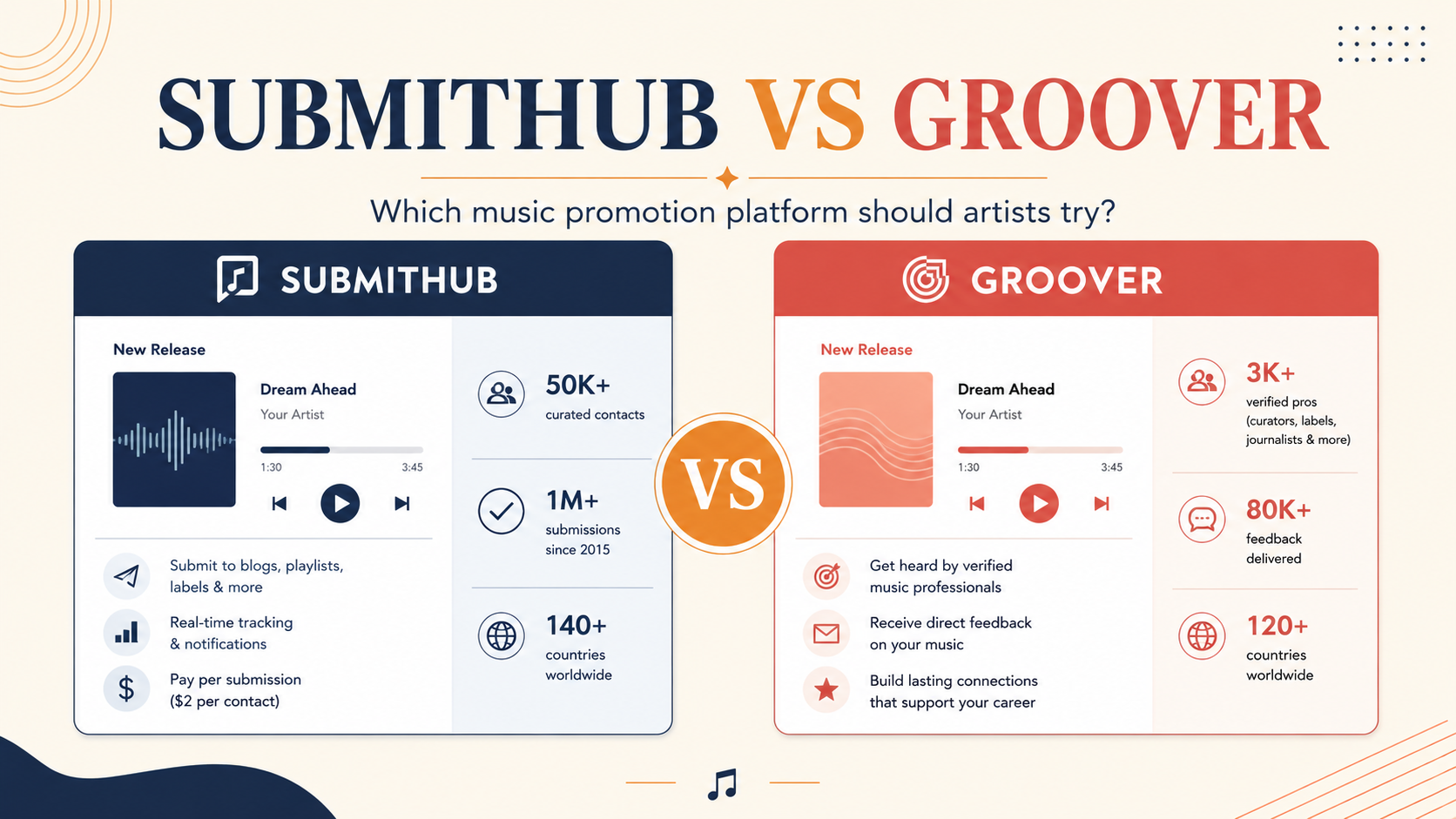
SubmitHub and Groover are both useful music promotion platforms, but they should be treated as tools, not miracles. SubmitHub is sharper, faster, and more data-driven. Groover is broader, more relationship-oriented, and often better for international blog and industry outreach.
From a curator’s perspective, the best platform is the one you use with strategy. Research the curators. Respect their genres. Send polished music. Write a clean pitch. Track the feedback. Learn from patterns. Do not confuse rejection with failure, and do not confuse one playlist add with a career breakthrough.
If your song is strong, targeted properly, and supported by a clear artist identity, both SubmitHub and Groover can help you reach people who might not have discovered you otherwise. But the real promotion starts before the submission. It starts with the song, the story, and the discipline to pitch like an artist who understands the business.
Enjoyed the read? Consider showing your support by leaving a tip for the writer
Featured









Follow Us

Shop























Colombian multidisciplinary artist Laru builds “Contra el río” around a compelling contradiction: resistance expressed through calm. The experimental Afro-fusion single moves with a laidback pulse, yet its internal design suggests constant forward motion. Gentle drums carry a tribal texture without overwhelming…