
How Musicians Can Manage Performance Anxiety Before a Show
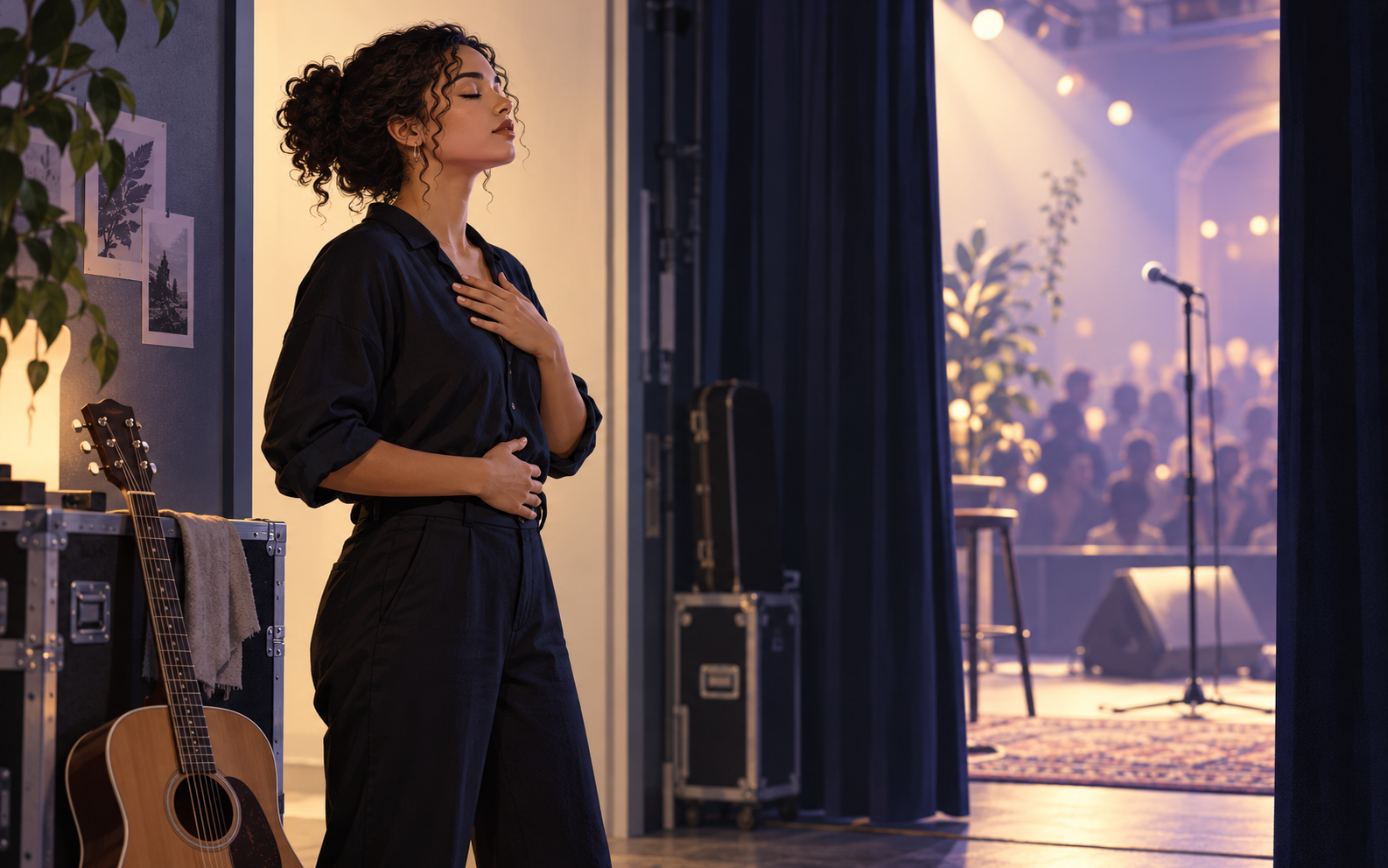
The room sounds different once an audience enters. Hands feel less precise, breathing becomes shallow and lyrics that were automatic in rehearsal suddenly seem fragile. A musician may interpret those sensations as evidence that the performance is already going wrong.
Performance anxiety is more complicated than a lack of preparation. It can appear before, during or after a show and affect experienced performers as well as beginners. The objective is not necessarily to remove every trace of nervous energy. It is to keep that energy from controlling attention and behaviour.
A useful pre-show system combines realistic preparation, simple physical regulation and a small set of performance cues. It creates something familiar inside an unfamiliar room.
Separate Useful Energy From Panic
Increased heart rate, alertness and physical activation can support performance. Problems arise when the performer interprets every sensation as danger and begins monitoring the body instead of the music.
The British Association for Performing Arts Medicine describes performance anxiety as a concern that may require both in-the-moment tools and longer-term support. Its guidance recognizes that symptoms and contributing factors vary between people.
Instead of demanding, “I must feel calm,” use a more workable goal: “I can perform while activated.” That shift removes the impossible test of perfect comfort.
Choose two or three controllable cues. A vocalist might focus on releasing the jaw, hearing the first pitch and communicating the lyric. A drummer might focus on count-in, breathing and listening to the bass. These cues are more useful than asking whether the audience approves.
Prepare for the Real Performance Environment
Private practice can become too safe. The artist stops after mistakes, repeats favourite sections and never rehearses the waiting, walking and uncertainty that surround a show.
Add controlled exposure. Perform a full set without stopping. Record a run-through. Invite two people to watch. Rehearse the spoken transitions. Wear the show clothing. Practise starting after a delay or continuing after a deliberate minor mistake.
The goal is not to manufacture humiliation. It is to teach the nervous system that imperfect conditions can still lead to a completed performance.
Technical preparation matters too. Confirm the set list, backing tracks, cables, instrument changes and soundcheck plan. Use the Uranium Waves Music Release Planner to keep campaign logistics outside the performer’s head on show day.
Stop Using the Final Hour as a Test
Anxious musicians often over-rehearse immediately before performing. They repeatedly test the highest note, fastest passage or most vulnerable lyric. Each attempt becomes a referendum on whether they are ready.
Use the final hour to maintain, not prove, ability. Warm up gradually. Play or sing enough to feel coordinated, then stop. Protect the voice and hands from fatigue.
Eat and hydrate according to a routine already tested in rehearsal. Do not experiment with unfamiliar supplements, excessive caffeine or somebody else’s medication. Prescription drugs sometimes discussed in performance contexts carry medical risks and should never be borrowed or used without appropriate clinical advice.
Build a Repeatable 20-Minute Routine
A practical routine might look like this:
20 minutes: check essential equipment and remove avoidable decisions
15 minutes: complete a gentle physical and vocal or instrumental warm-up
10 minutes: use slow, comfortable breathing with a longer exhale
5 minutes: review the opening cue, first transition and one recovery plan
1 minute: connect with the band, then direct attention outward toward the music
NHS breathing guidance recommends a comfortable position and gentle breathing without forcing it. Practise the technique regularly; a breathing exercise learned only during intense anxiety may feel like another task to perform correctly.
Keep the routine short enough to use in a cramped venue. Headphones, a familiar playlist or a quiet corner may help, but avoid making one perfect environment a requirement. The routine should travel.
Create a Recovery Plan for Mistakes
Fear grows when a mistake feels unrecoverable. Decide in advance what happens if a lyric disappears, a backing track fails or the count becomes unclear.
Use visible set-list notes, assign a band member to cue transitions and agree on a simple restart signal. A singer can return to the next structural landmark instead of searching mentally for the missed word. A solo performer can speak to the audience while equipment is reset.
Recovery is part of performance competence. Most audiences respond to the way an artist continues, not to microscopic deviations from rehearsal.
Review the Show Without Punishing Yourself
Do not conduct the harshest evaluation while adrenaline is still high. After the show, record three facts: what worked, what needs adjustment and what the next rehearsal will address.
Avoid global conclusions such as “I am terrible live.” Replace them with observable information: “I rushed the first verse,” or “My monitor request was unclear.” Specific problems can become rehearsal tasks.
If anxiety is persistent, worsening, causing cancelled performances or affecting daily life, seek support from a qualified health professional. BAPAM offers specialist information for performing artists, while Canadian musicians can begin with a family doctor or licensed mental-health provider.
Final Takeaway
Performance anxiety does not mean an artist lacks talent. Prepare under realistic conditions, reduce last-minute testing, focus on controllable cues and use one repeatable pre-show routine.
Confidence is not the absence of activation. It is knowing what to do when activation arrives.
This article offers general educational information and is not a substitute for medical or mental-health care.Pre-show nerves are not proof that an artist is unprepared. A repeatable routine can reduce uncertainty, protect attention and help musicians perform without fighting every physical sensation.
Enjoyed the read? Consider showing your support by leaving a tip for the writer
Featured



Follow Us

Shop













Colombian multidisciplinary artist Laru builds “Contra el río” around a compelling contradiction: resistance expressed through calm. The experimental Afro-fusion single moves with a laidback pulse, yet its internal design suggests constant forward motion. Gentle drums carry a tribal texture without overwhelming…