
San Antonio Spurs Reach First NBA Finals Since 2014: Is the Victor Wembanyama Era Already Here?
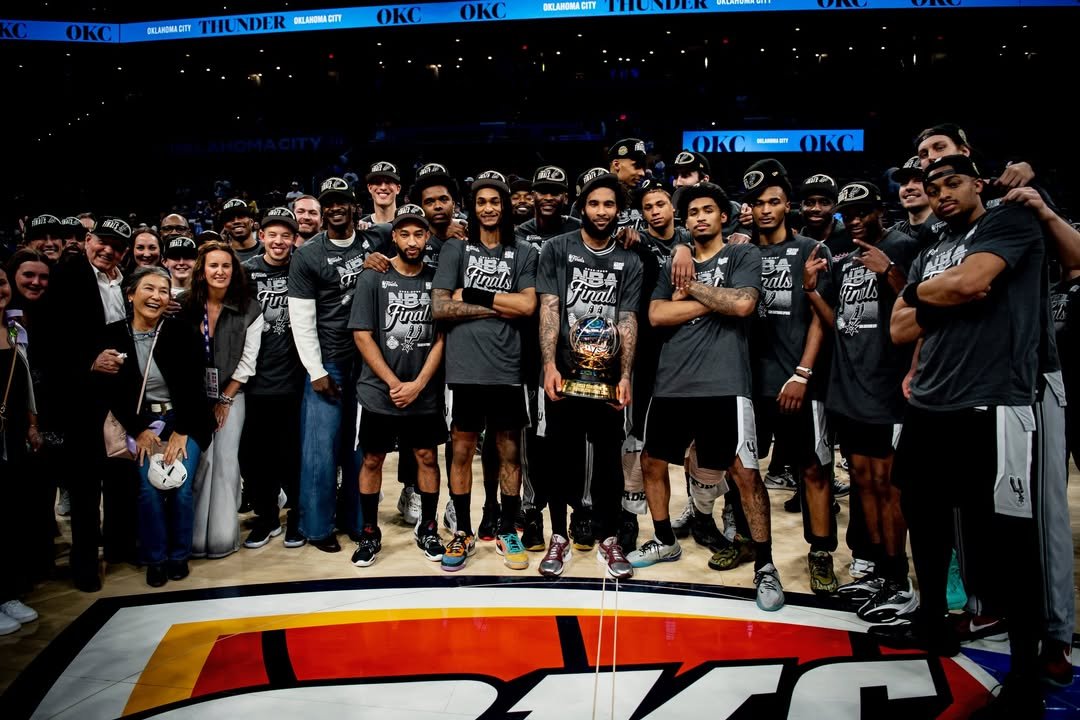
The San Antonio Spurs are back in the NBA Finals, and the basketball world may have to accept a terrifying possibility: the Victor Wembanyama era is not arriving in the future. It may already be here.
San Antonio defeated the defending champion Oklahoma City Thunder 111–103 in Game 7 of the Western Conference Finals, securing the franchise’s first NBA Finals appearance since 2014. For most teams, returning to the Finals after a twelve-year gap would feel like a slow restoration. For the Spurs, it feels almost like a cosmic correction. The franchise that once defined modern basketball discipline has found another generational centrepiece, and this time, he is unlike anything the league has ever seen.
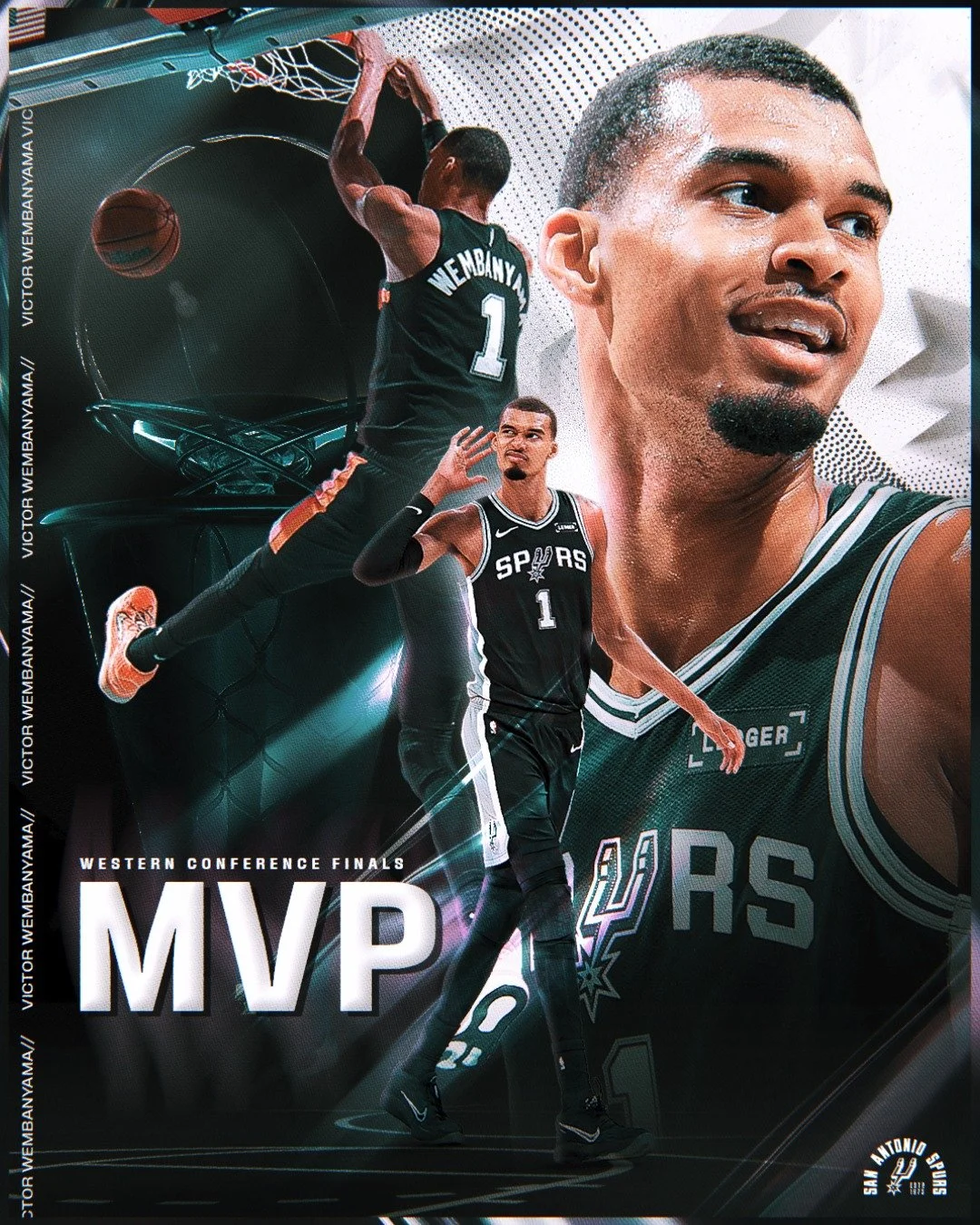
Victor Wembanyama did not simply participate in San Antonio’s return. He became the gravitational reason it happened. In Game 7, he finished with 22 points and seven rebounds, then walked away with Western Conference Finals MVP honours. Those numbers alone do not fully explain his impact. With Wembanyama, the box score often feels too small for the phenomenon. His presence changes geometry. Passing lanes shrink. Shots become negotiations. Opposing players attack the rim as if they are entering restricted airspace.
That is what makes this Spurs run so fascinating. It is not only that they reached the Finals. It is that they reached them with a young superstar whose timeline seems to be accelerating at an almost unreasonable speed. The NBA expected Wembanyama to become great. What it may not have expected was for San Antonio to become this relevant this quickly.
The Spurs’ Game 7 win over Oklahoma City felt like a symbolic passing of pressure. The Thunder entered the series as defending champions, with Shai Gilgeous-Alexander still operating as one of the league’s most dangerous scorers. Oklahoma City had the experience of a recent title run and the confidence of a team that had already climbed the mountain. Yet San Antonio survived the storm, absorbed the late-game tension, and closed the door on the road. That matters. Winning a Game 7 away from home against the defending champions is not a cute developmental milestone. It is a declaration.
The decisive stretch also showed why the Spurs are more than a one-man project. When Wembanyama was forced to the bench with five fouls late in the fourth quarter, San Antonio could have unraveled. Instead, Luke Kornet delivered one of the game’s defining defensive plays, Stephon Castle hit a composed jumper, and Julian Champagnie followed with another huge three. That sequence revealed the most important truth about these Spurs: Wembanyama is the sun, but the system around him has real orbit.
Julian Champagnie’s shooting, Castle’s poise, De’Aaron Fox’s pressure, Dylan Harper’s bench spark, and the collective defensive nerve around Wembanyama have turned San Antonio into something far more advanced than a rebuilding team. This is no longer an adorable young roster learning how to compete. This is a Finals team with structure, depth, and a terrifyingly high ceiling.
The comparison to the old Spurs dynasty is unavoidable. San Antonio’s last Finals appearance came in 2014, when the Spurs dismantled the Miami Heat in one of the most elegant championship performances in league history. Tim Duncan, Tony Parker, Manu Ginóbili, Kawhi Leonard, and Gregg Popovich turned teamwork into something almost symphonic. That team represented basketball as architecture: spacing, timing, trust, and ruthless precision.

The 2026 Spurs are not a copy of that dynasty. They are stranger, younger, longer, and more futuristic. But the organizational echo is there. San Antonio has once again built around a generational big man, surrounded him with smart pieces, and found a way to make youth look disciplined rather than chaotic.
That is why the Wembanyama era feels different from ordinary superstar ascensions. Many young stars put up numbers before they learn how to win. Wembanyama is already bending winning around his existence. His defensive influence gives San Antonio a playoff floor that few young teams possess. His offensive skill gives the Spurs a ceiling that may keep rising for years. He can post, pass, shoot, protect the rim, switch, recover, and intimidate without needing to dominate the ball on every possession.
In an NBA increasingly obsessed with spacing and versatility, Wembanyama is both a cheat code and a philosophical problem. How do teams attack a defence when the paint is patrolled by someone with his reach? How do they guard him when he can shoot over smaller defenders and move past slower ones? How do they build a game plan around a player who looks like a centre, moves like a wing, and alters the sport like a science-fiction glitch?
That is the dilemma now facing the New York Knicks in the NBA Finals. The matchup itself is rich with historical symmetry. The Spurs and Knicks met in the 1999 Finals, with San Antonio winning its first championship behind Tim Duncan and David Robinson. Now, more than two decades later, the same franchises meet again, with the Knicks chasing their own long-awaited breakthrough and the Spurs trying to launch a new championship epoch.
For San Antonio, the stakes are enormous but beautifully simple. Four more wins would turn a breakout season into a title-winning coronation. It would also accelerate Wembanyama’s legacy from promise to proof. Reaching the Finals is already historic. Winning them would be seismic.
Still, the Spurs should not be framed as a finished product. That is part of what makes them so dangerous. They are ahead of schedule, but not yet complete. Their young players are still growing. Their chemistry is still maturing. Their late-game execution can still sharpen. Wembanyama himself is still discovering the full violence of his own basketball vocabulary.
That should frighten the rest of the league.
The Spurs are not behaving like a team at the end of a cycle. They look like a team at the beginning of something. Their Finals appearance does not feel like a desperate last chance. It feels like the first public chapter of a new power structure. San Antonio has climbed back into the NBA’s highest room, and its best player is only beginning to understand how much space he can occupy there.
So, is the Victor Wembanyama era already here?
Yes — but with one important caveat. Eras are not officially crowned by one playoff run. They are built through repeated dominance, championship pressure, and the ability to survive the league’s inevitable counterattacks. But this Finals berth is the strongest possible evidence that Wembanyama is no longer just the future of the Spurs. He is their present.
The league has been warned. San Antonio’s rebuild has turned into a Finals run. Wembanyama has turned potential into power. And the Spurs, after twelve years away from the championship stage, are no longer reminiscing about their old dynasty.
They may be building the next one.
Enjoyed the read? Consider showing your support by leaving a tip for the writer
Featured









Follow Us

















Laeky’s “caller waiting” is built from emotional exposure, but its production refuses to collapse into fragility. The Australian artist threads syncopated acoustic guitar riffs through understated indie-pop drums, subtle bass, and soft synth textures, creating a frame that feels both restless and suspended. Her sultry, yearning vocal…