
SOCAN Sues Suno Over AI Songs Allegedly Copying Avril Lavigne, Joni Mitchell and More
The music industry’s fight with generative AI has opened another major front, and this time Canada is at the center of it. SOCAN, Canada’s largest member-owned music rights organization, filed a lawsuit against AI music company Suno on September 2, alleging that the platform has generated, made available and streamed AI outputs that reproduce copyrighted songs represented by SOCAN without authorization or compensation. The action was filed in the Federal Court of Canada. And these are not obscure examples. Songs connected to Avril Lavigne, Joni Mitchell, Tom Cochrane and Alexisonfire are among the works identified as SOCAN attempts to establish a much clearer boundary between generative AI experimentation and traditional music copyright.
SOCAN Says It Found 150 Suno Outputs
SOCAN’s case focuses on what comes out of Suno’s system. The organization says it identified a sample of 150 publicly available Suno outputs that are identical or substantially similar to songs in its repertoire. Music Business Worldwide reports that those outputs correspond to 137 SOCAN-represented songs. SOCAN has even published several comparisons for listeners. Among the originals highlighted are Tom Cochrane’s “Life Is a Highway,” Avril Lavigne’s “Sk8er Boi,” K. Maro’s “Femme Like U,” Alexisonfire’s “Passing Out in America” and Daniel Balavoine’s “S.O.S. d’un terrien en détresse.”
Joni Mitchell’s “Both Sides Now” also plays a significant role in the court claim. According to reporting on the filing, SOCAN alleges that when a user supplied Suno with lyrics from “Both Sides Now,” the resulting output reproduced significant elements of the original song, including its melody, harmony and lyrics. The “Sk8er Boi” example may be even more immediately striking to pop listeners. SOCAN alleges that a Suno output closely replicated Lavigne’s hit while changing portions of the lyrics into Korean. Music Business Worldwide reports that the output was titled “Sk8er Boi (K-pop remix) (Avril Lavigne cover)” on Suno.
Why This Suno Lawsuit Is Different
A large part of the generative-AI copyright debate has revolved around training data: whether AI companies can ingest copyrighted recordings or compositions while building their models without first obtaining licences. SOCAN is taking a particularly interesting route. Its Canadian action emphasizes the generated outputs themselves and Suno’s alleged public streaming of those outputs. SOCAN argues that making material that reproduces songs from its repertoire available to users infringes the performing rights it administers.

That distinction could make the case worth watching far beyond Canada. If courts decide that an AI platform is responsible when its system generates a substantially similar version of an existing song and then streams that output, the consequences could reach across the growing market for instant AI music.
How Much Could SOCAN Seek From Suno?
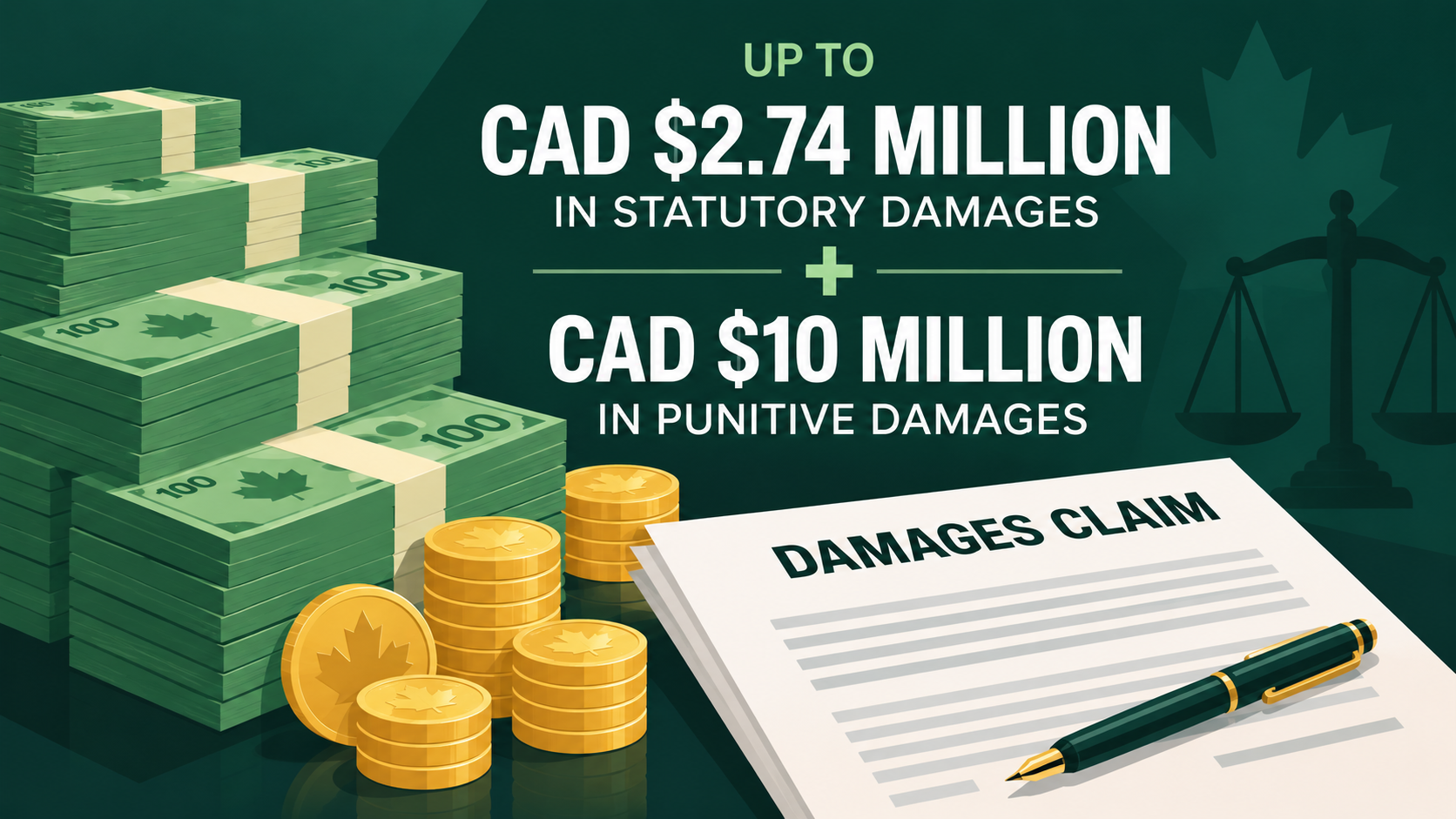
There is also real money attached to the dispute. According to Music Business Worldwide’s review of the claim, SOCAN is seeking damages and Suno’s profits attributable to the alleged infringement. As an alternative, it seeks statutory damages of up to CAD $20,000 for each of the 137 works identified, which would total approximately CAD $2.74 million if the maximum were awarded for every song.
SOCAN is additionally seeking CAD $10 million in punitive and exemplary damages, alleging that Suno’s infringement was knowing and deliberate. Those are claims being made by SOCAN; no damages have been awarded.
SOCAN Says AI Is Not the Enemy
The lawsuit is not being presented by SOCAN as an attempt to eliminate AI from music. Instead, the organization is pushing three principles it calls ART: Authorization, Remuneration and Transparency. SOCAN says creators should know when their music is being used, have the ability to authorize that use and receive compensation when appropriate. It has also said AI can have legitimate applications across the music ecosystem, including improving royalty matching and data accuracy.
That makes the larger conflict less about whether AI music should exist and more about who gets to determine the terms. Suno has disputed allegations of wrongdoing in other recent lawsuits, maintaining that its technology is intended to enable the creation of original music and that it has safeguards against misuse. A specific public response from Suno to SOCAN’s Canadian allegations was not identified in the sources reviewed for this article as of September 7.
Suno Is Facing Pressure From Multiple Directions
SOCAN’s action does not exist in isolation. Suno is already involved in copyright disputes with major music companies and artists. German collecting society GEMA previously won a first-instance ruling against Suno in July, while Universal Music Group and Sony Music remain engaged in litigation over the company’s technology. Artists including Jason Isbell have also filed a separate U.S. case involving claims over the unauthorized exploitation of musicians’ identities. The result is a fast-growing legal question that could shape the next era of music technology. AI can now make a convincing song in seconds. The argument moving into courtrooms around the world is increasingly about what happens when that new song sounds a little too much like one that already belongs to somebody else.
The SOCAN vs. Suno case could become one of Canada’s most important AI-music copyright disputes. Rather than debating AI in the abstract, SOCAN is bringing recognizable songs and specific generated outputs into court. Whether those similarities amount to infringement will ultimately be a question for the legal process, but the case makes one thing clear: AI music’s licensing problem is becoming increasingly difficult for the industry to ignore.
Enjoyed the read? Consider showing your support by leaving a tip for the writer
Featured






Follow Us

Shop











Wendy Bruner and Christopher Grundy construct “Toward Shalom” around warmth rather than spectacle, allowing its ideas of belonging, completeness, and social acceptance to develop inside an intentionally unvarnished frame. Written by Bruner and Monty Jackson and produced…