
Montreal Canadiens Facing Elimination: What Went Wrong Against the Hurricanes?
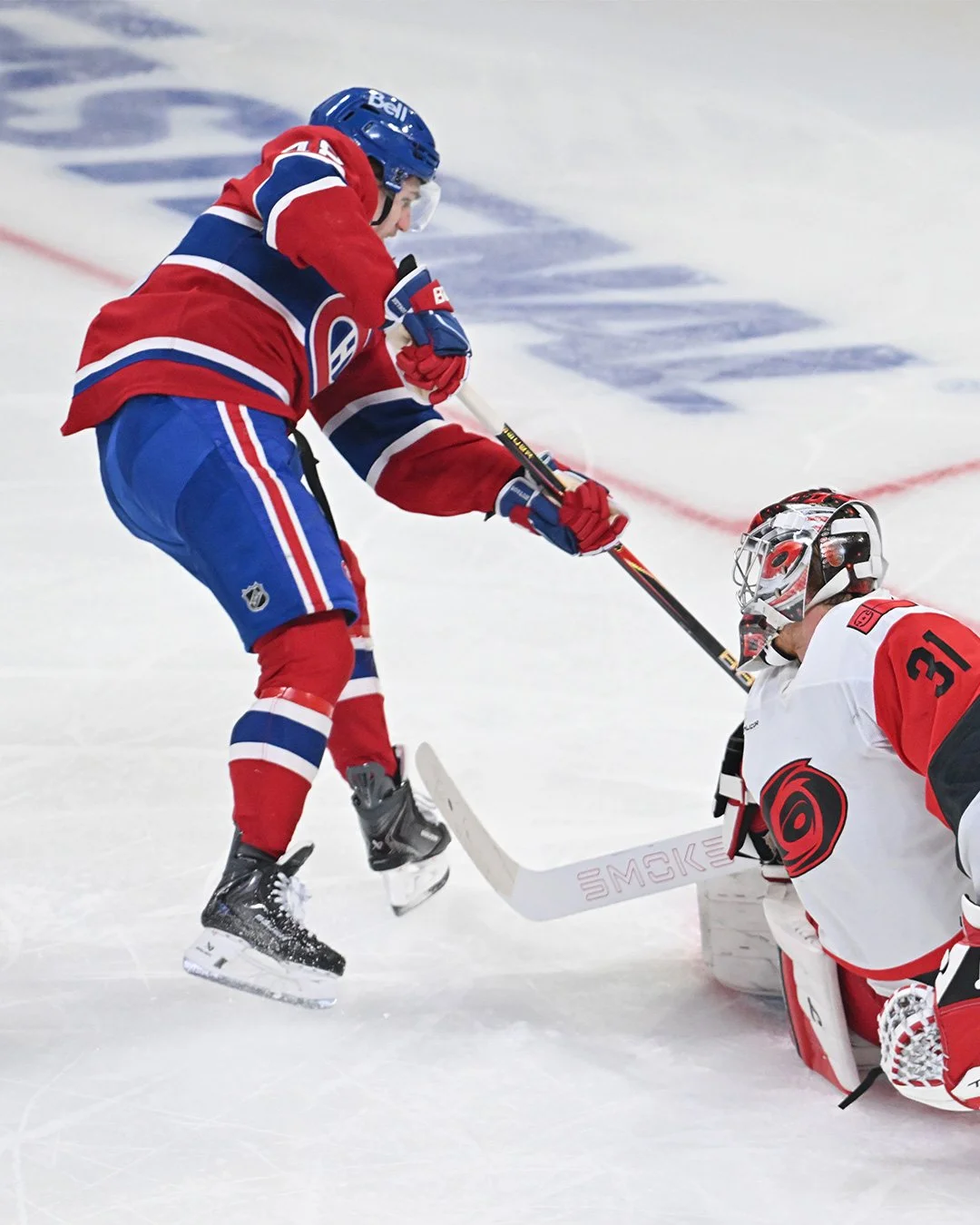

The Montreal Canadiens are not finished yet, but they are standing dangerously close to the edge. After a demoralizing 4–0 loss to the Carolina Hurricanes in Game 4 of the Eastern Conference Final, the Canadiens now trail the series 3–1 and face elimination heading into Game 5 in Raleigh. For a team that opened the series with confidence, speed, and offensive sharpness, the sudden collapse has been jarring.
This is not simply about losing one game. It is about how the Canadiens lost it.
Carolina did not just beat Montreal in Game 4. The Hurricanes squeezed the life out of the Canadiens’ rhythm. They scored three times in a ruthless first-period surge, forced Montreal into uncomfortable puck decisions, and turned the Bell Centre into a theatre of frustration. By the third period, the Canadiens produced only three shots, a shocking number for a team fighting to avoid falling into a nearly fatal series hole. So, what went wrong?
The first major issue has been Carolina’s pressure. The Hurricanes are not a passive opponent. They forecheck with venom, close space quickly, and turn routine breakouts into survival exercises. Montreal’s defense has struggled to move the puck cleanly under that pressure, and when the Canadiens fail to exit their zone with control, their transition game loses oxygen. That matters because Montreal is at its best when it attacks with pace, stretches the ice, and lets its skilled forwards operate before the opponent’s structure is fully organized. Against Carolina, those moments have become rarer.
The Hurricanes have also done an excellent job turning the series into a grind. Montreal wants rhythm. Carolina wants erosion. The longer shifts become, the more dangerous the Hurricanes look. They thrive on second chances, point shots, rebounds, deflections, and battles around the blue paint. That style may not always be glamorous, but in the playoffs, it is often devastatingly effective.


The Canadiens’ offensive stars have not disappeared completely, but they have been forced into a far less comfortable series. Nick Suzuki, Cole Caufield, Juraj Slafkovsky, and Lane Hutson can create high-end moments, but Carolina’s defensive layers have made clean looks difficult to manufacture consistently. The Hurricanes are not giving Montreal many soft possessions. Every pass seems contested. Every shooting lane seems crowded. Every mistake feels expensive.
That is playoff suffocation.
Another major problem has been Montreal’s inability to respond emotionally after setbacks. Game 4 was a brutal example. Once Carolina struck quickly in the first period, the Canadiens looked rattled rather than sharpened. In a series this tight, momentum swings are unavoidable. The issue is not getting punched. The issue is whether a team can punch back before the game drifts away. Montreal never truly did.
The Bell Centre crowd was ready to explode, but the Canadiens gave it little to feed on. Home ice should have been a weapon. Instead, Carolina neutralized the building by scoring early, controlling tempo, and forcing Montreal to chase the game. The Hurricanes’ road confidence has become one of the defining stories of the series, while the Canadiens have struggled to turn home energy into home dominance.
Goaltending is one area where Montreal cannot place all the blame. Jakub Dobes faced heavy pressure and made several important saves, even as the game tilted away from the Canadiens. The larger issue was not simply what happened in the crease. It was what happened before the shots arrived: lost battles, coverage breakdowns, failed clears, and too many sequences where Carolina dictated the terms.
At the other end, Frederik Andersen gave the Hurricanes exactly what elite playoff goaltending is supposed to provide: calm, control, and psychological pressure. A shutout in Game 4 does more than win a game. It tells the opposing bench that chances will be scarce and mistakes will be magnified. For a Montreal team already fighting for offensive traction, that kind of performance can feel like a locked door.
The Canadiens’ power play also needs to be part of the conversation. In elimination-style hockey, special teams can rescue a team when five-on-five offence becomes clogged. Montreal has not done enough to weaponize those opportunities. When Carolina takes penalties, the Canadiens need more than perimeter movement and hopeful shots. They need directness, deception, net-front traffic, and a stronger instinct to attack before Carolina’s penalty kill settles into shape.
The Hurricanes, meanwhile, look like a team that understands exactly who they are. Rod Brind’Amour’s group does not panic when games are ugly. In fact, ugliness often benefits them. They are comfortable winning through structure, pressure, and attrition. That is a difficult opponent for a younger Canadiens team still learning how to control playoff chaos.
Martin St. Louis now faces the hardest coaching challenge of Montreal’s season. The Canadiens must find a way to simplify without becoming predictable. They need cleaner exits, more aggressive puck support, and quicker decisions in the neutral zone. They also need their best players to treat Game 5 not as a rescue mission, but as a chance to reset the series one shift at a time.
The path back is narrow, but not imaginary. Montreal already proved in Game 1 that it can hurt Carolina when its speed and execution are aligned. The Canadiens do not need to win three games in one night. They need to win one period, then another, then one game. That is the only sane way to approach a 3–1 deficit.
Still, the warning signs are obvious. Carolina has adjusted better since the opener. The Hurricanes have dragged Montreal into their preferred style of hockey. They have won the key emotional moments, controlled larger stretches of play, and made the Canadiens look increasingly uncomfortable under pressure.
If Montreal’s season ends here, the series will be remembered as a painful education. The Canadiens showed promise, skill, and resilience during their playoff run, but the Hurricanes have exposed the difference between being dangerous and being fully mature. Carolina looks like a team built to close. Montreal still looks like a team learning how to survive when the game becomes claustrophobic.
That does not erase what the Canadiens have accomplished. Reaching the Eastern Conference Final is significant. But expectations change quickly in the playoffs, and once a team gets this close to the Stanley Cup Final, moral victories become thin consolation.
The Canadiens are facing elimination because Carolina has taken away their speed, punished their mistakes, silenced their home crowd, and turned the series into a physical, tactical grind. Now Montreal has one choice left: adapt immediately or watch a promising playoff run end one step short of the final stage. Game 5 will reveal whether the Canadiens still have another surge left — or whether the Hurricanes have already solved them.
Enjoyed the read? Consider showing your support by leaving a tip for the writer
Featured









Follow Us





















Laeky’s “caller waiting” is built from emotional exposure, but its production refuses to collapse into fragility. The Australian artist threads syncopated acoustic guitar riffs through understated indie-pop drums, subtle bass, and soft synth textures, creating a frame that feels both restless and suspended. Her sultry, yearning vocal…