
Hearing Protection for Musicians: How to Protect Your Ears Without Losing the Mix
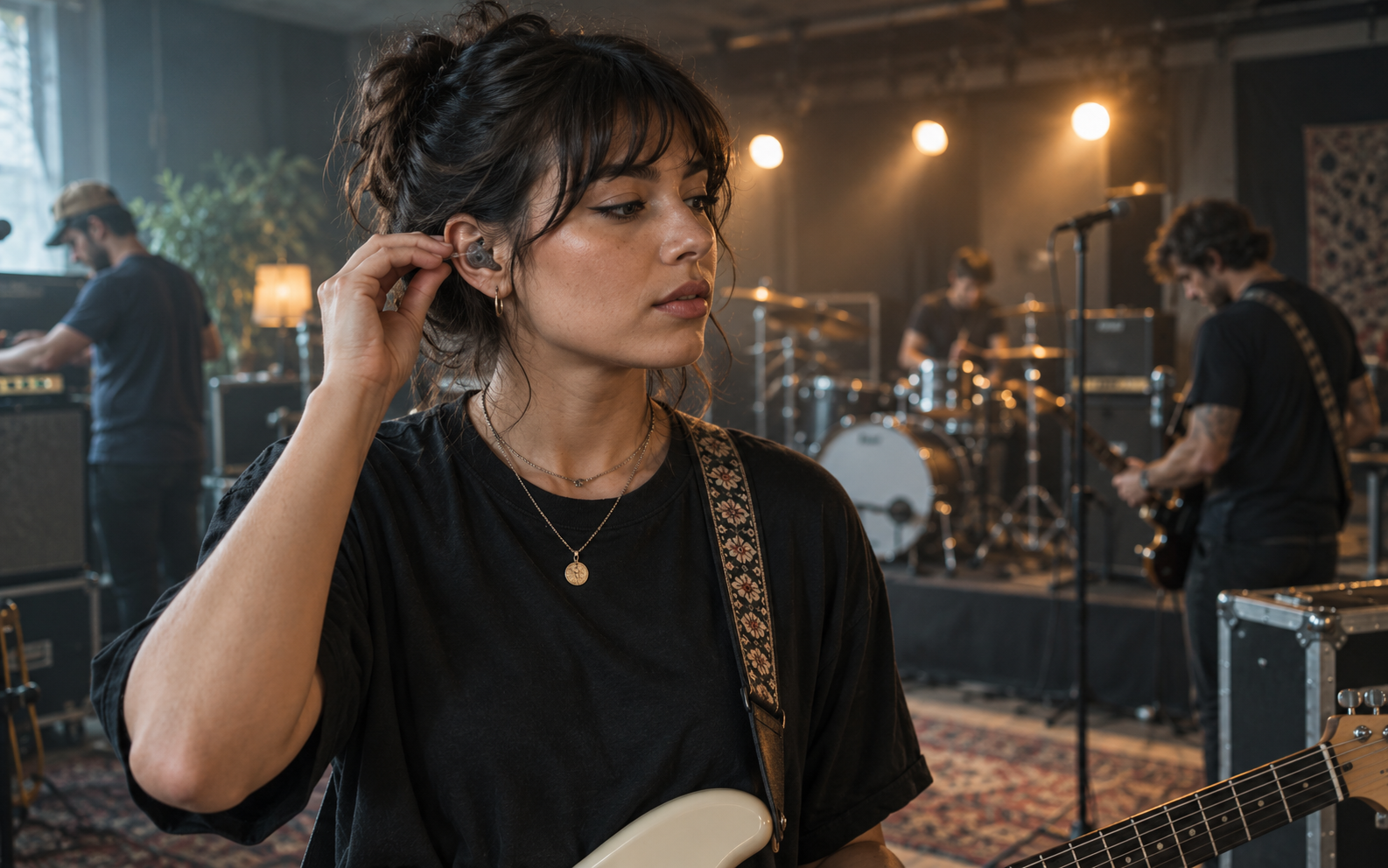
Hearing protection works best when it becomes part of the setup, not an emergency response after the set.
A ringing tone after rehearsal can feel like a normal cost of making loud music. It is not. Musicians rely on hearing to judge pitch, timing, tone, balance and emotion, yet rehearsals, stages and headphones can expose that same hearing to damaging sound.
The danger is not limited to one dramatic concert. Risk builds through the combination of level, duration and repetition. A room that feels manageable for ten minutes may become unsafe across a two-hour rehearsal, especially when cymbals, amplifiers and monitors compete.
Good hearing protection does not mean performing inside a muffled bubble. It means reducing exposure while keeping enough detail to make musical decisions—and creating habits that do not depend on willpower after the room is already loud.
Volume and Time Work Together
The U.S. National Institute on Deafness and Other Communication Disorders says a single extremely loud sound, or long and repeated exposure at or above 85 dBA, can cause hearing loss. It lists concerts and headphones at maximum volume in a typical range of 94 to 110 dBA.
A decibel increase may look small on paper, but the safe exposure window falls quickly as sound level rises. The World Health Organization’s current safe-listening guidance gives a useful comparison: about 40 hours per week at an average 80 dB, but only four hours per week at 90 dB.
These figures are population-level guidance, not a personalized guarantee. Individual susceptibility, prior damage, fit of protection and actual room acoustics vary. Treat them as a reason to control both volume and time, not as permission to stay exposed until a stopwatch expires.
Choose Earplugs Designed for Music
Cheap foam plugs can provide meaningful protection when inserted correctly, but they often reduce high frequencies more than lows. That tonal change can make vocals, guitars and cymbals feel distant, which tempts musicians to remove the plugs or turn monitors up.
High-fidelity musician plugs use acoustic filters intended to reduce level more evenly across frequencies. Custom-moulded options can improve fit and consistency for performers who work in loud environments often. The best choice is the protection you will wear correctly for the entire exposure.
NIDCD advises selecting protection that fits well and can be used consistently. Earplugs must seal the ear canal; earmuffs should cover the ears fully. In exceptionally loud environments, correctly fitted plugs and muffs can be combined, although a qualified hearing professional can advise on the right attenuation for your work.
In-Ear Monitors Are a Tool, Not Automatic Protection
In-ear monitors can reduce the need for loud floor wedges and help each performer hear a tailored mix. They can also deliver damaging levels directly into the ear if the mix is pushed too high or the earpieces do not isolate well.
Start with a proper seal, build the monitor mix at a low level and add only what the performer needs. If outside stage volume leaks in, solve placement, isolation and backline issues before compensating with more in-ear level. A limiter can protect against sudden peaks, but it does not make an unnecessarily loud average level safe.
Never share custom tips or insert used earpieces without appropriate hygiene. Check cables and connectors before the set so an intermittent signal does not trigger sudden changes or one-sided overcompensation.
Measure the Room Instead of Guessing
Conversation is a poor sound-level meter. Ears temporarily adapt to a loud room, so the rehearsal may feel less intense even while exposure continues.
Use a calibrated sound-level meter when possible and note typical levels at the musician’s position, not only at the mixing desk. Phone apps can identify broad patterns, but their microphones and calibration vary. They should not be treated as certified instruments for occupational compliance.
Practical changes help: turn guitar cabinets away from heads, raise them only enough to improve line of sight, move players away from cymbals and PA speakers, reduce unnecessary low-frequency buildup and schedule quiet breaks. Rehearsing with smaller amps or electronic drums can preserve energy and improve communication.
Build a Hearing-Safe Routine
Keep earplugs in the same case as picks, sticks or in-ears. Insert them before soundcheck so the brain has time to adjust. Carry a backup pair. Agree on a rehearsal level before playing, and assign someone to check it again after the band settles in.
Limit high-volume headphone sessions and avoid raising the level to overcome background noise. Noise-isolating closed-back headphones can reduce that temptation. After a loud show, give your ears quieter recovery time instead of moving directly into another intense listening session.
If mixes feel dull, harsh or unbalanced at moderate levels, address the technical problem rather than monitoring louder. The Uranium Waves Master Loudness Checker can help identify approximate loudness and peak behaviour, while professional mixing and mastering support can improve translation without forcing unsafe playback levels.
Know When to Get Professional Help
Persistent ringing, muffled hearing, sound sensitivity, difficulty understanding speech or a noticeable change between ears deserves attention from a qualified audiologist or clinician. Sudden hearing loss should be treated as urgent medical care.
Do not attempt to diagnose damage from an online tone test alone. Baseline and periodic professional hearing tests can help working musicians track changes and select appropriate protection.
Final Takeaway
Hearing protection for musicians is a system: reduce the source, shorten exposure, improve distance and monitoring, then use correctly fitted protection. No single device replaces the rest.
Your ears are part of the instrument chain. Protecting them does not make the performance less serious. It preserves the ability to hear what makes the music worth playing.
Enjoyed the read? Consider showing your support by leaving a tip for the writer
Featured





Follow Us

Shop















Wendy Bruner and Christopher Grundy construct “Toward Shalom” around warmth rather than spectacle, allowing its ideas of belonging, completeness, and social acceptance to develop inside an intentionally unvarnished frame. Written by Bruner and Monty Jackson and produced…