
Why Bruno Mars’ “I Just Might” Is Becoming One of Canada’s Biggest Pop Moments of 2026
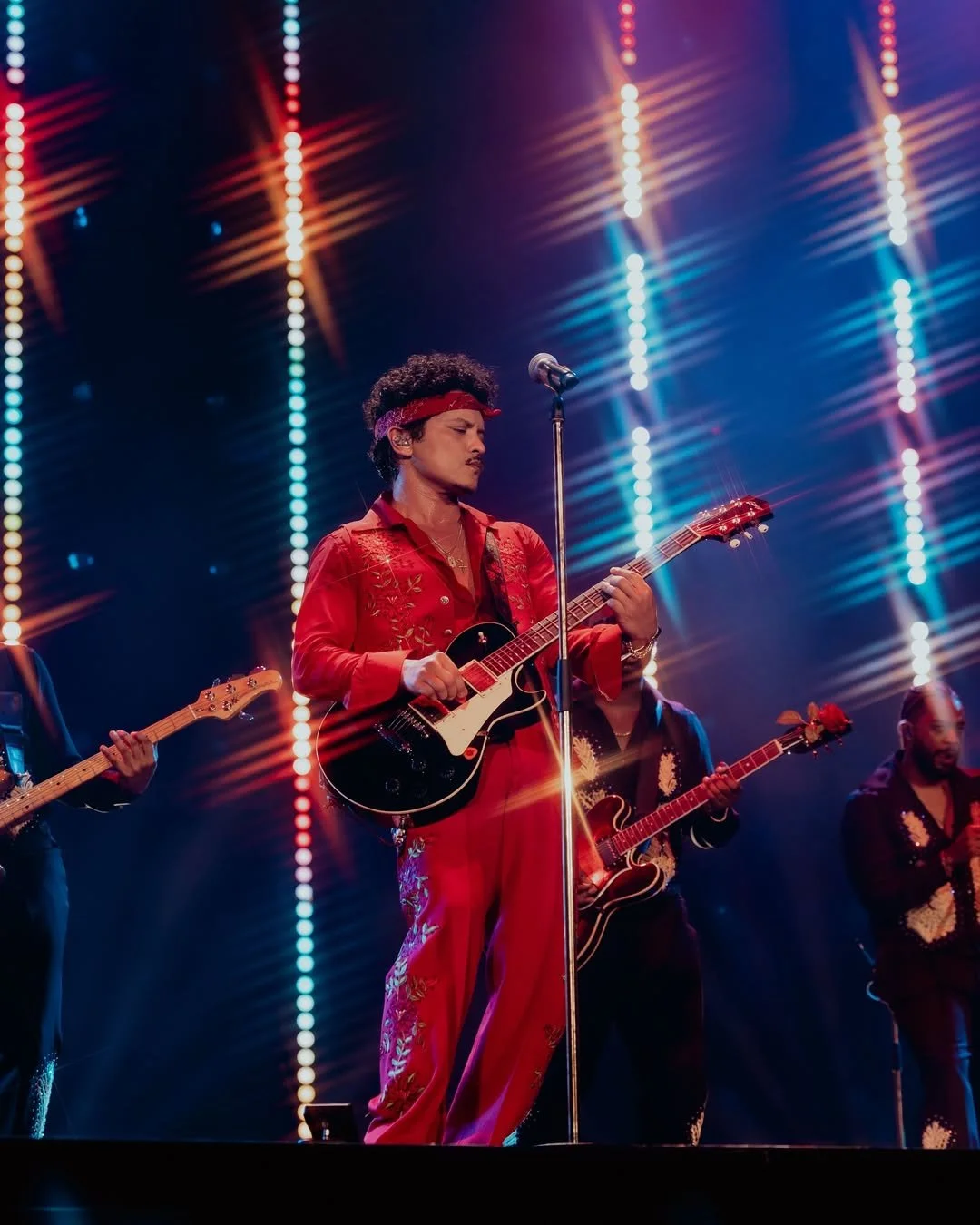

Bruno Mars has always understood something many pop stars spend entire careers trying to decode: nostalgia only works when it feels alive. His 2026 single “I Just Might” is not becoming one of Canada’s biggest pop moments because it reinvents the wheel. It is becoming massive because it polishes the wheel until it gleams, spins it under disco lights, and reminds listeners that sometimes pop music’s highest purpose is not complexity, but irresistible motion.
Released on January 9, 2026, “I Just Might” launched Mars’ The Romantic era and arrived as his first major solo single in years. Billboard Canada described the track as a slick return that channels retro disco energy, with a video showing Mars in a green suit fronting a band of multiple Brunos on a 1970s-inspired soundstage. That visual choice matters. Bruno Mars was not simply releasing a song; he was reopening a whole aesthetic universe: velvet grooves, sharp choreography, smiling showmanship, and radio-ready funk-pop designed to travel instantly from headphones to dance floors.
In Canada, the song’s rise has been especially striking. Billboard Canada reported that “I Just Might” has topped the Billboard Canadian Hot 100 and was sitting at No. 2 around the time of Mars’ Toronto concert at Rogers Stadium. That kind of chart endurance is what separates a regular hit from a true pop-culture moment. Plenty of songs debut loudly. Fewer become part of the season’s public soundtrack, especially in a market as musically plural as Canada, where hip-hop, Punjabi music, Afrobeats, country, francophone pop, Latin music, and global dance records all compete for attention.
Part of the song’s Canadian success comes from timing. “I Just Might” arrived at the beginning of the year, giving it enough runway to grow from comeback single to lifestyle record. By spring, it had the feel of a song that could follow people into patios, gyms, malls, car rides, radio blocks, TikTok clips, pre-drink playlists, and summer festivals. It has that rare commercial elasticity: clean enough for radio, funky enough for older listeners, bright enough for casual pop fans, and familiar enough to feel immediate after one chorus.
Musically, “I Just Might” succeeds because it understands Bruno Mars’ core advantage. He is not trying to sound algorithmically new. He is trying to sound permanently usable. The record leans into disco-pop, funk, and pop-soul, the same retro-futurist lane that has made Mars one of the most reliable hitmakers of the modern era. Pitchfork described the single as a vibrant return built around old-school cool, energetic rhythm, brass, handclaps, and a polished dancefloor attitude. In a year where pop is often fragmented into micro-scenes and hyper-specific fan communities, “I Just Might” feels unusually communal.
That communal quality is important in Canada. Canadian listeners have long responded to songs that can cross demographic borders without losing personality. “I Just Might” does exactly that. It does not ask the listener to understand a complicated backstory. It does not require deep fandom, genre loyalty, or lyrical decoding. It simply walks into the room with immaculate posture and says: dance, flirt, smile, repeat. In a cultural atmosphere often saturated with gloom, exhaustion, and overthinking, that kind of uncomplicated pleasure can feel almost radical.

The song also benefits from Bruno Mars’ renewed album narrative. His 2026 album The Romantic, released on February 27, marked his first solo album since 2016’s 24K Magic, according to Billboard Canada. That decade-long gap gave “I Just Might” added gravity. This was not just another single from a constantly visible artist. It was a re-entry point after years of collaborations, Silk Sonic mythology, and pop-star absence. For Canadian fans, the song arrived with the thrill of recognition: Bruno Mars was back in full technicolour.
His Toronto performance helped crystallize that momentum. Billboard Canada’s concert recap noted that “I Just Might” became a highlight of Mars’ early set, fitting naturally beside older career-defining hits like “24K Magic.” That is a crucial test for any comeback single. A new song can chart well and still feel weak beside classics. But when it can stand confidently next to the catalogue that made an artist famous, it stops feeling like a comeback attempt and starts feeling like a new chapter.
There is also a subtle generational brilliance at work. Bruno Mars’ music often feels engineered for listeners who miss the warmth of older pop eras but still want modern precision. “I Just Might” carries the DNA of disco, soul, funk, and classic show-band performance, but it is mixed with contemporary brightness. The drums snap cleanly. The bassline moves with expensive confidence. The vocals are glossy but human. Nothing feels accidental. Mars has built a career on making retro sound less like imitation and more like renovation.
That is why criticism about familiarity has not slowed the song down. Some listeners have argued that Mars keeps returning to similar vintage-inspired formulas, but the commercial response suggests that audiences are not necessarily demanding reinvention from him. They are demanding excellence within a lane he has mastered. MusicRadar reported that Mars even responded to social media criticism accusing him of repeating himself, a small controversy that only amplified discussion around the single. In pop, familiarity can be a weakness when it feels lazy. With Bruno Mars, it often feels disciplined.
The Canadian angle makes the story even stronger because Canada is not just passively receiving the track. It is actively validating it. A Billboard Canadian Hot 100 peak, a major Toronto stadium moment, and sustained cultural visibility all suggest that “I Just Might” has moved beyond fan-service. It has become one of those records that reminds people what mainstream pop can still do when the craft is this exacting.
In 2026, many hits are built for fragments: a sped-up section, a dance challenge, a quote-caption line, a viral hook detached from the full song. “I Just Might” feels different because it works as a complete pop object. The groove, visual branding, live performance, radio appeal, and comeback narrative are all aligned. That total-package quality is increasingly rare.
Ultimately, “I Just Might” is becoming one of Canada’s biggest pop moments of 2026 because it offers something both old-fashioned and urgently needed: joy with architecture. It is not chaotic virality. It is not accidental success. It is a meticulously built feel-good record from an artist who understands how to make nostalgia sweat under modern lights. Bruno Mars did not need to over-explain his return. He let the bassline do the lobbying. Canada listened.
Enjoyed the read? Consider showing your support by leaving a tip for the writer
Featured









Follow Us



















Laeky’s “caller waiting” is built from emotional exposure, but its production refuses to collapse into fragility. The Australian artist threads syncopated acoustic guitar riffs through understated indie-pop drums, subtle bass, and soft synth textures, creating a frame that feels both restless and suspended. Her sultry, yearning vocal…