
2026 American Music Awards: Biggest Winners, Performances, and Pop-Culture Moments Explained
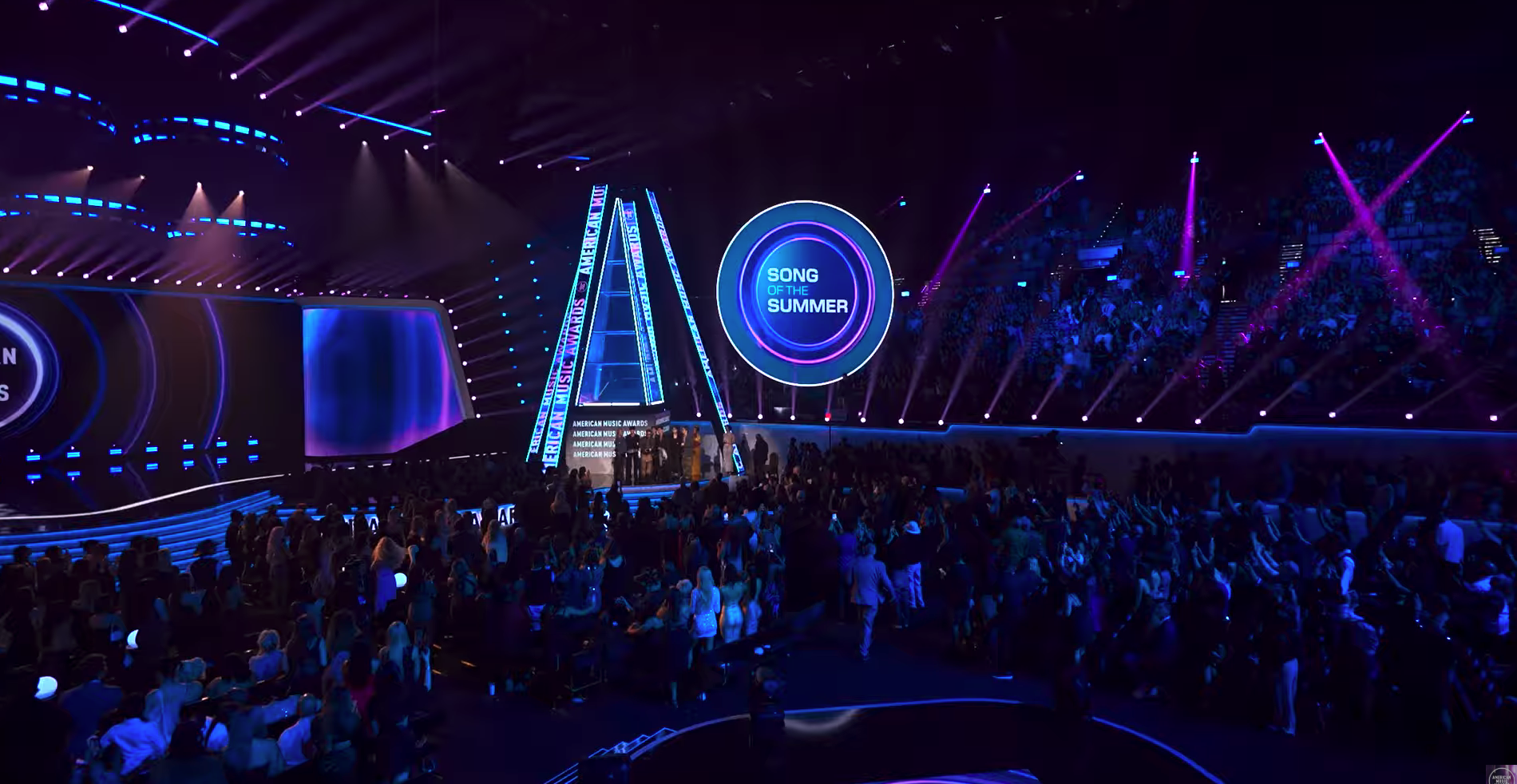
The 2026 American Music Awards arrived with the kind of genre-sprawling chaos that makes modern pop feel less like a hierarchy and more like a crowded international airport. Hosted by Queen Latifah live from the MGM Grand Garden Arena in Las Vegas, the 52nd AMAs aired on May 25, 2026, on CBS and Paramount+, bringing together legacy icons, global pop giants, K-pop history, Latin music dominance, viral-era newcomers, and fan-voted surprises.
Unlike the Grammys, the AMAs have always leaned closer to audience temperature than industry sanctimony. The 2026 nominations were based on fan interactions, including streaming, sales, radio airplay, tour grosses, social activity, and video viewing, tracked by Billboard and Luminate during the eligibility period from March 21, 2025, through March 26, 2026. Voting ran through May 8, except for Social Song of the Year and Tour of the Year, which stayed open into the first half-hour of the broadcast. That structure made this year’s ceremony feel especially revealing: less about what critics wanted to canonize, and more about which artists had genuinely occupied public attention.
The biggest pre-show storyline belonged to Taylor Swift, who led all nominees with eight nods. She entered the night already as the winningest artist in AMAs history, with 40 career wins, and was nominated across major categories including Artist of the Year, Album of the Year, Song of the Year, Best Music Video, Song of the Summer, Best Female Pop Artist, Best Pop Song, and Best Pop Album. But Swift did not attend the 2026 AMAs, making her absence one of the night’s quieter pop-culture tremors. In a fan-voted ecosystem where her presence usually bends gravity, the show had to build its momentum around other centres of cultural force.
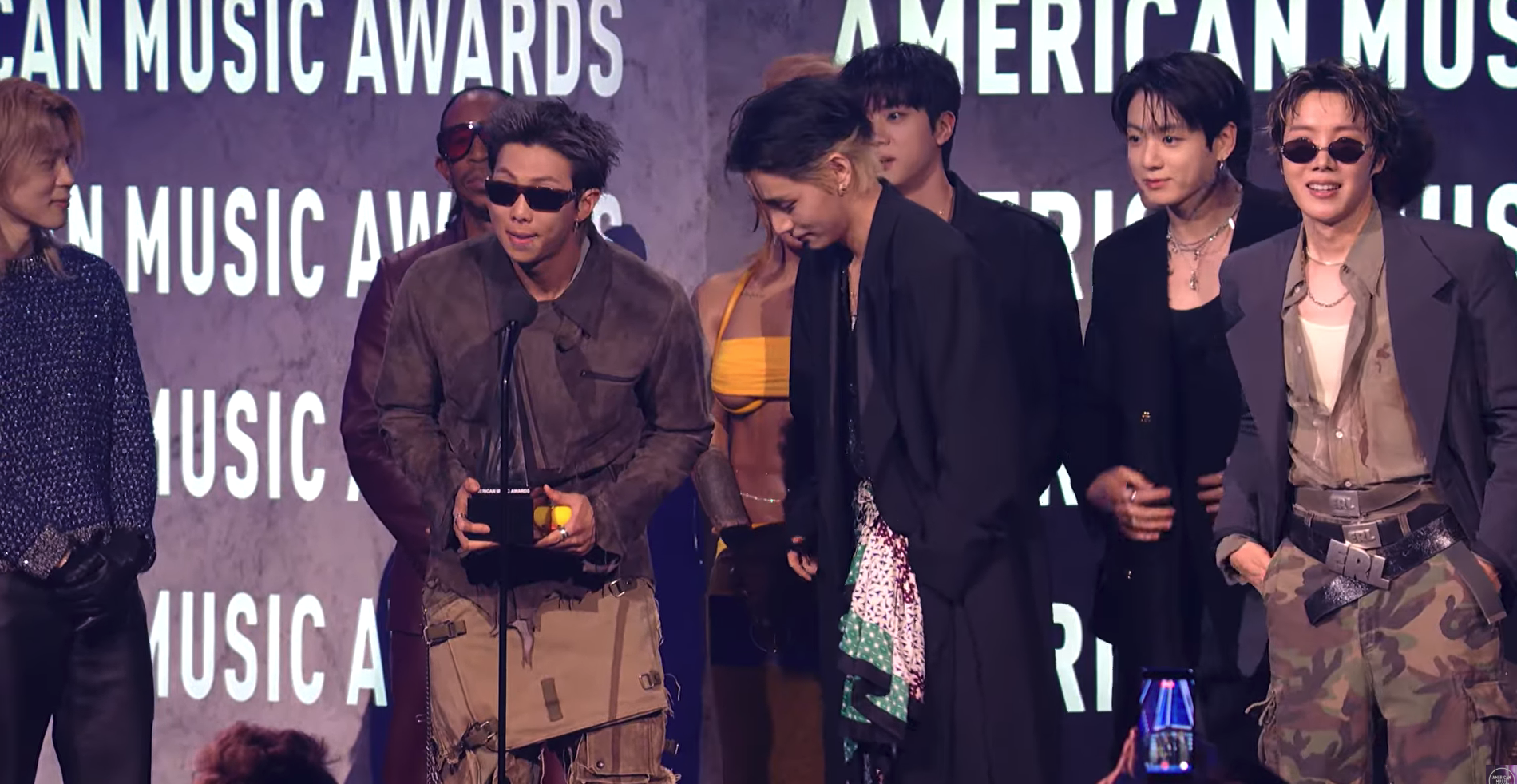
One of those centres was BTS. The group made its first award-show appearance in four years at the 2026 AMAs, a full-circle moment considering they made their U.S. television performance debut at the 2017 AMAs. This year, BTS arrived with three nominations: Artist of the Year, Song of the Summer, and Best Male K-Pop Artist. Their single “SWIM” won Song of the Summer, confirming that BTS remain one of the rare acts whose fanbase can still transform an awards-show category into a global event.
Another major winner was Karol G, whose night carried both emotional and historical weight. She received the International Artist Award of Excellence, becoming the first artist to receive the honour since Whitney Houston in 2009. The award has also previously gone to figures such as Beyoncé, Michael Jackson, Aerosmith, Bee Gees, Led Zeppelin, and Rod Stewart, making Karol G’s recognition more than a Latin-pop victory lap. She also won Best Latin Album for Tropicoqueta and performed “Ivonny Bonita,” turning the ceremony into another reminder that Latin music’s global power is no longer peripheral.
Shakira also claimed a major touring victory. Her Las Mujeres Ya No Lloran World Tour won Tour of the Year, beating out heavyweight contenders including Beyoncé’s Cowboy Carter Tour, Kendrick Lamar and SZA’s Grand National Tour, Lady Gaga’s The Mayhem Ball, and Oasis’ Oasis Live ’25 Tour. That win was significant because it showed how international touring narratives are now competing directly with the biggest English-language pop and hip-hop spectacles.
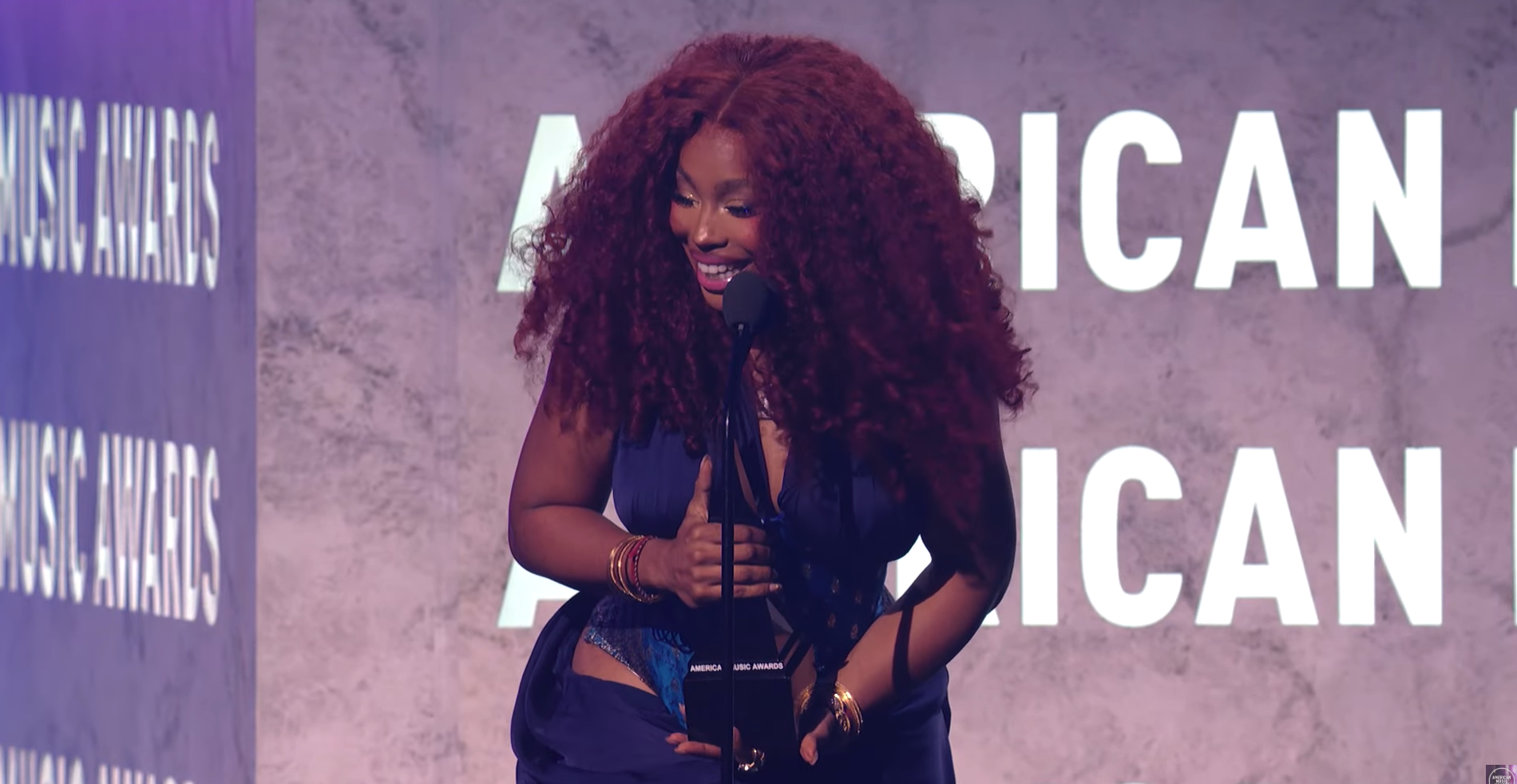
The 2026 AMAs also rewarded the viral and digital-first side of pop. Tyla’s “CHANEL” won Social Song of the Year, a category that perfectly reflects how music now lives as much through clips, edits, fashion language, and fan-made visual culture as it does through traditional radio play. Meanwhile, “Golden” by HUNTR/X — performed by EJAE, Audrey Nuna, and Rei Ami — won Song of the Year, one of the night’s most fascinating results because it underlined how animation, soundtracks, K-pop-adjacent aesthetics, and internet-native fandoms are increasingly shaping mainstream music taste.
Rock and alternative music also had a strong showing. Twenty One Pilots won Best Rock/Alternative Artist, while sombr’s “back to friends” won Breakthrough Rock/Alternative Song and his album I Barely Know Her won Breakthrough Rock/Alternative Album. That sombr momentum mattered because he entered the night as one of the most-nominated breakout names, tied among the major nomination leaders with seven nods alongside Morgan Wallen, Olivia Dean, and Sabrina Carpenter.
Performance-wise, the 2026 AMAs leaned heavily into cross-generational spectacle. The official lineup included Billy Idol, Karol G, Hootie & the Blowfish, KATSEYE, Keith Urban, Maluma, The Pussycat Dolls with Busta Rhymes, Riley Green, SOMBR, Teddy Swims, Teyana Taylor, Twenty One Pilots, and more. Billy Idol’s appearance carried special legacy weight because he received the Lifetime Achievement Award and delivered his first-ever AMAs performance. KATSEYE brought the U.S. television broadcast premiere of “PINKY UP,” while Teddy Swims performed “Mr. Know It All,” and Maluma returned to the AMAs stage with music from his latest project Loco x Volver.
The show also had a Memorial Day dimension. Darius Rucker received the Veterans Voice Award Presented by USAA’s Honor Through Action, recognizing his long-running support for military communities. He was also scheduled to perform with Hootie & the Blowfish, adding a nostalgic layer to a ceremony otherwise dominated by global pop and digital-era momentum.
On the red carpet, the AMAs generated its usual fashion chatter. Queen Latifah turned the hosting gig into a rare family night out, while Chrissy Teigen had a lighthearted wardrobe malfunction after her heel got caught in the hem of her dress. Those moments may seem minor next to award results, but they are exactly how modern award shows survive online: a ceremony is no longer only measured by trophies, but by the number of side moments that can circulate as clips, memes, and celebrity micro-narratives.
Ultimately, the 2026 American Music Awards captured a music industry in full mutation. BTS proved K-pop remains a global voting machine. Karol G and Shakira confirmed Latin music’s stadium-level command. Tyla and HUNTR/X showed how social virality and screen culture are reshaping hitmaking. Billy Idol, Hootie & the Blowfish, and Queen Latifah gave the night its legacy backbone. And Taylor Swift’s absence became a headline of its own, proving that sometimes the biggest star in the room is the one who is not there. The 2026 AMAs were not just about who won. They were about what kind of music culture is winning now: multilingual, fan-driven, nostalgic, algorithmic, theatrical, and gloriously overpopulated.
Enjoyed the read? Consider showing your support by leaving a tip for the writer
Featured




Follow Us







Laeky’s “caller waiting” is built from emotional exposure, but its production refuses to collapse into fragility. The Australian artist threads syncopated acoustic guitar riffs through understated indie-pop drums, subtle bass, and soft synth textures, creating a frame that feels both restless and suspended. Her sultry, yearning vocal…