Artists Push for AI Deepfake Protections as NO FAKES Act Faces Senate Vote
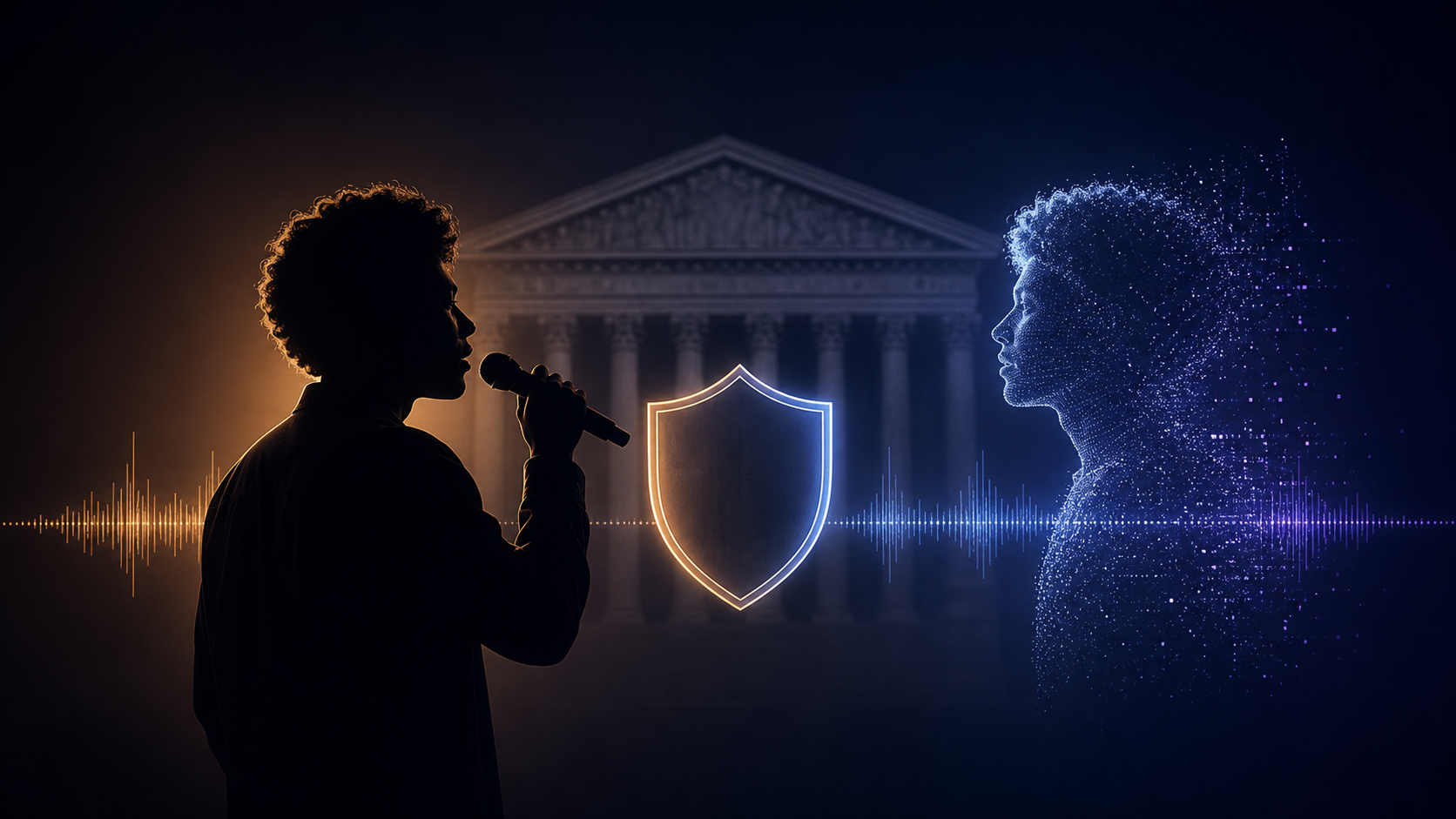
The music industry’s fight against AI voice clones is moving from takedown notices and public outrage into federal law. The NO FAKES Act, short for the Nurture Originals, Foster Art, and Keep Entertainment Safe Act, is facing a U.S. Senate Judiciary Committee vote on June 18, according to Music Business Worldwide. The bill would create, for the first time in U.S. federal law, an intellectual-property-style right in a person’s voice and visual likeness, giving artists and other individuals a clearer legal path against unauthorized AI-generated replicas.
For musicians, this is not a small technical update. It goes directly to one of the most unsettling questions in modern pop culture: who controls an artist’s voice when software can imitate it?
The gap became obvious after viral AI tracks began imitating major stars. One of the most cited examples remains “Heart on My Sleeve,” the unauthorized AI-generated track that appeared to use synthetic versions of Drake and The Weeknd’s voices. As Music Business Worldwide noted, cloning a voice is not always clearly treated as copyright infringement, because copyright law protects recordings and compositions more directly than vocal identity itself.
That is the legal space the NO FAKES Act is trying to fill. Instead of focusing only on whether a song, beat or lyric was copied, the bill looks at whether a person’s recognizable voice or likeness was digitally replicated without consent. The Recording Academy has described the proposal as a potential first federal right of publicity, designed to give creators control over unauthorized uses of their digital personas.
The music business has been asking for this kind of clarity because the current system is uneven. Right-of-publicity laws exist at the state level, but protections vary widely depending on where a claim is brought. That patchwork can make it difficult for artists, estates, labels and managers to respond quickly when an AI imitation spreads online across platforms, territories and fan communities.
Supporters see the bill as a necessary guardrail. Senator Marsha Blackburn’s office has framed the NO FAKES Act as a response to deepfake harms, while also pointing to the related TRAIN Act as another effort to help creators understand when copyrighted works are used to train generative AI systems. The RIAA has also reaffirmed support for the bill, describing it as part of a broad push to protect individuals while allowing innovation to continue.
But the bill is not without critics. The Electronic Frontier Foundation has urged Congress to reject NO FAKES, arguing that it could add a new layer of internet censorship and threaten expressive uses of digital replicas. Public Knowledge and other civil-society groups have also warned the Senate Judiciary Committee about possible free-expression harms.
That tension is why the debate matters beyond celebrity protection. Music culture runs on imitation, homage, parody, impersonation, remixing and fan creativity. A law that is too narrow may fail to protect artists from exploitative AI replicas. A law that is too broad could chill commentary, satire, documentary work or creative experimentation.
For labels and publishers, the NO FAKES Act is part of a larger strategy around AI accountability. The industry is already fighting over training data, synthetic tracks, AI-generated catalog spam and whether platforms should label or limit artificial music. A federal voice-and-likeness right would not solve every AI music problem, but it could give artists a stronger weapon against the most personal form of imitation: the unauthorized recreation of their identity.
To conclude, the cultural stakes are clear. A voice is not just a sound file. In music, it carries history, style, emotion, biography and trust. Fans connect to artists because they believe there is a person behind the performance. AI voice cloning threatens that relationship when it blurs the line between tribute, tool and deception. The Senate vote will not end the AI music debate. But it could decide whether American law begins treating vocal identity as something artists can protect nationally — not just after harm spreads, but before digital replicas become normal business.
Enjoyed the read? Consider showing your support by leaving a tip for the writer
Featured




Follow Us

Shop






A warm evening rarely announces its memorable moment; it settles in slowly, softening the edges until everything feels suspended. That is the atmosphere The Dada Project creates on “Whispers,” the new single from Diane Arkenstone and David Arkenstone, premiering on our website ahead of its official September 25th release…