Why Australia’s Sky Turned Red: The Strange, Stunning Weather Moment That Stopped the Internet
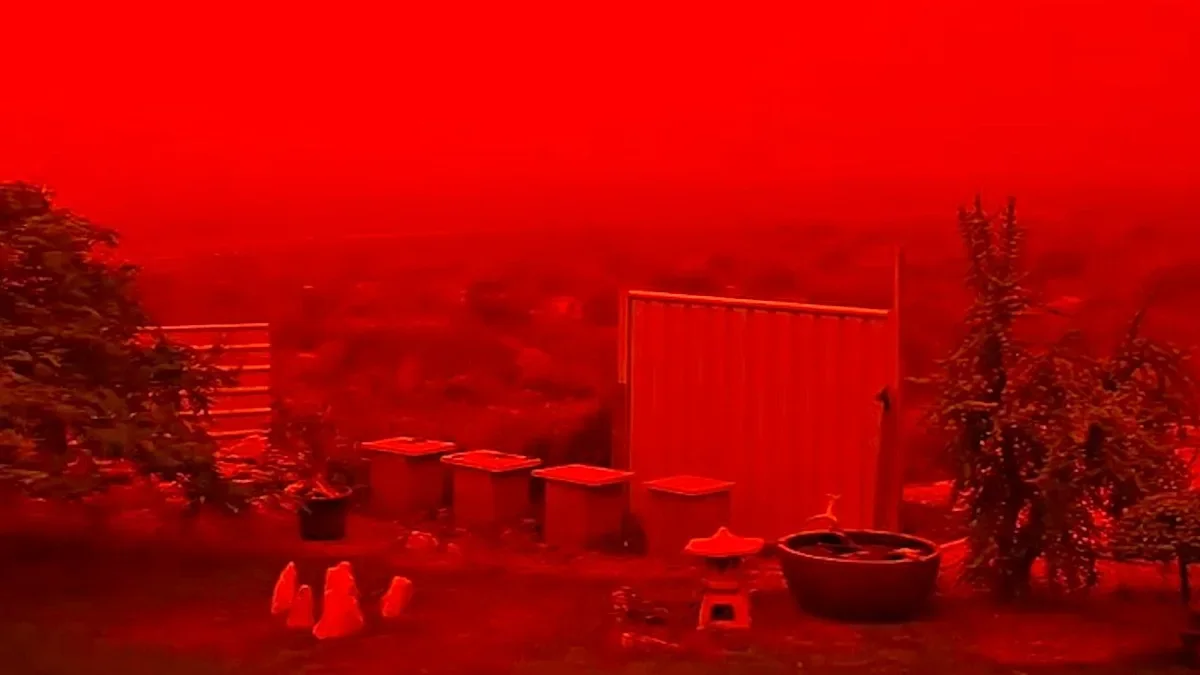
Australia has once again reminded the world that its landscapes can look almost mythic when weather, light, and terrain collide in the right proportions. In late March, parts of Western Australia, especially around Shark Bay, were cast beneath an eerie red sky as Tropical Cyclone Narelle approached the coast. The spectacle quickly spread online because it looked less like an ordinary storm front and more like a scene borrowed from dystopian cinema. But the explanation, while dramatic, is grounded in atmospheric science rather than fantasy.
The crimson sky was largely caused by iron-rich dust being lifted into the air by strong winds ahead of the cyclone. Western Australia’s soil, especially in the broader Pilbara-linked region, is famously rich in iron oxide, which gives the land its rusty red tone. As Narelle pushed toward the coast, those winds swept up enormous amounts of that red dust and carried it across the atmosphere, tinting the daylight with a deep reddish filter.
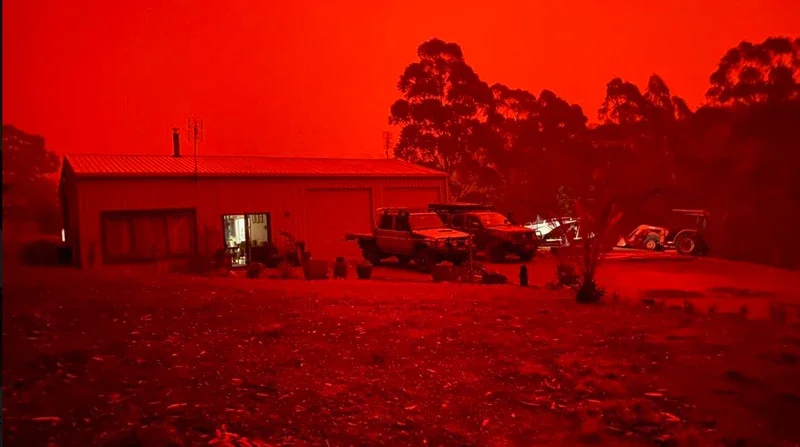
Light did the rest of the work. When the atmosphere fills with dust, shorter blue wavelengths scatter away more easily, allowing longer red and orange wavelengths to dominate what the eye sees. In this case, the suspended dust acted almost like a giant atmospheric screen, bending the mood of the entire sky toward crimson. Reports on the event noted that the effect was especially striking around sunrise and sunset, when the sun’s lower angle already favors warmer tones.
What made the moment so captivating was not just the science, but the visual violence of it. This was not a gentle amber haze or a pretty pastel sunset. It was thick, apocalyptic red — the kind of sky that makes everyday streets, rooftops, and parked cars suddenly look extraterrestrial. Videos from Shark Bay circulated widely because the atmosphere appeared almost unreal, as though the whole town had been dropped under a scarlet veil.
Cyclone Narelle itself was already a major weather event before the sky changed colour. Coverage described it as a severe system affecting broad parts of Western Australia, with damaging winds, dust, and disruption across multiple communities. That context matters, because the red sky was not a random curiosity floating free of consequence; it was part of a larger and more dangerous weather pattern that brought real hazards along with the spectacle.
There is something especially arresting about a red sky because it touches a deep symbolic nerve. People tend to read crimson skies as omens — biblical, cinematic, vaguely catastrophic. Yet what happened in Australia was a reminder that nature does not need supernatural help to look uncanny. Dry ground, iron-rich dust, violent wind, moisture, and angled sunlight were enough to turn an ordinary day into something almost infernal. That is part of why the footage spread so quickly: it was beautiful, unsettling, and scientifically legible all at once.
In the end, the red sky over Western Australia was a fleeting but unforgettable collision of geography and weather. It was not the sky itself changing, of course, but the atmosphere becoming saturated with the colour of the land below it. Australia did not suddenly become Mars. It simply revealed, for a brief moment, how thin the membrane is between the familiar world and one that looks completely otherworldly.
Featured









Dust has a memory, and on WILD WEST: AMERICAN STORIES, Grant Maloy Smith lets that memory rise slowly through strings, wood, weather, and voice. The American artist’s 18-song Americana and Folk album moves with the patience of an old landscape painting coming…