Spotify’s Verified Badge for Human Artists Is a Smart Idea With a Flawed Selection Process
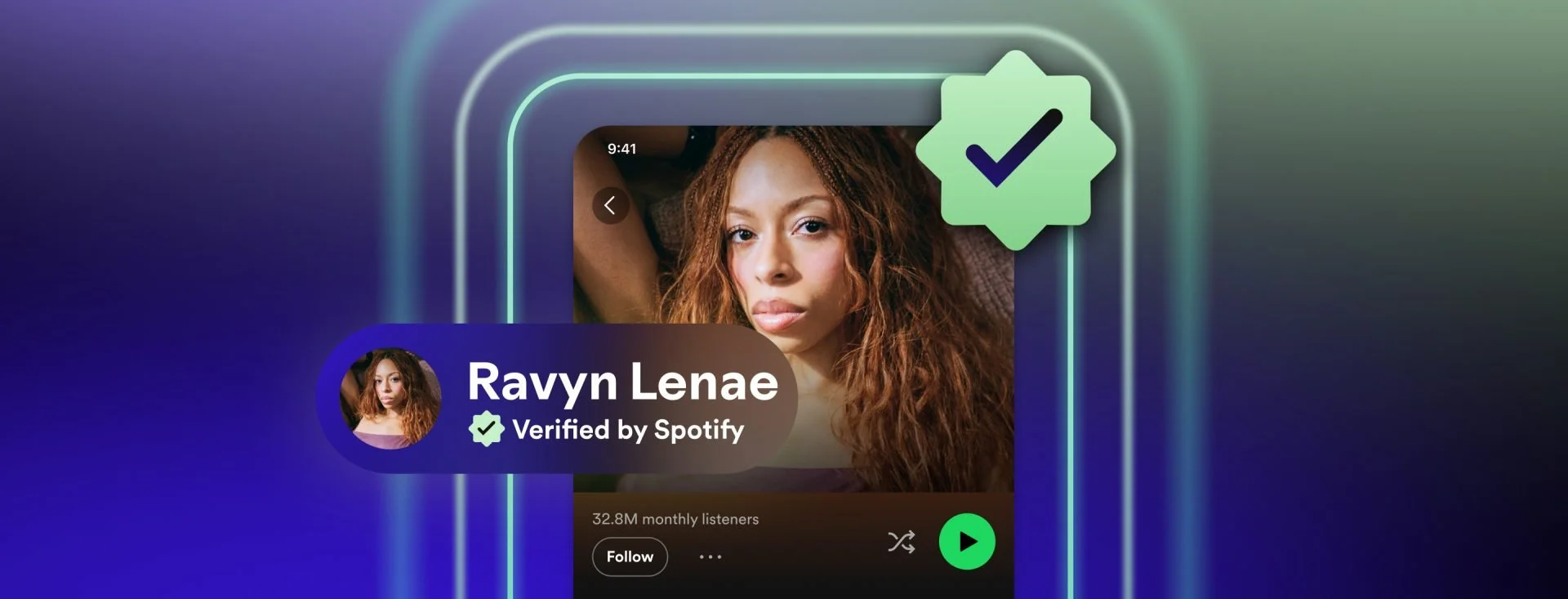
Spotify is taking a major step in the fight against AI-generated music by introducing a new “Verified by Spotify” badge, a light-green checkmark designed to help listeners identify authentic human artists. The badge appears on artist profiles and in search results when an artist meets Spotify’s standards for authenticity and trust. In theory, this is a timely and necessary update. Streaming platforms are now facing a flood of synthetic songs, fake artist identities, AI-generated vocals, and automated uploads that blur the line between real musicianship and machine-produced content.
However, while Spotify’s intention may be understandable, the selection process already exposes a serious flaw. By relying on factors such as listener activity, engagement history, public artist presence, social links, merchandise, and live shows, the platform risks confusing visibility with authenticity. A human artist is not less real because they have fewer monthly listeners. A producer is not less legitimate because they do not perform live. A songwriter who has been releasing music since 2016 should not be treated with uncertainty simply because their audience is modest. Low numbers do not equal artificiality.
This issue becomes even more important when considering artists who were already creating music before COVID-19 and before AI music became widely accessible. Any artist with a verifiable catalogue from before 2020 should have a much easier path to verification. Before the current explosion of AI music tools, most independent artists distributing songs online were real creators working through traditional creative labour: writing, recording, producing, mixing, mastering, uploading, promoting, and fighting for visibility in an already oversaturated digital market. Their release history should matter.
Indeed, Spotify’s system should not only look at current popularity. It should examine creative history. If an artist has music distributed before 2020, consistent metadata, legitimate release records, copyright information, and ownership of their artist profile, that should carry heavy weight. Many real musicians have spent years building small but genuine catalogues without ever becoming algorithmic favourites. Their lack of massive engagement should not place them in the same suspicious category as synthetic AI profiles.
Another major flaw is the possible use of platform history as a trust signal. Many independent artists have complained for years that their songs were added to suspicious third-party playlists without their permission, only to later suffer penalties or algorithmic damage because those playlists carried botted activity. This is a serious problem because artists often have no control over where their music is added. A musician can wake up and discover that their song has been placed on a playlist filled with fake streams, artificial saves, or abnormal listener behaviour. They did not request it. They did not benefit from it in any meaningful long-term way. Yet their profile can still be affected by the stain of fraudulent activity.
That reality makes Spotify’s verification process delicate. If an artist has a history of suspicious streaming activity, the platform should not automatically assume wrongdoing. There is a difference between an artist buying fake streams and an artist being dragged into a botted playlist ecosystem without consent. Many small artists are especially vulnerable because they lack the industry knowledge, label support, and legal leverage to challenge fraudulent playlisting. In most cases, they cannot do anything about it. They cannot remove themselves from every suspicious playlist instantly. They cannot control every third-party curator. They cannot prevent bots from targeting their songs. Penalizing them without context would be profoundly unfair.
This matters because a missing verification badge could create a new form of reputational damage. In a music market already anxious about AI, listeners may begin to interpret unverified artists as suspicious. Bloggers, curators, labels, and casual fans may wonder whether an artist is real, whether their music is AI-generated, or whether their activity is trustworthy. For independent musicians, that kind of doubt can be damaging, especially when the artist has done nothing wrong.
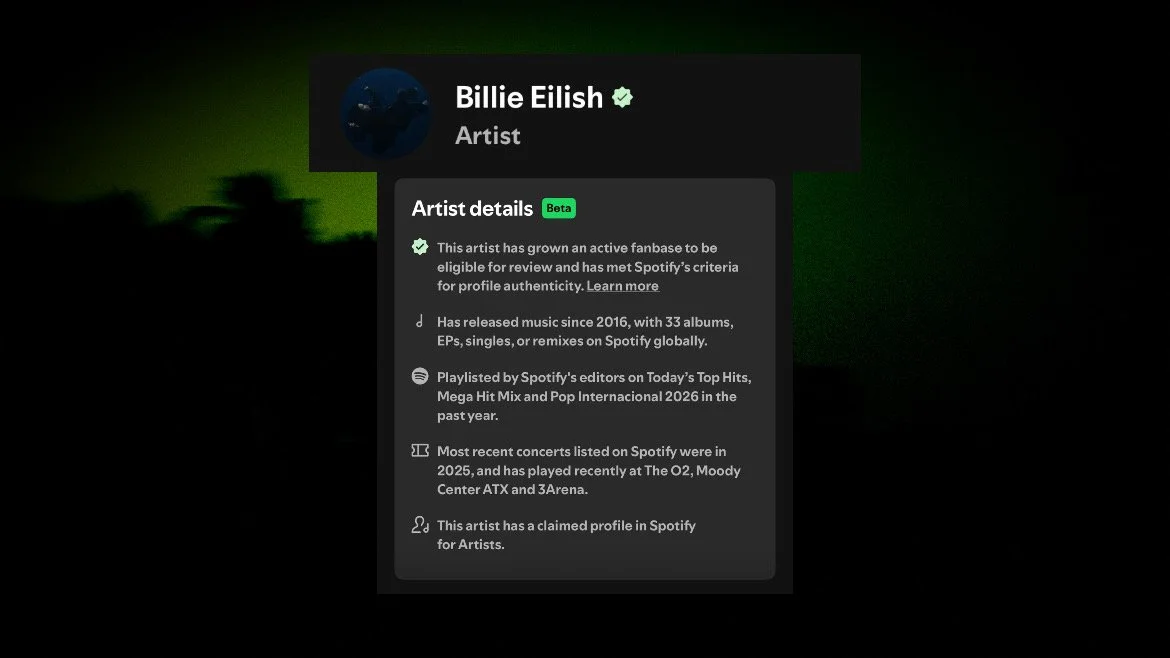
Moreover, the requirement or consideration of live shows also raises concerns. Many legitimate creators do not perform concerts. Instrumental producers, beatmakers, ambient composers, electronic artists, film-score-inspired musicians, and studio-based creators often build their entire artistic identity away from the stage. Their craft happens in arrangement, sound design, rhythm, texture, atmosphere, and emotional architecture. They may never sell merchandise. They may never tour. They may not cultivate a public-facing persona. Yet they are still fully human artists.
In fact, instrumental producers may be among the most overlooked under this kind of system. A producer who has spent years building beats, compositions, or cinematic soundscapes should not be disadvantaged because their work does not fit the traditional artist model. The music industry has always included creators who operate behind the curtain. Not every real artist is a performer. Some are architects of sound, and their legitimacy should not depend on whether they can prove public visibility through shows or fan merchandise.
Spotify’s badge is still a valuable idea. Listeners deserve transparency, and artists deserve protection from AI impersonation. The rise of fake profiles, cloned voices, and mass-produced AI music has created confusion across streaming platforms. A verification badge can help restore trust, reduce deception, and give human creators a clearer identity in an increasingly synthetic marketplace. The problem is not the badge itself. The problem is the possibility of a narrow selection process that rewards commercial signals more than creative truth.
A better verification model would include a direct application pathway for independent artists, producers, and legacy creators. Spotify should allow artists to submit evidence such as pre-2020 releases, distributor records, copyright ownership, social history, studio credits, press coverage, and artist profile access. It should also create a fair review process for musicians whose accounts may have been affected by unauthorized botted playlists. Suspicious activity should trigger investigation, not automatic exclusion.
Ultimately, Spotify’s Verified by Spotify badge could become an important defense against AI confusion, but only if it protects the full spectrum of human creativity. Real artists are not always viral. They are not always touring. They are not always selling merch. They are not always algorithmically clean, especially when fraudulent playlisting can happen without their knowledge or permission. Some are quiet, obscure, meticulous, and stubbornly independent.
If Spotify truly wants to distinguish human artists from AI, it must remember one essential truth: authenticity is not measured only by monthly listeners, shows, or engagement history. It is measured by creative intent, artistic continuity, and evidence of real human work. Any artist who has been building a catalogue since before 2020 deserves serious recognition, and any artist harmed by unauthorized botted playlist activity deserves context before judgment. Human creativity should not be punished for being small, private, instrumental, or unlucky inside a streaming system it does not fully control.
Enjoyed the read? Consider showing your support by leaving a tip for the writer
Featured


Follow Us









Eva Rose approaches heartbreak with unusually clean logic on The Last Laugh, her 13-track American Indie Pop debut. The album is guitar-driven, candid, and often funny, but its real strength is restraint. Rose does not treat pain as spectacle. She breaks it into recognizable behaviors: staying too long, romanticizing…