
Rex Novi Builds a Bruised, Genre-Bending World of Resistance and Reflection on "Burial at Sea"
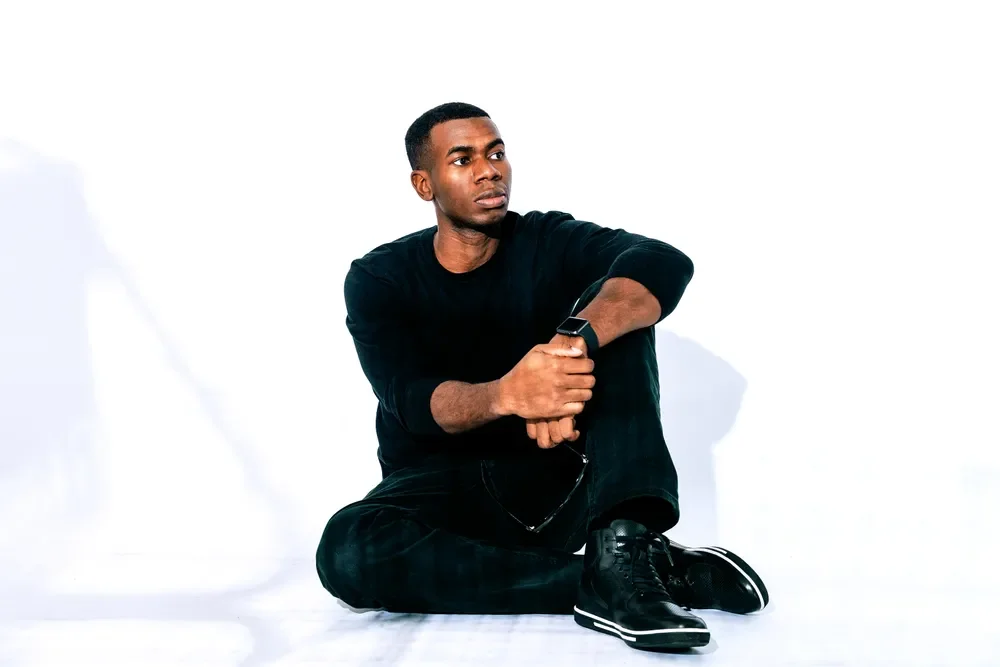

Rex Novi doesn’t treat his project Burial at Sea like a clean portfolio piece; he treats it like weathered evidence pulled from the water. The American singer-songwriter, rapper and producer builds the album as an eight-song voyage through hip-hop, alternative rap, soul, cinematic interludes, and bruised experimentalism, allowing the record to feel both carefully assembled and beautifully scarred. Indeed, the most compelling thing about the project is its refusal to behave like a standard rap album. Developed across roughly a decade, Burial at Sea carries the weight of old drafts, lived-in questions, and unresolved American tension. It is energetic at the surface, yet underneath that movement sits a darker concept: the Black American experience imagined as drifting, searching, resisting, and eventually being swallowed by forces larger than the individual. Rex Novi’s voice is not always technically polished, especially when he leans into singing, but his honesty gives the album a raw voltage that overproduced records often lose. As Mo would put it: the flaws are visible, but so is the blood.
Musically, Burial at Sea works because Rex thinks like a producer before he thinks like a performer. The arrangements stretch hip-hop until its outline starts to blur, then pull it back with drums, basslines, spoken textures, and rap passages that remind the listener where the spine is. Moreover, the album’s sequencing matters. It begins with more kinetic pressure and gradually winds down, creating the feeling of an ill-fated expedition losing light as it moves farther from shore. The production favors cinematic outros, atypical structures, bridges that do not arrive where expected, and instrumental choices that feel scavenged from different emotional geographies. Soul guitar, Afro-infused percussion (“Going”), melancholic synths, voicemail fragments, opera-colored vocals, groovy bass, and Asiatic or oriental-toned instrumentation all enter the frame without turning the album into a confused collage. In fact, Rex’s strongest gift is his ability to make these textures coexist inside one bruised world. The mix often feels handmade rather than glossy, which suits the record’s conceptual backbone. It has grain, air, and dust. It sounds like someone building a ship from memory, grief, politics, and whatever instruments survived the storm.
Lyrically, the album lives between confession and indictment. Rex writes with a mind tuned to personal guilt, social collapse, romantic absence, domestic fracture, racial violence, and the uneasy theatre of American power. However, he rarely turns these themes into slogans. He prefers imagery: high seas, polluted homes, burning worlds, wonderlands turned into cages. That symbolic approach gives the record a novelistic quality, as promised by its structure, because each song feels less like a separate chapter of autobiography and more like another room inside the same doomed vessel. On “The Odd at Sea,” Rex’s natural, unvarnished vocal delivery may not be his sharpest tool, yet the emotional direction is clear: a person caught between disappearance and responsibility. Greg Lo brings charisma and rap precision, balancing Rex’s more vulnerable presence. “Black Water” opens with an imperfect but emotionally loaded a cappella before breaking into a harder rap section with J Nolan, where the denunciation of injustice lands with more authority. Notably, Rex sounds more convincing when rapping than when carrying melodic hooks, and the album itself proves that he has enough production intelligence to invite singers where the chorus needs lift. “Going” is one of the clearest standouts, driven by Afro-percussive energy, sorrowful synth work, and fierce writing about corruption, tension, and a country failing its own mythology. Rex and Rinus N. deliver with urgency, making the track feel like protest music wearing storm clouds.
Quick Track-by-Track Insight
“Heaven Haven” serves as a cinematic interlude, elevated by Victoria Pakalniece’s operatic delivery and Rex’s orchestration, opening a melancholic portal rather than a simple transition. “The Odd at Sea” is emotionally conflicted and uneven in places, but Greg Lo’s presence and Rex’s production make its inner turmoil stick. “Black Water” moves from exposed vocal fragility into forceful rap momentum, with J Nolan helping sharpen the song’s political edge. “Going” stands tall through its Afro-infused percussion and grim synth atmosphere, turning global unrest into a gripping alternative rap statement. “Million Eyes” relaxes into soulful guitar, laidback drums, and groovy bass, giving Rex space for a nonchalant but charismatic rap performance. “Siren Song” uses voicemail and argument fragments with real conceptual bite, before Ke Turner’s nostalgic R&B performance brings tenderness and ache to the center. “Done” hits with throwback rap confidence, a catchy instrumental, and one of Rex’s strongest flows, even if the sung portions still reveal the project’s limitations. “Aqueous Transmission” closes with striking creative ambition, blending tender balladry, orchestral color, and Asian-influenced instrumentation into an ending that feels strange, fragile, and fittingly adrift.
Ultimately, Burial at Sea is not a perfect album, but it is far more interesting than many perfect-looking ones. In addition, Rex Novi’s background as an engineer, gear-head, songwriter, and behind-the-scenes craftsman shows in the record’s architecture; he understands atmosphere, texture, and the emotional meaning of sound. The singing could be stronger, and there are moments where a guest vocalist would have carried the melodic weight with more elegance. Still, the rap writing, production risks, sequencing, and conceptual ambition give the album a distinct identity. Burial at Sea is for listeners who appreciate hip-hop when it gets restless, political, soulful, and weird around the edges. Rex Novi may still be refining the balance between vocalist and rapper, but as a producer-author, he has built a world worth entering.
Enjoyed the read? Consider showing your support by leaving a tip for the writer
TRENDING NOW









CONNECT WITH US





FEATURED







Sometimes the body clocks in while the mind has already blown past the city limits. San Antonio five-piece Mahogany Drift turns that disconnect into pure voltage on “Headspace,” their debut single and the first introduction to the forthcoming Sentry EP. Heavy electric guitar riffs come in thick…