
Niall Horan’s Dinner Party Era Keeps One Direction’s Solo Legacy Moving

Niall Horan’s Dinner Party era arrives with the quiet confidence of an artist who no longer needs to prove he survived One Direction. He already has. The more interesting story now is how he continues to extend the band’s solo legacy without relying on spectacle, controversy, or desperate reinvention. With his fourth studio album, released June 5, 2026, Horan leans into intimacy, romance, grief, and adult steadiness, offering a warm new chapter in one of pop’s most closely watched post-boy-band journeys.
For longtime fans, Dinner Party feels like a natural evolution. Horan has always been the One Direction member most comfortable with simplicity: acoustic guitars, clean melodies, classic pop-rock instincts, and emotional sincerity without excessive theatricality. While other members of the group have explored louder reinventions, fashion mythologies, genre pivots, or more turbulent public narratives, Horan’s solo identity has grown through consistency. He has built a career around being reliable without becoming dull, polished without sounding mechanical, and familiar without being creatively frozen.
The title itself reveals the album’s emotional architecture. Dinner Party is inspired by the real-life moment Horan met his long-term partner at a dinner party, turning a social encounter into the foundation for a record about romantic certainty, domestic warmth, and emotional arrival. That concept is refreshingly un-cynical. In a pop culture climate often obsessed with breakup autopsies and revenge narratives, Horan is writing about love as a place to settle into, not merely escape from.
That makes the album feel mature in a very specific way. Maturity here does not mean boring. It means Horan has become more interested in emotional texture than dramatic overstatement. The record reportedly moves through breezy guitar pop, yacht-rock ease, acoustic vulnerability, and brighter pop-rock edges. It sounds like an artist hosting listeners rather than trying to overwhelm them. The dinner party metaphor works because the album feels communal: warm lights, conversation, memory, affection, and one final song that changes the tone of the room.
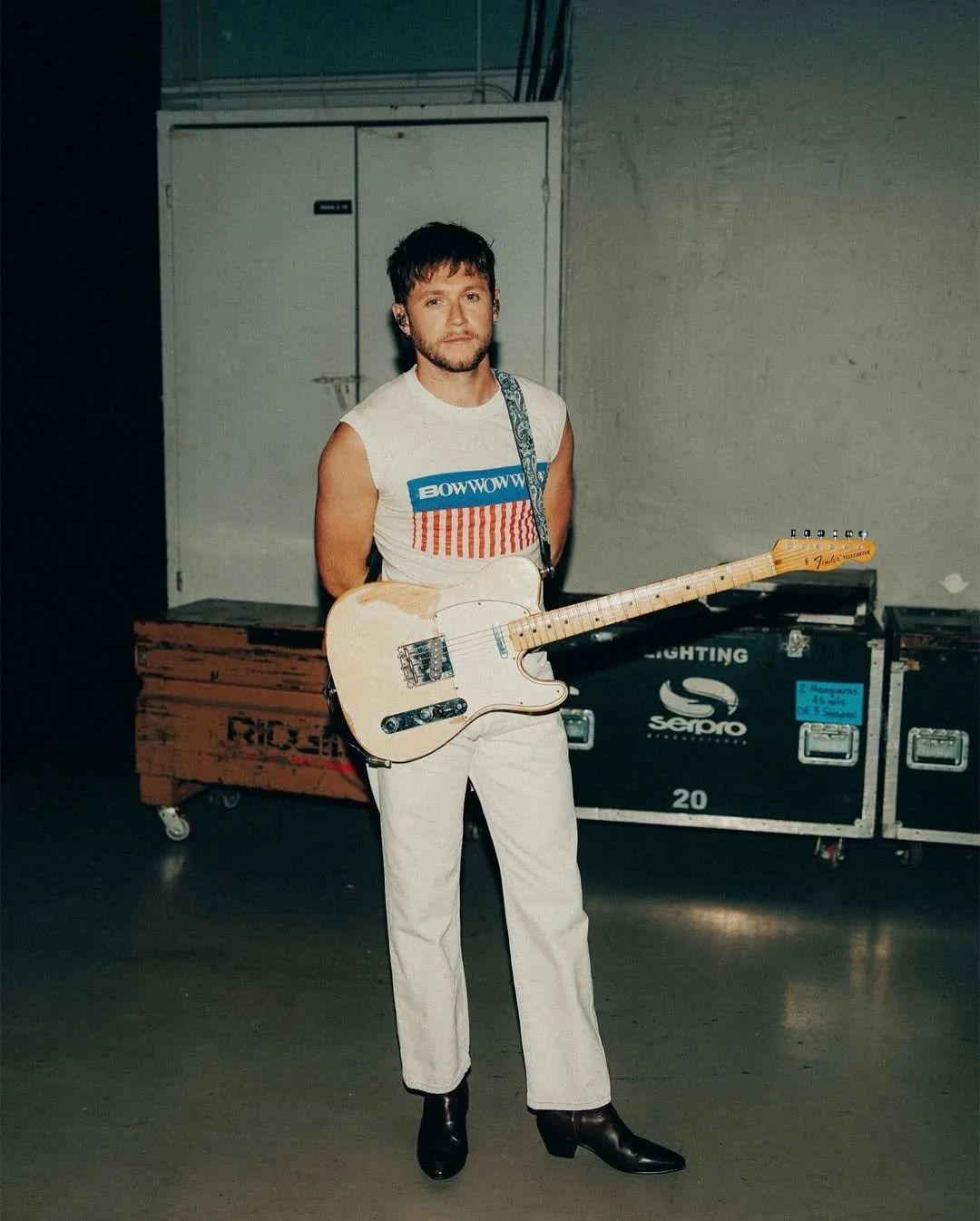

That final song, “End of an Era,” gives the project its deepest connection to One Direction’s legacy. Written as a tribute to Liam Payne after his death in 2024, the track brings grief into an album otherwise shaped by romance and softness. Its presence matters because it acknowledges that One Direction’s story is no longer only nostalgic; it is also marked by loss. For fans who grew up with the group, Horan’s tribute does not simply honour a former bandmate. It honours a shared youth that now feels more fragile.
This is where Dinner Party becomes more than a solo album. It becomes part of the emotional afterlife of One Direction. Every member’s solo work has added a different chapter to the group’s larger myth. Harry Styles became the stadium-pop chameleon. Zayn Malik pursued moody R&B independence. Louis Tomlinson built a loyal rock-leaning fan world around resilience and connection. Liam Payne’s legacy remains tied to both pop ambition and the complicated pressures of post-band identity. Horan’s lane has been steadier: songwriting craft, live warmth, melodic durability, and a refusal to overcomplicate his place in the story.
That steadiness is valuable. One Direction’s solo legacy does not survive only through chart peaks or viral shocks. It survives because each member keeps giving fans new emotional entry points into the history they shared. Horan’s Dinner Party era does that with gentleness. It invites Directioners to grow up with him rather than remain trapped in teenage memory. The music does not reject the past, but it does not live inside it either.
Horan’s touring plans also strengthen the era. The Dinner Party Live On Tour dates give the album a real-world dimension, extending its themes from recorded intimacy into communal performance. That matters because Horan has become one of pop’s most dependable live connectors. His appeal onstage is not based on shock value. It comes from ease, musicianship, humour, and the sense that he genuinely enjoys being in the room with fans.
That kind of connection is rare in a hyper-managed pop environment. Horan’s career works because it feels human-scaled even when the audience is huge. He can play arenas without losing the impression of someone casually telling a story with a guitar nearby. That balance has become his signature, and Dinner Party amplifies it.
The album also arrives at a moment when One Direction’s cultural presence remains unusually strong. The band has not released new music in years, yet its fandom, mythology, and individual careers continue to generate conversation. Fans still debate reunions, revisit old performances, compare solo eras, and follow each member’s evolution with remarkable loyalty. Horan benefits from that history, but he is not imprisoned by it. Dinner Party proves he can honour the emotional roots of that fanbase while still writing from the life he has now.
From an SEO and pop-culture perspective, the album has several strong angles: new music, One Direction legacy, Liam Payne tribute, romance, touring, and post-boy-band maturity. But its real value is subtler. Dinner Party shows that the most durable solo careers are not always the loudest. Sometimes they are built through trust. Horan has trained his audience to expect sincerity, melody, and emotional clarity. That may not create the most chaotic headlines, but it creates longevity.
In 2026, Niall Horan’s Dinner Party era feels like an artist choosing warmth over spectacle. It is romantic without being saccharine, nostalgic without being trapped, and reflective without becoming heavy-handed. Most importantly, it keeps One Direction’s solo legacy moving forward in a way that feels honest.
The boy-band story may belong to the past, but Horan’s solo career is still unfolding with quiet purpose. Dinner Party is not just another album. It is a reminder that growing up after global fame can be graceful, grounded, and musically rewarding when the artist knows exactly who he is.
Enjoyed the read? Consider showing your support by leaving a tip for the writer
Featured








Follow Us











Wendy Bruner and Christopher Grundy construct “Toward Shalom” around warmth rather than spectacle, allowing its ideas of belonging, completeness, and social acceptance to develop inside an intentionally unvarnished frame. Written by Bruner and Monty Jackson and produced…