
How Much Do Independent Artists Really Earn From Spotify in 2026?
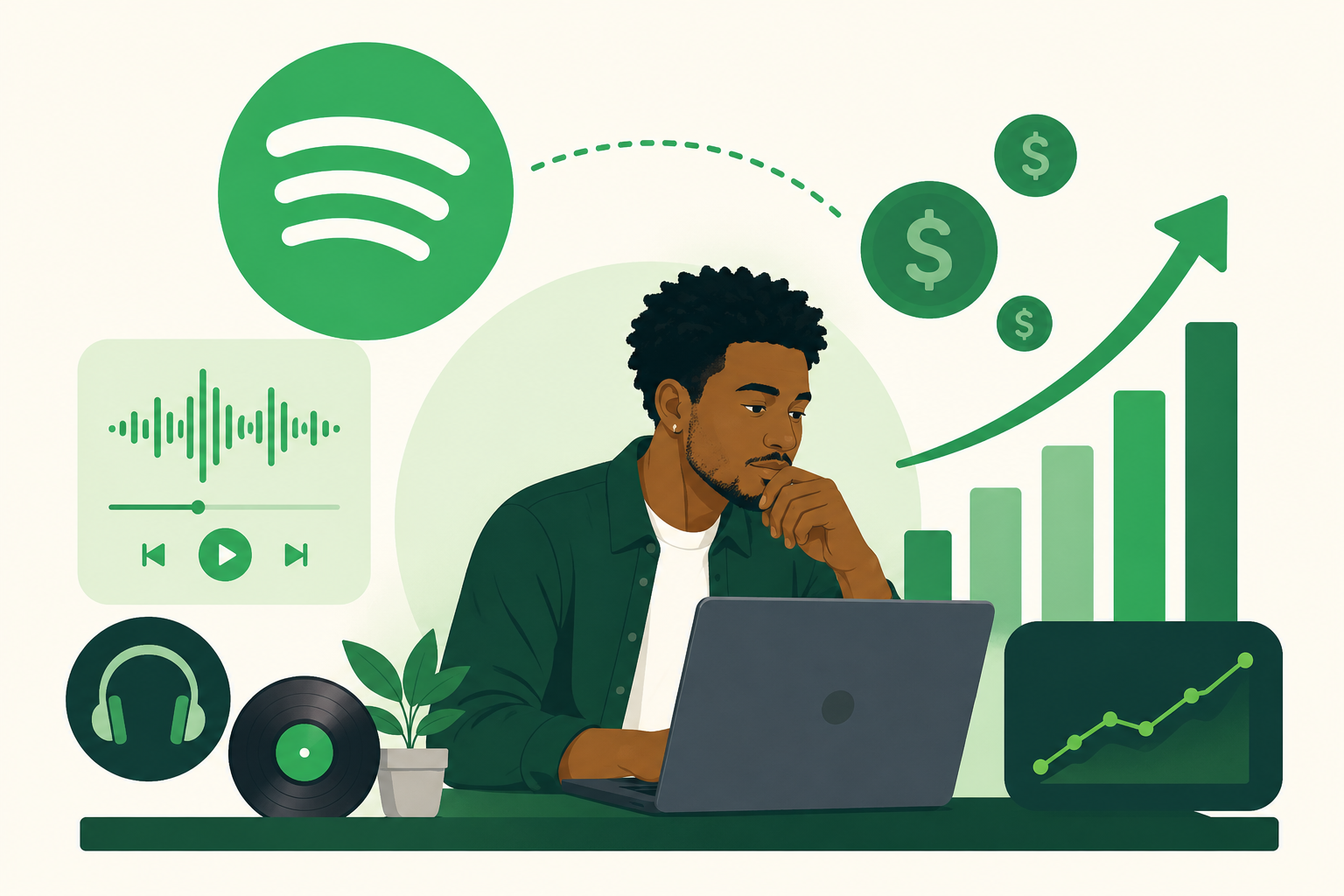
Spotify remains one of the most powerful music platforms in the world, but for independent artists, the big question is still uncomfortable: how much money do artists really earn from Spotify in 2026?
The answer is not as simple as “one stream equals one fixed amount.” Spotify royalties depend on several factors, including listener location, subscription type, total platform revenue, distribution agreements, publishing rights, label splits, and whether the artist owns their masters. That means two artists with the same number of streams may not earn the exact same amount.
Most public estimates place Spotify payouts somewhere around a few dollars per 1,000 streams, but this should be treated as an approximation, not a guaranteed rate. A song with one million streams may generate a few thousand dollars before distributor fees, collaborator splits, producer percentages, taxes, marketing expenses, and publishing divisions are considered.
For independent artists, this is where the reality becomes more complicated. If an artist owns their master recording and distributes through a service that takes a small fee or no percentage, they may keep more of the recording royalty. But if the song involves producers, featured artists, sample owners, songwriters, managers, or label partners, the final amount reaching the artist can shrink quickly.
This is why Spotify success can look bigger from the outside than it feels in the artist’s bank account. A track with 100,000 streams may sound impressive, but the payout may not cover the cost of recording, mixing, mastering, artwork, playlist pitching, video content, ads, and promotion. Streaming income matters, but it is rarely enough by itself for most emerging artists.
Still, Spotify is not useless for independent musicians. In 2026, the platform remains a powerful discovery engine. A strong Spotify presence can help artists grow monthly listeners, attract playlist placements, build audience data, sell tickets, pitch to blogs, reach curators, and prove momentum to managers, labels, sync agents, and brand partners. The artists who benefit most from Spotify usually treat it as one part of a wider ecosystem. They do not rely only on streams. They connect Spotify growth to merch, live shows, YouTube, TikTok, Instagram, Bandcamp, sync licensing, email lists, direct fan support, and physical products. The real business is not just getting streams; it is converting listeners into supporters.
Independent artists should also understand the difference between vanity numbers and useful numbers. A viral spike can feel exciting, but repeat listeners, saves, playlist adds, fan location data, and engagement are often more valuable. A smaller audience that truly cares can be more profitable than a larger passive audience that never buys anything.
In 2026, Spotify earnings are best understood as leverage rather than a complete income plan. For most independent artists, the platform can generate royalties, but the bigger value may come from visibility, audience growth, fan data, and credibility.
So, how much do independent artists really earn from Spotify? Some earn almost nothing. Some earn a modest side income. A smaller group earns serious money. But the artists who build sustainable careers usually understand one truth: Spotify can open the door, but it should not be the entire house.
For independent musicians, the smartest strategy is to release consistently, own as many rights as possible, study listener data, promote outside the platform, and build income streams beyond royalties. In 2026, Spotify can still be useful, but only artists who treat streaming as part of a larger business will have a real chance of turning attention into income.
Enjoyed the read? Consider showing your support by leaving a tip for the writer
Featured


Follow Us







ALBI. designs “HEARTBEAT” around propulsion. The Brisbane/Meanjin artist layers syncopated synths, distorted bass, and punchy drums into an alt-pop structure that feels engineered for movement, while her crunchy, soaring vocal adds a roughened edge to the song’s otherwise polished momentum. Produced by Song Higginson, the track…