
China’s First Artificial Floating Island Marks New Era in Ocean Exploration
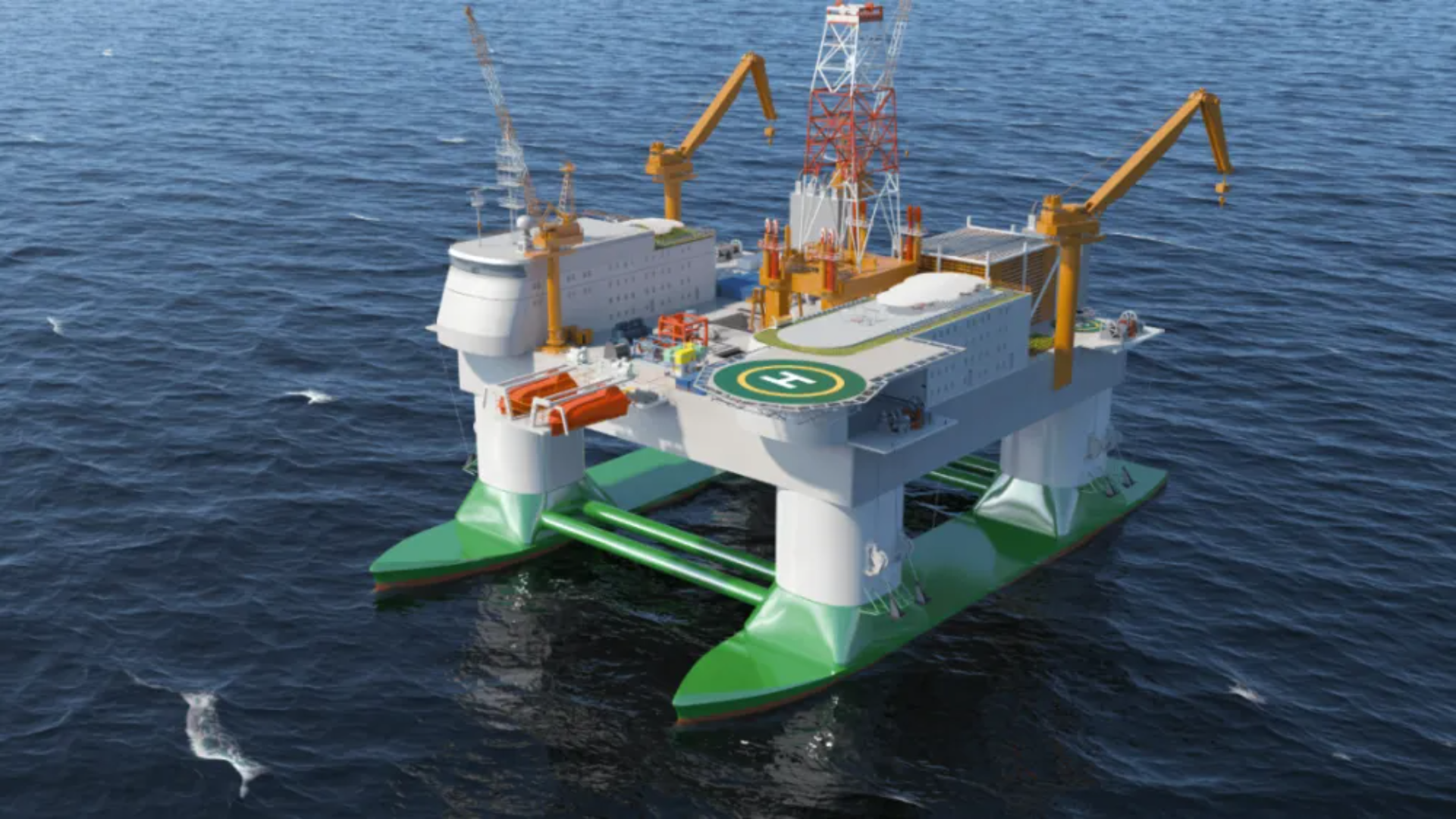
China has launched work on a major new offshore research platform in Shanghai, as the country steps up efforts to expand its capabilities in deep-sea exploration and marine technology.
The project, known as the Open-Sea Floating Island, is being described as a large-scale all-weather research facility designed to operate in harsh offshore environments for long periods. Chinese officials and researchers see it as an important addition to the country’s science and technology infrastructure, with a focus on ocean research, equipment testing, and marine resource development.
Unlike a traditional research vessel or fixed offshore station, the new system is intended to combine mobility with long-duration stability at sea. It will include three main parts: a central floating platform, a group of ship-based laboratories, and land-based support facilities.
At the center of the project is a semi-submersible twin-hull platform, built to remain stable in rough seas while supporting large-scale experiments and heavy deep-sea equipment. Chinese state media reported that the platform will be capable of supporting operations at depths of up to 32,800 feet, allowing researchers to conduct work across a wide range of marine environments.
The facility is expected to give scientists and engineers a more practical setting for testing advanced technologies. Instead of relying mainly on nearshore waters or land-based laboratories, teams will be able to carry out experiments in real offshore conditions, where equipment is more likely to face the pressure, motion, and weather found in actual deployment zones.
The concept was developed by Shanghai Jiao Tong University, which said the project is meant to fill a gap in China’s existing marine research network. While the country already operates deep-sea laboratories, research ships, and submersibles, researchers say there has been a need for a platform that can both travel to designated sea areas and remain there for extended scientific missions.
The floating facility is expected to support a broad range of research and industrial goals. These include testing deep-sea mining systems, offshore oil and gas equipment, and other marine technologies. It may also be used for studies on ocean ecosystems, seasonal marine changes, and scientific questions related to the evolution of life.
Researchers say the platform could also contribute to improved typhoon forecasting, potentially providing data that helps strengthen disaster preparedness in coastal areas.
According to project researchers, the platform is designed to move quickly to a target location like a research vessel, then shift into a stable operating mode through ballast adjustments. Once in place, it is expected to support long-term missions thanks to its large carrying capacity, extended deployment capability, and resistance to severe weather.
The facility is scheduled for completion by 2030. Once operational, it is expected to serve as an open-sea testing ground for a new generation of marine equipment and offshore technologies, underscoring China’s broader push to build stronger long-term infrastructure for ocean science.
Featured









Follow Us







Realated











Sometimes the body clocks in while the mind has already blown past the city limits. San Antonio five-piece Mahogany Drift turns that disconnect into pure voltage on “Headspace,” their debut single and the first introduction to the forthcoming Sentry EP. Heavy electric guitar riffs come in thick…