
Canada’s World Cup Squad Is Here: Why 2026 Could Redefine Canadian Soccer Forever
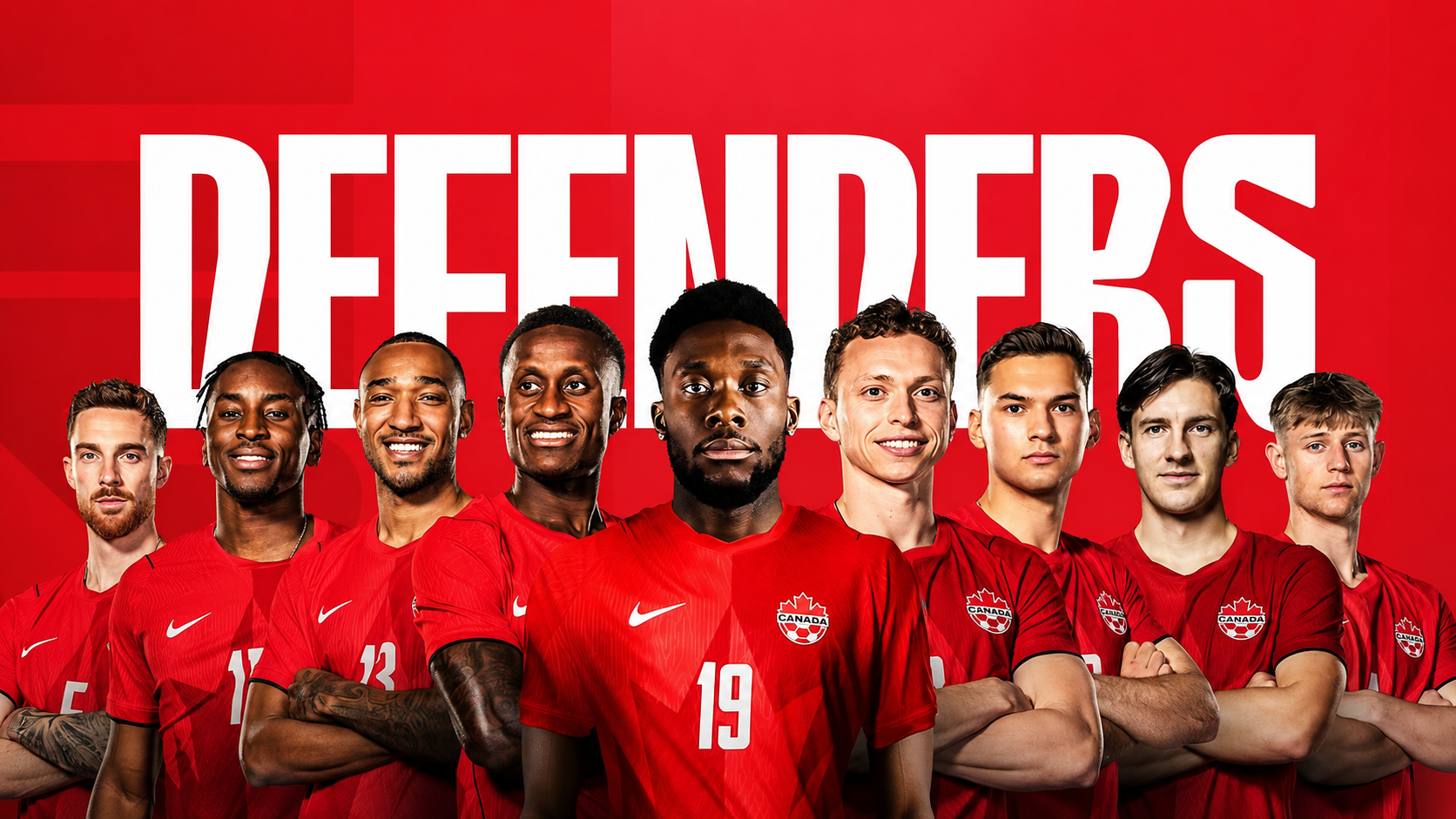
Canada’s FIFA World Cup 2026 squad is finally here, and the announcement feels bigger than a simple roster reveal. It feels like a national checkpoint. For the first time, Canada will enter a men’s World Cup on home soil, carrying not only a 26-player squad but also the expectations of a country that has spent years trying to transform itself from a developing soccer nation into a legitimate global competitor.
Canada Soccer unveiled the 26 players selected to represent the men’s national team at FIFA World Cup 2026, with head coach Jesse Marsch confirming his choices during a primetime special broadcast across TSN, CTV, Crave, and RDS. The presentation itself was symbolic. Player names were displayed on the EdgeWalk at the CN Tower, overlooking Toronto’s skyline and the city’s World Cup stadium. It was not subtle, but it did not need to be. This is Canada’s home tournament, and the country wanted the moment to feel monumental.
The squad includes the expected headline names. Alphonso Davies, Jonathan David, Stephen Eustáquio, Tajon Buchanan, Cyle Larin, Alistair Johnston, Maxime Crépeau, Dayne St. Clair, and several others give Canada a roster filled with experience, athleticism, and international credibility. This is no longer a team built only on hope. It is a team built on players competing across Europe and North America, with enough quality to make the group stage feel like an opportunity rather than a ceremonial appearance.
That is the central difference between Canada’s 2022 World Cup team and this 2026 version. In Qatar, Canada returned to the men’s World Cup after a 36-year absence. The achievement itself was historic, but the tournament exposed the gap between ambition and execution. Canada played bravely, even beautifully in flashes, but left without a point. The lesson was clear: energy alone is not enough at this level.
Now, Canada arrives with more maturity, more tactical sophistication, and a deeper understanding of what World Cup football demands. The 2026 squad is still dynamic and aggressive, but it should also be more seasoned. Several players have gained important club and international experience since the last tournament, and Marsch’s task is to turn that growth into something coherent.
Alphonso Davies remains the emotional and symbolic face of the project. His presence in the squad gives Canada its most globally recognizable star, a player capable of changing a match through speed, creativity, and sheer disruption. When Davies is healthy and expressive, he gives Canada a dimension very few opponents can comfortably manage. His role will be crucial, not only because of what he does on the ball, but because of how much tactical attention he attracts.
Jonathan David may be just as important. As one of Canada’s most reliable finishers, David carries the responsibility of turning promising attacks into actual scoreboard pressure. World Cup matches are often decided by thin margins, and Canada cannot afford to waste its best chances. David’s composure, movement, and ability to attack space will be essential if Canada wants to advance from Group B.
The midfield is another fascinating area. Stephen Eustáquio gives Canada intelligence, tempo control, and international polish. Ismaël Koné brings athletic upside and carrying ability. Jonathan Osorio adds experience and calm. Players such as Mathieu Choinière, Nathan Saliba, Ali Ahmed, and Marcelo Flores give Marsch additional flexibility depending on the opponent and match situation. Canada may not dominate possession against every team, but it has enough midfield variety to avoid becoming one-dimensional.
Defensively, the squad reflects both promise and pressure. Moïse Bombito, Derek Cornelius, Alistair Johnston, Joel Waterman, Luc de Fougerolles, Richie Laryea, Niko Sigur, Alfie Jones, and Davies give Canada options across the back line. However, defending at a World Cup is not only about individual names. It is about concentration, spacing, and surviving moments when the opponent forces uncomfortable decisions. Canada’s defensive structure will be heavily tested, especially against Switzerland’s organization and Qatar’s tournament experience.
In goal, Marsch has selected Maxime Crépeau, Owen Goodman, and Dayne St. Clair. The goalkeeper battle could become one of the most interesting internal storylines. Crépeau brings experience and leadership, while St. Clair offers athletic quality and has been part of the national-team picture for years. Goodman’s inclusion adds youth and long-term intrigue. Whoever starts will need to manage not only shots, but also pressure, distribution, and the emotional temperature of playing a World Cup at home.
Canada’s Group B schedule gives the tournament immediate weight. The opener against Bosnia and Herzegovina on June 12 in Toronto could define the emotional trajectory of the campaign. Canada then faces Qatar on June 18 in Vancouver before meeting Switzerland on June 24, also in Vancouver. On paper, this is not an impossible group. It is difficult, balanced, and tactically varied, but Canada has a realistic path if it plays with discipline.
That realism is what makes this squad reveal so powerful. Canada is not entering 2026 simply as a grateful co-host. It is entering with ambition. The goal should not be merely to score a famous goal or produce one proud performance. The goal should be to advance.
Still, the pressure will be immense. Playing at home sounds romantic, but it can become heavy. Every mistake will be magnified. Every selection decision will be debated. Every substitution will be dissected. Canadian fans are more invested in soccer than ever before, and the national team is no longer operating in obscurity. This group will be watched, judged, celebrated, and criticized in real time.
That is the cost of relevance.
For Jesse Marsch, this tournament is also a defining managerial test. His contract extension through 2030 suggests long-term belief in his leadership, but the 2026 World Cup will shape public perception of his project. He has inherited a talented generation, but talent alone does not guarantee tournament success. Marsch must find the right balance between aggression and control, pressing and patience, emotion and calculation.
The squad also reveals how far Canadian soccer development has come. Players on the roster grew up across Ontario, Quebec, British Columbia, Alberta, Nova Scotia, and beyond, with roots in local clubs, immigrant communities, MLS academies, European systems, and Canadian youth pathways. The team is not just representing a country geographically. It is representing the complexity of Canadian identity itself.
That may be the most meaningful part of this World Cup squad. Canada’s rise in men’s soccer has never been purely technical. It has been cultural. The sport has always existed in Canadian communities, but now the national team has given that passion a larger stage. The 2026 squad is the product of years of grassroots work, diaspora influence, professional growth, and a generation that no longer sees Canada as an outsider in world football.
Whether this becomes Canada’s greatest men’s soccer moment will depend on what happens in June. The roster is strong, but the World Cup is merciless. Reputation means little once the whistle blows. Canada will need sharp finishing, disciplined defending, smart coaching, and emotional control. It will need stars to perform and role players to deliver in unglamorous moments.
But for now, the unveiling of the squad marks the beginning of something historic. Canada has named the players who will carry a nation into its first home men’s World Cup. The names are official. The stage is enormous. The expectations are real.
Now the question is no longer whether Canada belongs at the World Cup. The question is how far this team is ready to go.
Enjoyed the read? Consider showing your support by leaving a tip for the writer
Featured








Follow Us























With “The Day I Said I'd Follow,” American artist Lilly Amaris transforms a deeply personal declaration of faith into a bright, contemporary indie-pop statement shaped by warmth, movement, and emotional clarity. The track leans…