
AI-Powered Travel Scams: How Cybercriminals Are Using Real Booking Details to Fool Tourists
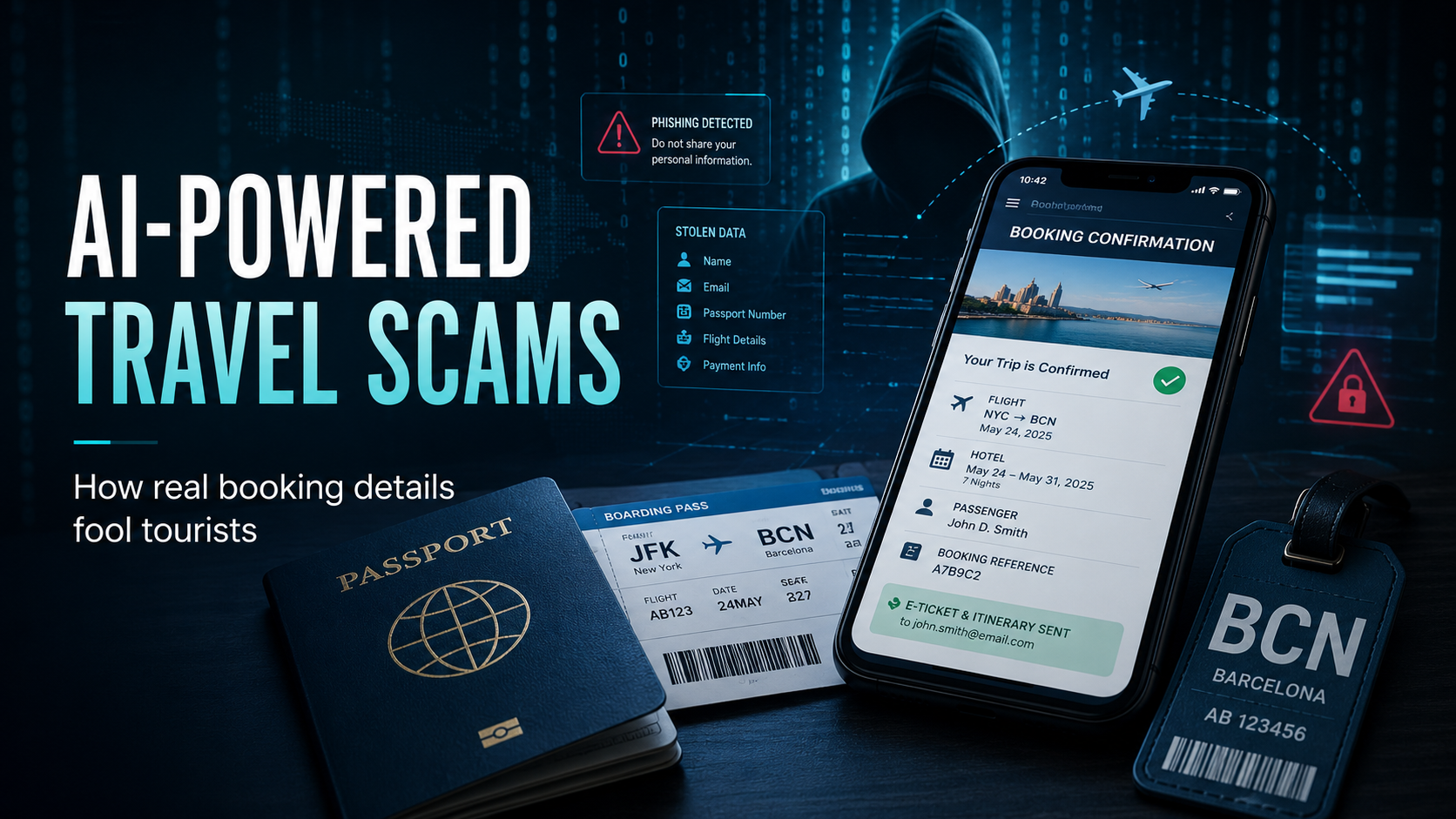
AI-powered travel scams are becoming one of the most alarming threats facing tourists in 2026. Unlike old-fashioned scam emails filled with spelling mistakes and suspicious promises, the newest travel scams look disturbingly believable. Cybercriminals are no longer relying only on fake vacation deals or imaginary hotel listings. They are now using real booking details to convince travelers that a fraudulent message is legitimate. This is what makes the new wave of travel fraud so dangerous. A tourist may receive a message that includes their real hotel name, check-in date, reservation number, destination, or personal information. The message may claim there is a payment issue, identity verification problem, card failure, or urgent booking update. Because the details appear accurate, the victim is more likely to trust the request.
Artificial intelligence makes the deception even stronger. Scammers can use AI tools to write polished emails, translate messages into different languages, imitate customer service tones, create fake travel websites, generate realistic property photos, and automate conversations through chatbots. The result is a scam that feels less like spam and more like a normal interaction with a hotel, airline, or booking platform. One common version of the scam involves fake messages pretending to come from a hotel or travel website. The traveler is told that their reservation may be cancelled unless they confirm payment through a link. That link leads to a fake page designed to steal credit card details, login credentials, or personal information. In some cases, scammers may also contact tourists through WhatsApp, text messages, or email, making the fraud feel even more immediate.
The psychology behind these scams is simple: urgency plus familiarity. When tourists are preparing for a trip, they are often busy, emotional, and afraid of losing their reservation. If a message uses real booking details and warns that a hotel stay could be cancelled, many people react quickly before thinking carefully. Travelers should be especially cautious of any message asking them to pay again, verify a card, confirm identity, or click an external link. Even if the message contains accurate reservation details, that does not automatically make it safe. The best response is to open the official booking app or website directly, not through the link provided. Travelers can also call the hotel using a verified phone number from the official website.
Tourists should also avoid sharing passport details, credit card numbers, or login information through messaging apps unless they are absolutely certain the request is legitimate. Strong passwords, two-factor authentication, virtual cards, and credit card alerts can add extra protection. For the travel industry, this issue is a serious warning. Hotels, vacation rentals, and booking platforms must strengthen cybersecurity, train staff against phishing, protect customer data, and improve fraud detection. A single compromised hotel account can create a chain reaction affecting dozens or hundreds of guests.
AI-powered travel scams prove that online fraud is entering a more personalized era. The danger is no longer just a fake offer that looks too good to be true. The danger is a fake message that looks almost perfectly real.
In 2026, tourists need to treat every unexpected travel message with suspicion, even when it includes accurate details. The safest rule is simple: never trust the link, verify through the official platform, and confirm directly before making any payment.
Enjoyed the read? Consider showing your support by leaving a tip for the writer
Featured









Follow Us



















Laeky’s “caller waiting” is built from emotional exposure, but its production refuses to collapse into fragility. The Australian artist threads syncopated acoustic guitar riffs through understated indie-pop drums, subtle bass, and soft synth textures, creating a frame that feels both restless and suspended. Her sultry, yearning vocal…