
Leon Thomas Is Quietly Becoming One of R&B’s Most Important Architects

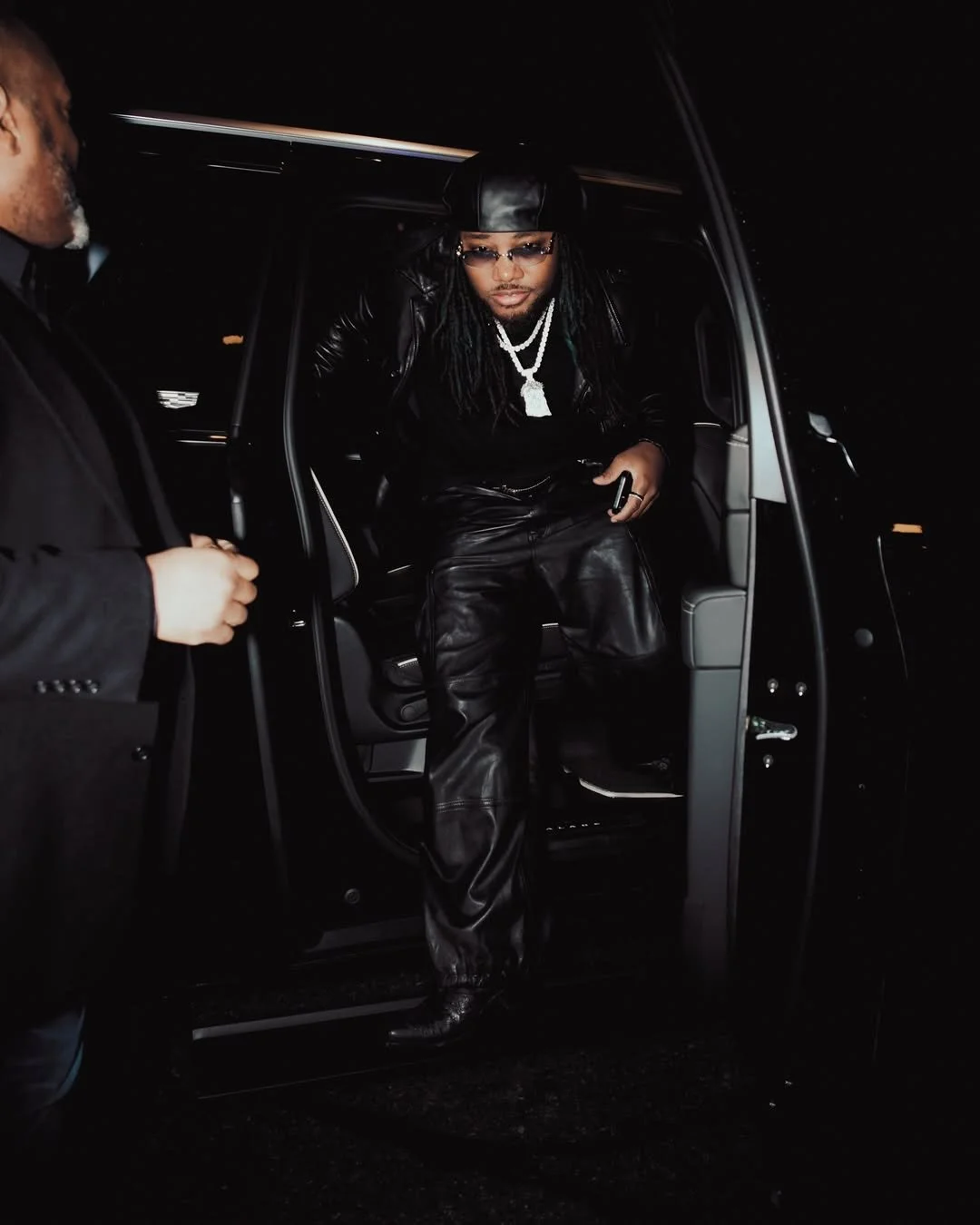
Leon Thomas is not entering R&B through the front door. He has been inside the house for years, quietly rewiring the lights. Before the wider public began treating him like one of the genre’s most compelling new stars, Thomas had already built a résumé that stretched across songwriting rooms, production credits, television fame, Broadway training, and Grammy-winning records. Now, with the success of MUTT, his expanding solo catalogue, and fresh industry recognition from ASCAP, the Brooklyn-born singer, songwriter, producer, and multi-instrumentalist is no longer just “behind the scenes.” He is becoming one of modern R&B’s most important architects.
That word — architect — feels more accurate than “breakout star.” A breakout star appears suddenly. Leon Thomas did not. He accumulated. He studied. He engineered. He spent years shaping records for other artists before the public fully understood that the same person helping sculpt contemporary R&B’s texture also had a voice, an artistic identity, and a personal mythology of his own.
Thomas’s influence has already touched some of the biggest names in popular music. He has written and produced for artists including Ariana Grande, Drake, Chris Brown, Kehlani, Post Malone, and SZA, while also earning major recognition for his work on SZA’s Grammy-winning hit “Snooze.” ASCAP recently announced that Thomas will receive its Vanguard Award, an honour given to artists helping shape the future of music, further confirming what many R&B listeners have been noticing: his fingerprints are becoming increasingly difficult to ignore.
The fascinating thing about Leon Thomas is that his rise does not feel like a carefully manufactured industry campaign. It feels more subterranean, almost mycelial. He has been spreading through the roots of contemporary R&B, soul, hip-hop, and pop, connecting worlds that often pretend to be separate. His music understands the velvet discipline of classic R&B, but it refuses to behave like museum music. It bends toward rock, psychedelia, funk, hip-hop, and left-field soul without losing its emotional heat.
That artistic duality became especially clear with MUTT, his 2024 album released through EZMNY Records and Motown. The project pushed Thomas from respected creative insider to genuine front-facing force, supported by singles including “Mutt” and “Far Fetched,” with guest appearances from Masego, Wale, Ty Dolla $ign, and Baby Rose. Its expanded deluxe edition, MUTT Deluxe: HEEL, arrived in 2025 and helped extend the project’s cultural lifespan rather than treating it like a disposable streaming-era release.
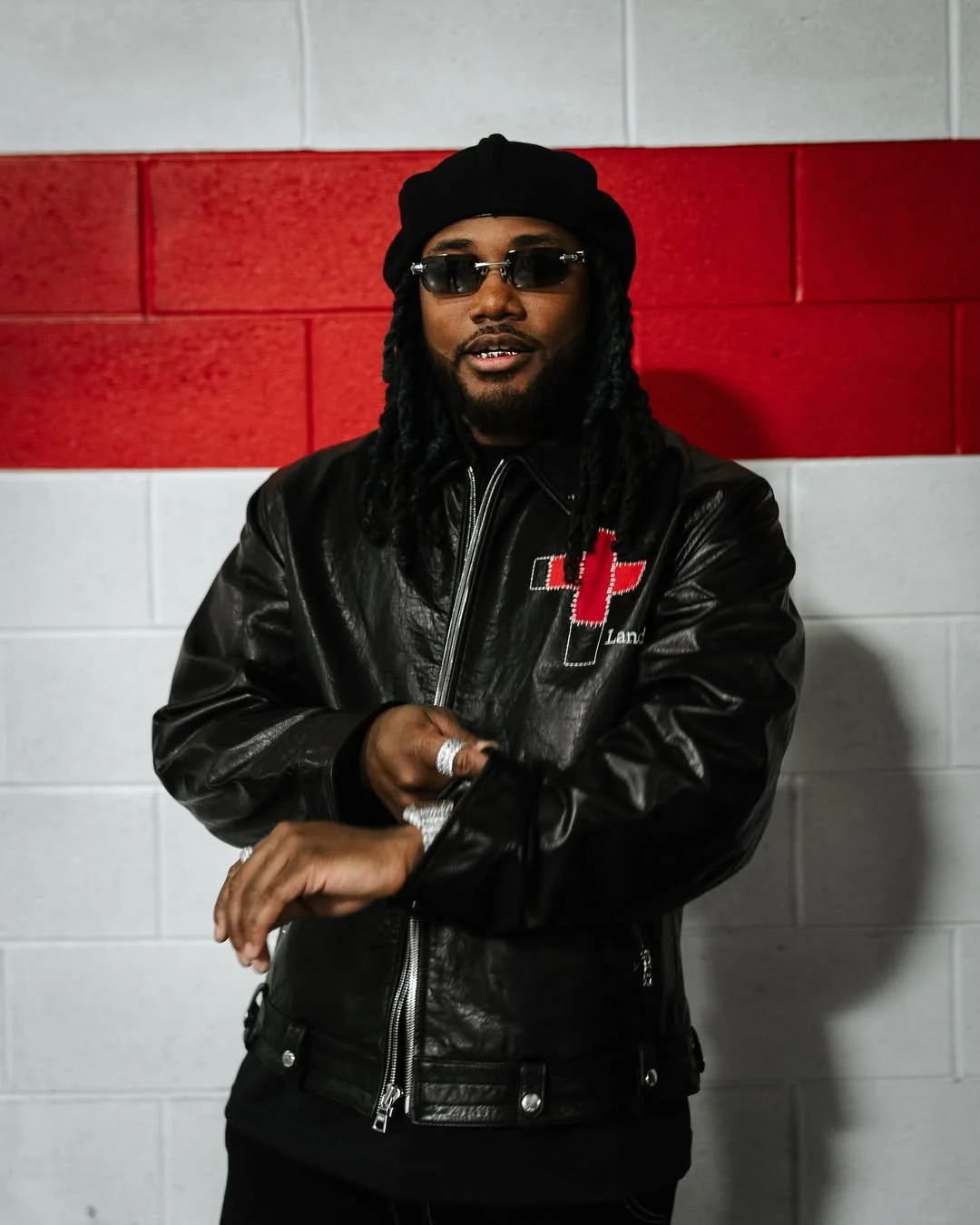
What made MUTT resonate was not simply its smoothness. Smooth R&B is abundant. Thomas’s advantage is that he makes smoothness feel unstable. His songs often carry a bruised elegance, a friction between romance and ego, softness and appetite, technical precision and emotional mess. He can sound wounded without becoming passive, seductive without becoming hollow, experimental without drifting into self-indulgence. That tension is where his architecture becomes visible. Leon Thomas understands structure. He knows how to build a hook that feels immediate without sounding cheap. He knows how to leave enough space in a production for a vocal to breathe. He knows when live instrumentation should feel warm and when it should feel slightly dangerous. His best music does not chase nostalgia; it metabolizes it.
This is partly why his evolution from child actor to serious musician feels less like a rebrand and more like a revelation. Many mainstream listeners first encountered Thomas through Nickelodeon’s Victorious, but reducing him to that origin story misses the larger point. His background in performance, theatre, and television gave him a rare kind of musical dramaturgy. He knows how to inhabit a character, but he also knows how to step outside that character and produce the entire scene.
In interviews, Thomas has openly embraced a more genre-fluid version of R&B, drawing from figures such as Prince, D’Angelo, Babyface, and George Clinton while also positioning himself as a kind of R&B rock star for the current era. That mixture of lineage and defiance matters. He is not rejecting tradition. He is refusing to let tradition become a cage.
The timing of his rise is important as well. R&B has spent the last decade in a strange, often misunderstood position. On one hand, the genre has never disappeared; its DNA is everywhere in pop, rap, Afrobeats, alternative music, and electronic production. On the other hand, pure R&B artists often have to fight for mainstream visibility unless they blur themselves into other categories. Thomas seems aware of that contradiction. Rather than begging the industry to define him neatly, he makes music that treats R&B as a living organism.
That is why calling Leon Thomas one of R&B’s most important architects does not feel exaggerated. He is not merely contributing vocals. He is shaping language, mood, arrangement, and sonic expectation. His work as a songwriter and producer has already helped other artists locate emotional clarity, while his solo music is now giving him the space to show the full blueprint. His recent recognition also suggests that the industry is finally catching up. ASCAP’s decision to honour him with the Vanguard Award places him among creators viewed as future-shaping rather than merely successful. That distinction matters. Success can be numerical. Influence is structural.
Thomas is increasingly being recognized not just for what he has achieved, but for what his work makes possible. There is also something refreshing about the quietness of his ascent. In an era where many artists are pressured to become full-time internet spectacles, Thomas’s credibility comes from craft. His career does not depend on controversy, meme theatrics, or excessive self-mythologizing. The songs are doing the proselytizing. The credits are speaking. The arrangements are making the argument.
For emerging R&B artists, his path offers a valuable lesson: authorship can be layered. You can be a writer, producer, vocalist, arranger, performer, and conceptualist without flattening yourself into one marketable label. Thomas represents the modern musician as a complete ecosystem — someone who can understand the machinery of the industry while still protecting the mystique of the music.
Of course, his next challenge will be longevity. The public loves a breakthrough, but architecture is judged over time. If Thomas continues building with the same mixture of sophistication, risk, and melodic instinct, he could become one of the defining R&B figures of this decade — not because he is the loudest name in the room, but because more and more rooms are beginning to sound like him.
Leon Thomas is quietly becoming one of R&B’s most important architects because he understands something many artists forget: a genre does not evolve only through stars. It evolves through builders. Through people who know where the walls should be broken, where the windows should be widened, and where the foundation must remain sacred.
Right now, Leon Thomas is doing all three.





Connect With Us

Featured





There are easier ways to go viral than being mistaken for Druski, but Paul Bill Jr. is making the situation work in his favour. The singer-songwriter has been getting increased attention across social media after clips from his “Prettiest Girl In The Room” music video started circulating online. The reason was almost comically immediate: a remarkable number of viewers thought they were watching…