
Toronto, Canada Band Spring Colours Push Digital-Emo Forward on The Courage Cloak
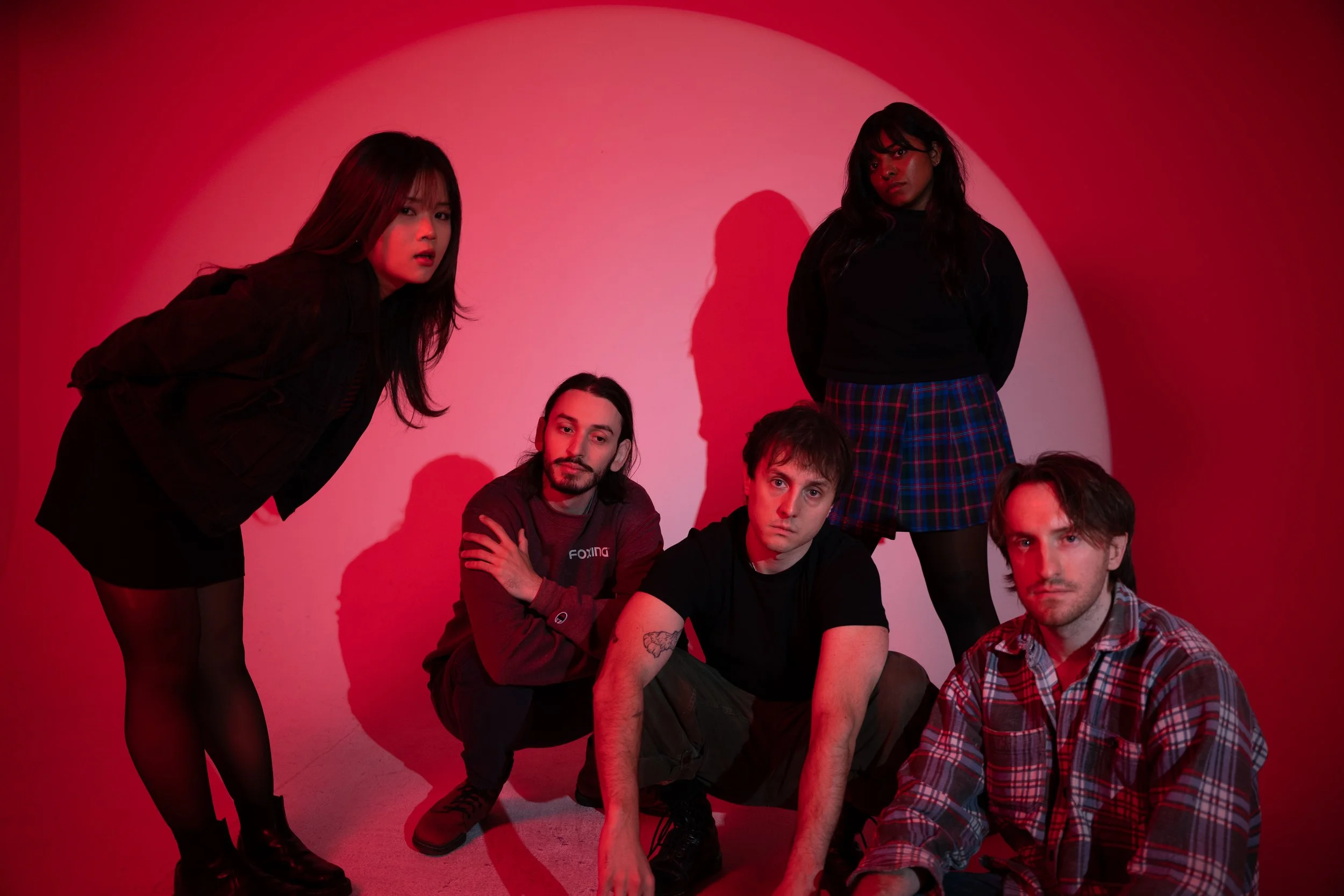
A record can behave like a coat of armour: impressive from a distance, cumbersome once the wearer remembers there is a body underneath. Toronto, Canada band Spring Colours bring that tension into relief on “The Courage Cloak,” a ten-track album released March 27, 2026, following a steady grassroots rise built through loud rooms, extensive East Coast touring, and a sold-out hometown release show. The band calls its language “digital-emo,” yet the record reaches well beyond a single tag. Early-2000s indie sleaze, late-2000s indie pop, fourth-wave emo, chiptune abrasion, noise-pop colour, and occasional heavy-metal weight all brush against one another without collapsing into pastiche. That hybridity gives Spring Colours a useful instability: the songs can glow, snarl, flicker, or suddenly retreat. The album’s governing image is the “courage cloak” itself, a red, angry performance of toughness that disguises a quieter need for connection. Rather than romanticising bravery, the band examines what happens when defence becomes costume, habit, and eventually confinement.
The production gives that idea a physical architecture. “The Courage Cloak” was recorded, mixed, and mastered across Toronto in 2025, beginning with drums and percussion engineered and produced by Calvin Hartwick at Dreamhouse Studios. Lukas Lyjak then handled bass, guitars, lap-steel, synthesizers, programming, and piano in a basement setup, while Greg Giesbrecht recorded vocals and reamping at Patchwork Sound. Giesbrecht mixed tracks 1–5, 7–8, and 10; Lyjak mixed 6 and 9; Noah Mintz mastered the record at Lacquer Channel Mastering. Those varied spaces are audible in the album’s personality. Upbeat drums often arrive with a forward shove, while electric guitars move between indie-rock incision and heavier, almost metallic pressure. Synths rarely behave as decoration; they interrupt, destabilise, or widen the frame. Against that machinery, the vocals can rise above the mix or roughen into grit, making vulnerability feel less like confession than friction. The result is polished enough to reveal detail, yet carries the scuffed edges of songs that learned how to breathe onstage before they were fixed to tape.
Track-by-Track Highlights
“In the Jaws of Home” opens with a church-like organ before tearing into a denser rock body of guitar, bass, and pumping drums; its religious imagery and repeated refusal to “go back” make home sound less like sanctuary than a mouth lined with teeth. “Bracelet Song” follows with hi-passed, syncopated guitars and a propulsive backbone, but its gentler, layered bridge is where the song blooms, turning reincarnation into a tender anxiety about whether love can survive infinite cycles. “Armour Trading” begins in synthetic light, then snaps into melancholic indie rock, with Lukas Lyjak and Suzie Ryu trading gritty vocal presence over bright drums and bruised guitar layers; lyrically, its exchanged armour becomes a precise metaphor for two people defending themselves while standing on the same side. “Hobbyist” is the record’s first true shove toward heavy metal and punk, driven by muscular guitars, hard-charging drums, and a blustering vocal attack. Beneath that force, however, sits a darker study of compartmentalisation, emotional damage, and the instinct to brace before the structure cracks. “I’ll Be a Moon to You” races with unmistakable 2000s rock nostalgia, its heavy guitars and urgent drums softened by a surprisingly tender bridge that lets melancholy seep through the velocity. The lyrics turn intimacy into orbit, roots, ghosts, and celestial collision, giving dependence both romance and unease. “A Brief Moment in the Great Pendulum” then removes the voice entirely. Spacey, UFO-like melodic gestures and electronic details make the instrumental feel like the album’s joker card, a suspended corridor between emotional rooms rather than a conventional rock interlude. Finally, “Femur in the Dust (Who Told You There’s a Better Life!?)” detonates that suspension with fast, syncopated synths before guitars, drums, soaring vocals, and barely perceptible ethereal layers rush into view. Its exhaustion is catchy rather than defeated, and the accompanying medieval battle imagery—soldiers, skeleton monsters, and recurring red textures—extends the album’s fascination with armour into literal costume. Seven tracks are enough to reveal Spring Colours’ central gift: making defence mechanisms sound exhilarating without pretending they are painless.
Those seven tracks reveal the album’s essential design without emptying every room in the house. Spring Colours understand sequencing as emotional architecture: tension builds, fractures, softens, then reappears wearing a different face. The remaining three songs are better encountered without advance explanation, particularly because The Courage Cloak works less as a collection of isolated moments than as an unfolding negotiation between noise and honesty. Its defining quality is not simply heaviness, nostalgia or its proximity to fifth-wave emo; it is the band’s willingness to let tenderness survive inside distortion. For listeners drawn to records where huge guitars can coexist with synth glow, existential writing and sudden pockets of softness, Spring Colours offer a debut carrying both bruising energy and emotional precision. The cloak may be the album’s central symbol, but the music becomes most affecting whenever that fabric slips. That tension gives the whole record pulse, bruises, and a peculiar sense of grace.
Enjoyed the read? Consider showing your support by leaving a tip for the writer
TRENDING NOW





CONNECT WITH US






FEATURED



Colombian multidisciplinary artist Laru builds “Contra el río” around a compelling contradiction: resistance expressed through calm. The experimental Afro-fusion single moves with a laidback pulse, yet its internal design suggests constant forward motion. Gentle drums carry a tribal texture without overwhelming…