
Haven West Veraguas Challenges Certainty with Raw Intimacy on The Black and White EP


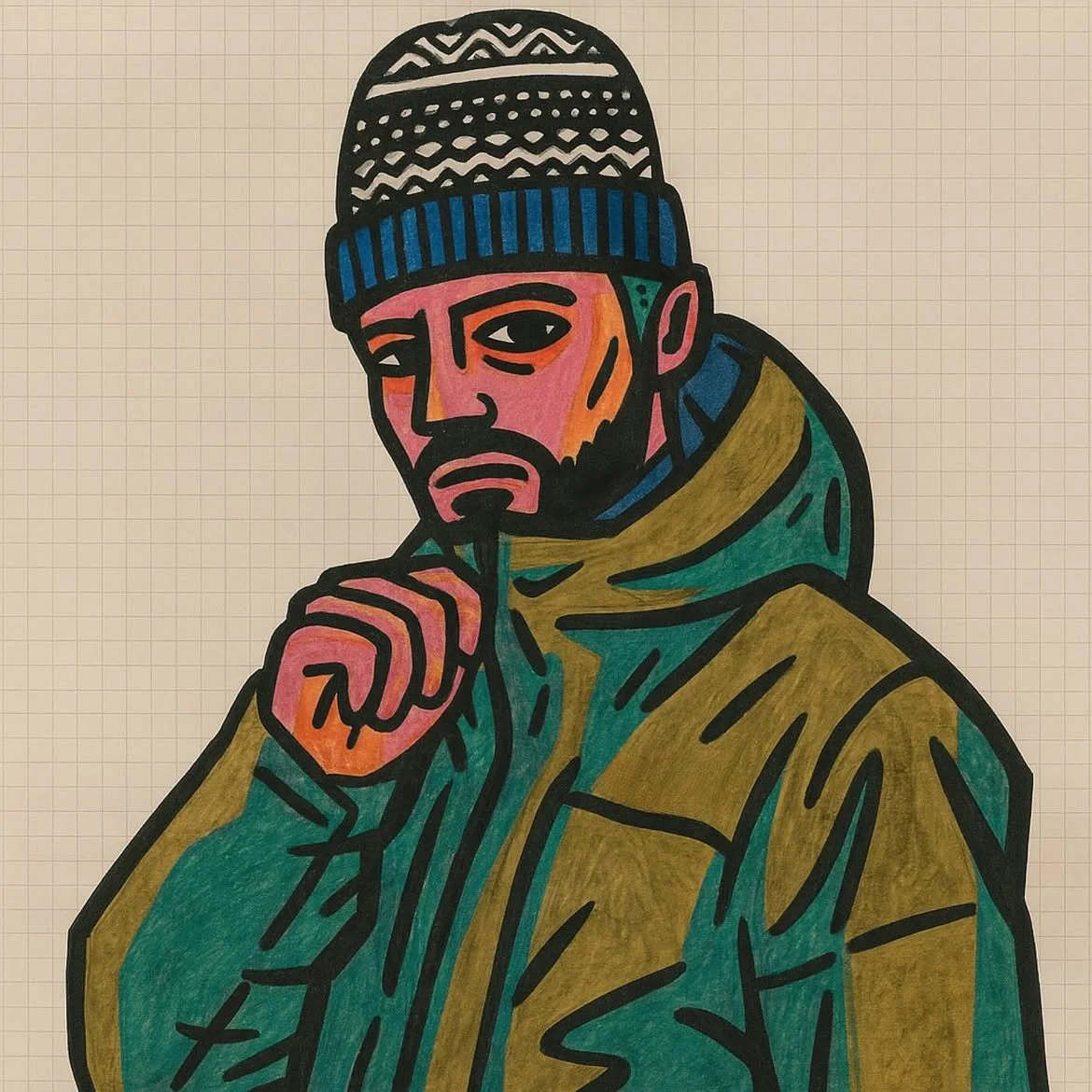
A compass doesn’t panic when north feels complicated—it simply keeps pointing, even while the sky argues with itself. Haven West Veraguas seems to share that stubborn instinct on The Black and White EP, a 7-song Alternative Folk dispatch that treats certainty as a suspicious luxury. This project doesn’t beg to be “liked” in the easy, playlist-friendly sense; it wants to be considered. Indeed, the EP is built around a sharp, almost philosophical irritation: our modern appetite for clean answers, clean labels, clean enemies—anything that saves us from the exhausting work of nuance.
Musically, The Black and White EP is cohesive without being predictable. The production leans on acoustic guitar as its spine, with tender drum-work, soft pads, and occasional “crowd” textures that make the songs feel lived-in rather than performed. Haven’s voice is the real architecture, though—raw, slightly raspy, often unpolished on purpose, and sometimes doubled so it feels like the room is singing with him rather than staring at him. In fact, the EP’s greatest strength is how it turns intimacy into a political gesture: it’s hard to demonize strangers when a singer is breathing doubt into your ear like a confession.
The opener, “An existential crisis at 3PM in the afternoon,” arrives with a gentle riff and a human, unguarded vocal delivery—half diary entry, half late-afternoon spiral. The arrangement is deceptively simple: cozy drums slip in, backing vocals appear like distant witnesses, and suddenly it feels less like a track and more like a small concert happening inside your chest. However, what truly lands is the emotional timing: the song captures that strange age-warp feeling—yesterday was childhood, tomorrow is aching knees, and today is confusion with good lighting.
“All I’ve Got” continues the tonal continuity, but with more dynamic movement. The acoustic build stays consistent, yet the song oscillates between two rhythmic moods without derailing, which is harder than it sounds; it’s the difference between a sharp turn and a car crash. Moreover, the slight “duet” doubling on the vocals creates a communal sensation, as if Haven isn’t trying to impress you—he’s trying to reach you. It’s folk music with its sleeves rolled up.
Then “I HATE CONSUMERISM” kicks the door a little wider. The pop-rock edge adds bite, and the drums feel more animated, as if the EP finally lets its frustration show teeth. The message is blunt—society as a consumption treadmill—but the delivery stays tethered to the project’s sonic palette: acoustic textures, atmospheric pads, and vocals that remain more personal than preachy. In addition, it’s one of the moments where the EP’s politics feel less like a headline and more like a nervous system reacting to overload.
“Optimistic nihilism” is the record’s quiet spell, almost minimal in its arrangement—guitar and voice, with space as the third instrument. It carries a dreamy, indie-film softness, the kind of track that makes ordinary life feel cinematic: walking home, thinking too much, feeling almost okay about it. Indeed, it’s a song that offers survival as a strange form of romance—keep going, even if meaning shows up late.
The fifth track, “Black And White,” flips the palette beautifully: piano replaces guitar, and flute notes drift in with a fragile elegance before cello and classical accents thicken the emotional air. Haven’s vocals grow more assertive as the arrangement blossoms, turning nostalgia into something heavier than memory—almost a negotiation with the past. It’s poignant, cinematic, and arguably the EP’s most textural moment.
Still, The Black and White EP isn’t flawless—and it doesn’t pretend to be. The concept is boldly experimental, and at times the melodic direction can feel slightly scattered, as if the project is sprinting between ideas before one fully settles. Additionally, a few moments sacrifice “catchiness” for intention, meaning the hooks don’t always hit with instant impact. Yet that’s also part of its personality: this EP isn’t sugar, it’s nerve.
By the time the remaining songs expand the emotional vocabulary—moving into melancholic reflection and generational frustration—you realize Haven West Veraguas isn’t simply writing folk tunes. He’s building a mirror that refuses to flatter. And when it reflects you back—messy, uncertain, divided—you don’t feel condemned. You feel awake.
Enjoyed the read? Consider showing your support by leaving a tip for the writer
TRENDING NOW







CONNECT WITH US





FEATURED



Rob Aspinall builds “Keeps On” from restraint rather than release, letting its emotional weight gather slowly inside a mellow alt-soul framework. The Melbourne artist, multi-instrumentalist and producer shapes the track with soft piano keys, gentle guitar and bass phrases, ethereal pads, and relaxed R&B drums…