
Woonsocket Band Favourite Armchair Reject Polished Perfection With the Unfiltered Album “Favourite Armchair”

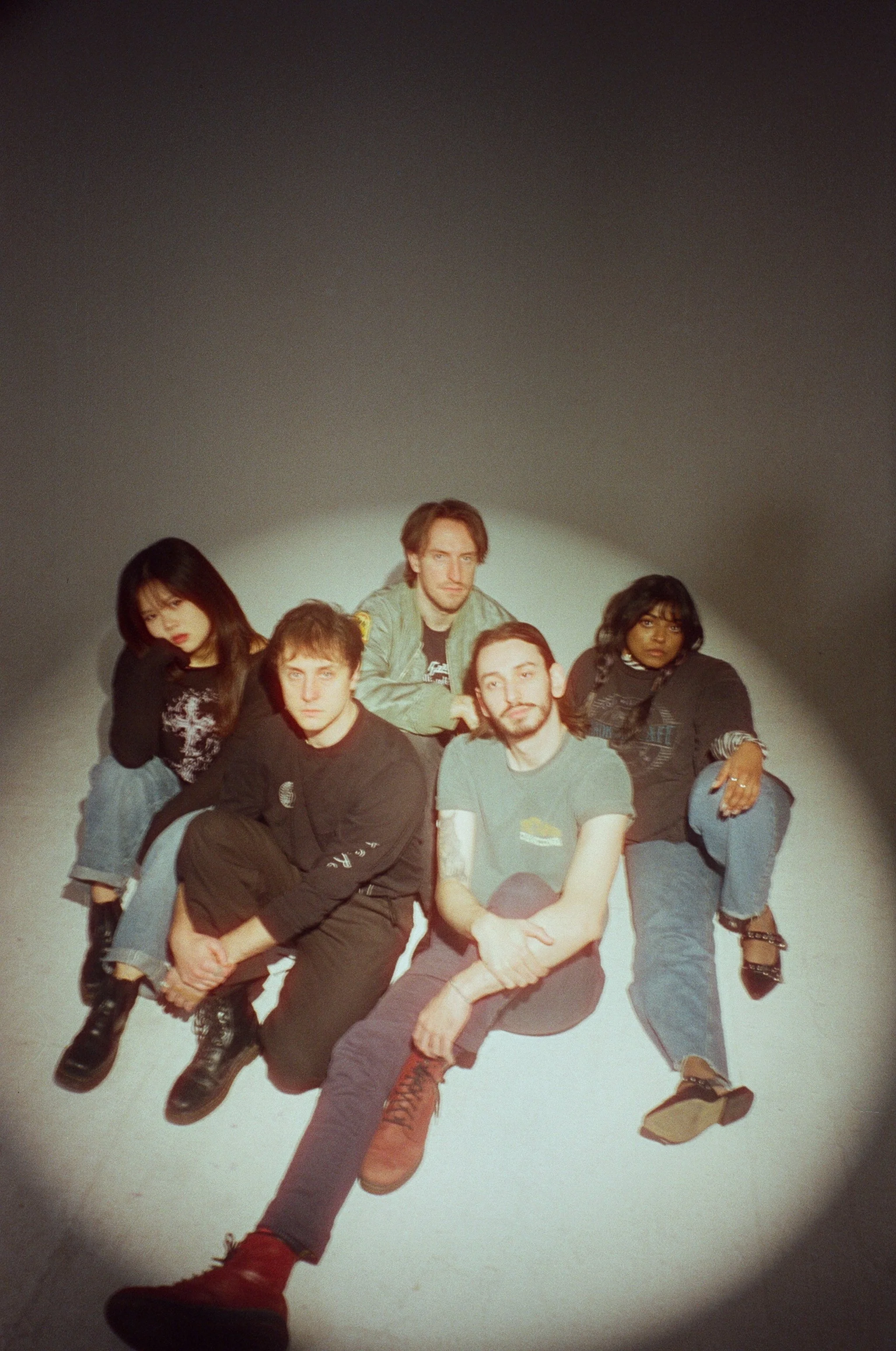
American Indie Band Favourite Armchair’s self-titled album “Favourite Armchair” unfolds with the kind of rough-grained Americana and country folk spirit that feels increasingly rare in a music landscape polished to near-invisibility. This is not a record chasing pristine surfaces, radio symmetry, or instant commercial comfort. It is loose, eccentric, imperfect, and deeply human. Across its 15 songs, the band, originally from Woonsocket and composed of Trevor Chrisholm, Dan Roda, Matthew Riemer, Shaun Dubreuil, Raime Masket, Dave Maki, Bea Roda, Ben Chisholm, Daniel Chisholm, Leighton Brown, Bruce Brosnan, Scott Dianis, and Dave Tierney, leans into a homemade sonic identity where acoustic guitar, banjo, piano, mandolin, Xylophones, Bucket-Railing, flutes, harmonica, soft percussion, and wandering vocal layers become part of a living, sometimes unstable conversation. The result is unconventional by design. Some melodic choices feel difficult on first contact, and certain performances sit outside conventional smoothness, yet that same refusal to overcorrect gives the album its strange magnetism. Indeed “Favourite Armchair” sounds like musicians testing the room, trusting instinct, and allowing the recording to preserve the fingerprints of the moment.
The production is the album’s most defining feature, largely because it does not behave like standard production at all. Rather than sanding down the performances, the mixes keep their scuffs visible. Instruments overlap without always locking into a clean grid, harmonies occasionally drift, and the vocals often feel more emotionally present than technically controlled. However, this rawness is not empty negligence; it becomes the album’s central argument. At a time when artificial, hyper-processed material keeps flooding digital spaces, Favourite Armchair pushes back by sounding unmistakably handmade. The arrangements can be awkward, but they are never sterile. The acoustic textures have a tactile quality, the percussion often feels casual and room-born, and the folk instrumentation gives the album a rustic body even when the melodies become unsettled. Not every idea lands with precision, but the record’s charm comes from hearing the band wrestle with shape, mood, and accident in real time.
Track-by-Track Review of the First 7 tracks on the album
“Overflow” — The opener introduces the album’s raw personality immediately, with melodies that feel strained but emotionally sincere. Its dull-edged riffs, tired vocal delivery, and uneven harmonies make it difficult, yet the track succeeds as a statement of honest imperfection.
“In the Heat” — Built on melancholy folk textures, this track lets banjo, mandolin, and relaxed drums move through a morose atmosphere. The vocal feels odd and unsteady, but that instability gives the song its bruised, human character.
“Mystery Pop” — Beginning with a baby’s laugh, the track becomes one of the album’s warmer and more playful moments. Its loose performances, audible imperfections, and barely legible lyrics make it feel like a private recording accidentally left beautifully intact.
“Theme from Oxygen Concentrator, Pt. 1” — Soft acoustic riffs and calming percussion create a gentle atmosphere beneath a spoken-word lead performance. The humming and melodic coordination remain rough, but the piece has a meditative, sketchbook-like charm.
“A Brazen Accounting For” — This track gives the spoken performance a more engaging instrumental backdrop, with a lightly funky groove shaping the atmosphere. Its closing harmonized singing feels raw and exposed, turning technical fragility into emotional texture.
“Will Optometry Overcome?” — Instrumentally, this is one of the album’s strongest early cuts, playful and more coherently assembled than several surrounding moments. The off-key vocal delivery may divide listeners, but the naturalness of the performance strengthens the album’s anti-synthetic appeal.
“Red Pony” — Cleaner, warmer, and more emotionally focused, this track brings a stronger sense of balance to the record. The harmonica, acoustic riffs, subtle percussion, and more tuned choral touches help it stand out as one of the album’s most accessible and affecting passages.
Ultimately, Favourite Armchair is not an album built for everyone, and that is part of its identity. Its imperfections are too visible to ignore, but they are also too personal to dismiss. The band uses country folk and Americana not as polished genre costume, but as a flexible language for experimentation, looseness, humor, melancholy, and instinctive performance. Listeners looking for refined vocals, clean hooks, and seamless mixing may struggle with its rough edges. However, those drawn to organic records with personality, risk, and visible humanity may find something oddly refreshing here. Favourite Armchair proves that music does not always need to be flawless to feel alive; sometimes, the cracks are exactly where the character enters.
Enjoyed the read? Consider showing your support by leaving a tip for the writer
TRENDING NOW








CONNECT WITH US






FEATURED



Colombian multidisciplinary artist Laru builds “Contra el río” around a compelling contradiction: resistance expressed through calm. The experimental Afro-fusion single moves with a laidback pulse, yet its internal design suggests constant forward motion. Gentle drums carry a tribal texture without overwhelming…