
Vince Staples’ Cry Baby Album Proves His Independent Era Is Already Sharper Than Ever

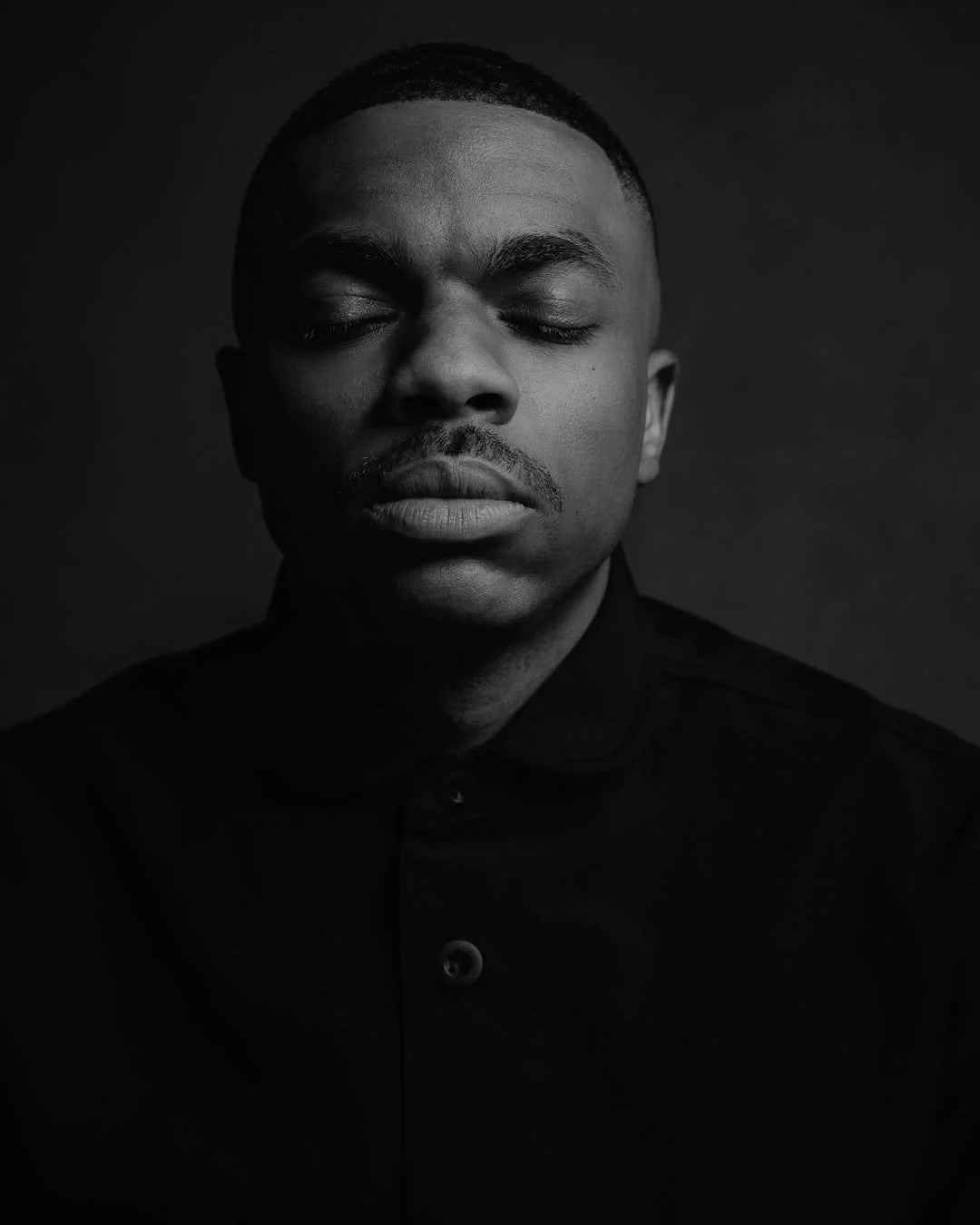

Vince Staples has never needed excess to make his point. His new album Cry Baby arrives with only 10 tracks, but that compact structure feels intentional rather than slight. Released June 5, 2026, the project marks Staples’ first album with Loma Vista and signals a new chapter after his run with Def Jam and Blacksmith. For an artist whose music has always balanced deadpan humour, social unease, street-level memory and philosophical abrasion, Cry Baby feels like another carefully cut document from one of rap’s most observant minimalists. The title itself is perfect Vince Staples: childish on the surface, sinister underneath. Cry Baby sounds like an insult, a confession, and a diagnosis all at once. Staples has long understood that American life often asks people to suffer quietly, then mocks them when they react. By naming the album Cry Baby, he turns sensitivity into a weapon. The phrase becomes less about weakness and more about the absurdity of surviving chaos while being told not to complain.
The album’s rollout already suggested that Staples was entering a darker, more cinematic zone. “Blackberry Marmalade” arrived with a first-person shooter-style video co-directed by Staples and Bradley J. Calder, setting the tone for a project interested in violence, entertainment, surveillance and social conditioning. It was not just a music video gimmick. It felt like a thesis statement. In Vince Staples’ world, spectacle and danger are rarely separate. They feed each other.

What makes Cry Baby especially interesting is the reported emphasis on live instrumentation. Staples has never been boxed into one sonic identity, moving from the icy West Coast precision of Summertime ’06 to the electronic experimentation of Big Fish Theory, the intimate restraint of Vince Staples, the neighbourhood reflection of Ramona Park Broke My Heart, and the spiritual fatigue of Dark Times. With Cry Baby, live instrumentation gives his writing a more tactile frame. The music can breathe, but the atmosphere still feels uneasy. That tension is where Staples thrives. He is funny, but rarely light. He is concise, but never empty. He can sound casual while saying something devastating. His delivery often rejects melodrama, which makes the darker material land harder. Instead of begging the listener to feel, he places the facts on the table and lets the silence become accusatory. In modern rap, where emotional expression can sometimes become over-performed, Staples’ restraint remains unusually powerful.
The tracklist also suggests a project built around fable, fear and national absurdity. Titles like “Go! Go! Gorilla,” “The Big Bad Wolf,” “Only In America,” and “Do You Know The Devil?” carry a storybook quality, but not the comforting kind. They sound like corrupted children’s tales, nursery rhymes rewritten by someone who grew up too close to danger to believe in innocence as a permanent condition. That is classic Staples: taking familiar language and making it feel unstable.
“Only In America” may be the most obviously loaded title on the album. Staples has spent much of his career examining the contradictions of American life: violence sold as entertainment, poverty treated as personal failure, trauma turned into content, and Black survival constantly measured against systems designed to exhaust it. If Cry Baby continues that thread, it does so in a moment where the country feels even more overstimulated, divided and addicted to crisis. Still, Staples is not a rapper who simply lectures. His genius is that he makes critique feel conversational. He rarely sounds like he is standing above the listener. He sounds like someone describing the room while everyone else pretends the walls are not burning. That makes his music accessible without becoming simplistic. He does not flatten complexity for easy slogans. He lets contradictions remain jagged.
Cry Baby also matters because of where Staples is in his career. He is no longer an emerging critical favourite. He is a veteran artist with a distinct voice, a Netflix series, a respected catalogue, and a public persona that often blurs comedy with existential clarity. That broader creative presence makes his music feel even more layered. Fans do not only hear Vince Staples the rapper; they hear Vince Staples the writer, actor, satirist and cultural observer. His move into a more autonomous era is important for that reason. Staples has always seemed allergic to industry theatre. He does not present himself as a mythological rap superhero, nor does he chase constant online drama to inflate his releases. His power comes from precision. A new Vince Staples album does not need to be bloated to feel significant. It only needs enough room for his worldview to sharpen.
In 2026, hip-hop is crowded with maximalist rollouts, deluxe editions, algorithmic singles and endless attempts to manufacture urgency. Cry Baby cuts against that. Its 10-track format suggests discipline. Its title suggests discomfort. Its rollout suggests visual unease. Its live instrumentation suggests a willingness to stretch without abandoning the bleak wit that made Staples essential.
What separates Vince Staples from many of his peers is that he rarely sounds impressed by fame. Even when his career expands, his writing stays grounded in systems, memory and survival. He understands absurdity because he has watched it up close. He understands entertainment because he participates in it while also distrusting it. That double vision gives Cry Baby its potential weight.
The album may be short, but Vince Staples has never confused length with depth. His best work often feels like a locked room with one flickering light: sparse, controlled, uncomfortable and impossible to ignore. Cry Baby appears to continue that lineage while opening a new independent chapter for one of rap’s sharpest thinkers. If Dark Times felt like a heavy exhale, Cry Baby feels like the next grim smile after the smoke clears. Vince Staples is still watching the world burn. The difference is that now, with more autonomy and a sharper frame, he sounds ready to document the fire on his own terms.
Enjoyed the read? Consider showing your support by leaving a tip for the writer
TRENDING NOW








CONNECT WITH US







FEATURED



Wendy Bruner and Christopher Grundy construct “Toward Shalom” around warmth rather than spectacle, allowing its ideas of belonging, completeness, and social acceptance to develop inside an intentionally unvarnished frame. Written by Bruner and Monty Jackson and produced…