
Meredith Adelaide finds strength in softness on “To Believe I’m the Sun,” a dusk-lit Indie Folk/Soft Pop confession.
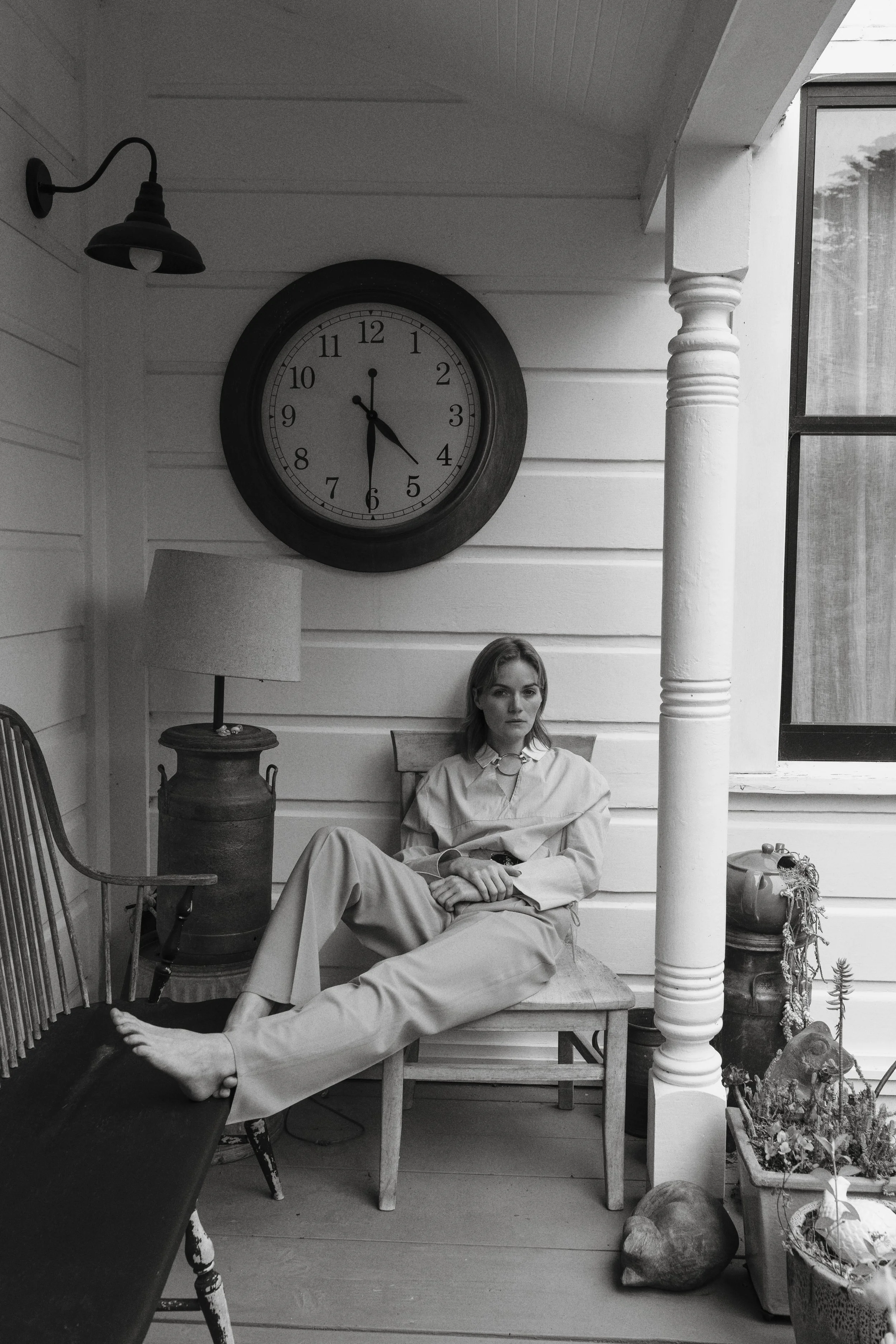

There’s a superstition that moths trust the porch light more than the moon; Meredith Adelaide’s “To Believe I’m the Sun” wonders what happens when that porch light is your own chest, humming. Across eight pieces of Indie Folk and Soft Pop parsimony, the Pacific Northwest singer-songwriter documents the slow, adult work of self-regard—less manifesto than field note, tender yet ocean-gloomy, like waves stippling the night and never once breaking the hush. Her voice lives at candle height—unadorned, quietly forceful—while close-knit guitars, sighing pads, and occasional violin keep the room small enough for truth to speak at conversational volume. Indeed, the record’s conceit is not grandeur but calibration: the ear leans closer, the pulse steadies, and a usable confidence takes shape.
“Big Songs” begins as a whispered dare to ambition, its gentle strums and velvety lead sketching the album’s thesis: yearning colliding with hesitation. The melody doesn’t chase catharsis; it sits with the wish and lets it breathe. “One Foot Out” lingers in the doorway, strums braided to a silky lead as unease flickers: belonging and departure cohabiting like mismatched roommates. Then “Pushing Out” adds a pulse and a surprising spark—earthy guitar accents, harmonica breezes, a hint of grit—announcing the record’s first act of forward motion. However, “Guard Dog” closes them again, returning to bone-bare strums and a candlelit lead—a study in defensive tenderness, the instinct to bar the door even when you can’t name the threat.
“Lights On” breathes like 2 a.m. kitchen air: muffled guitar, ethereal pads, and feathery violin hold the outline of abandonment without melodrama. The harmonies arrive as sparks rather than floodlights, illuminating detail—the glass on the counter, the chair left slightly ajar. Moreover, “I Want It Back” curls into memory’s softer fabric. Gentle strums and gauzy strings cradle a voice that refuses to over-emote; regret is articulated with clear diction and careful pacing, a cushion that nonetheless remembers the fall. “Lost (Whistling)” drifts like a dusk walk with no destination: layered guitars, a subtle whistle motif, and the same supple delivery conspire to dignify uncertainty. In Addition, the song’s quiet propulsion—the sense of moving even without a map—turns acceptance into a form of momentum. “What Do I Know” then completes the circle with frank humility: rather than resolve the questions, Adelaide commits to carrying them. The cadence feels less like an ending than a way of walking.
Production-wise, the album privileges touch over spectacle. Guitars are recorded at intimate distance; string textures arrive as weather rather than plot points; pad beds widen the stereo field without swallowing the lyric. The drum kit is mostly imaginary—felt in the sway of phrases rather than in backbeat doctrine—so the listener’s breath becomes part of the rhythm section. Moreover, the vocal placement is consistently front and center, with harmonies hugging close enough to count as self-duets. This restraint pays dividends: the words remain legible, the emotional telemetry clear. Yet limits attend the choice. The palette, however elegant, changes hue more often than color. Arrangements across the eight tracks share nearly identical scaffolding—strum, hushed pad, lethargic gait, brief swell, clean exit—which can render the project predictable, especially for listeners craving sharper dynamic arcs or bolder timbral risks. In fact, one occasionally longs for a percussive rupture, a piano to step forward, or a countermelody to argue back.
Lyrically, Adelaide writes in everyday nouns and carefully chosen verbs; she resists ornate metaphor in favor of direct address, which gifts the songs a durable plainness. The ego is not vilified; it is danced with, negotiated, taught to sit. The emotional temperature rarely spikes, but the afterglow lingers. The vibe, ultimately, is consoling without sedation: you feel seen in your ambivalence, fortified in your small braveries. If To Believe I’m the Sun sometimes risks sameness, it also models a humane steadiness—music you can live by while your inner weather changes. The porch light keeps humming. You step closer, not to worship, but to warm your hands and stay.
Enjoyed the read? Consider showing your support by leaving a tip for the writer
TRENDING NOW






CONNECT WITH US





FEATURED



Wendy Bruner and Christopher Grundy construct “Toward Shalom” around warmth rather than spectacle, allowing its ideas of belonging, completeness, and social acceptance to develop inside an intentionally unvarnished frame. Written by Bruner and Monty Jackson and produced…