
ILUKA braids tenderness and fury on "the wild, the innocent, & the raging," where circuitry meets campfire.


Every revolution needs a bar jukebox, a desert highway, and a girl who refuses to shut up. ILUKA’s the wild, the innocent, & the raging album arrives as exactly that: a neon-lit road movie of an album where witchy cowgirls, runaway girls and manic pixie ghosts all riot inside the same heart. It’s electro-pop and commercial pop on the surface, yes, but underneath it’s a manifesto for anyone who’s been told they’re “too much” and decided to turn that accusation into a crown. ILUKA doesn’t merely sing these 14 songs; she occupies them with the swagger of someone determined to take up space, loudly and beautifully.
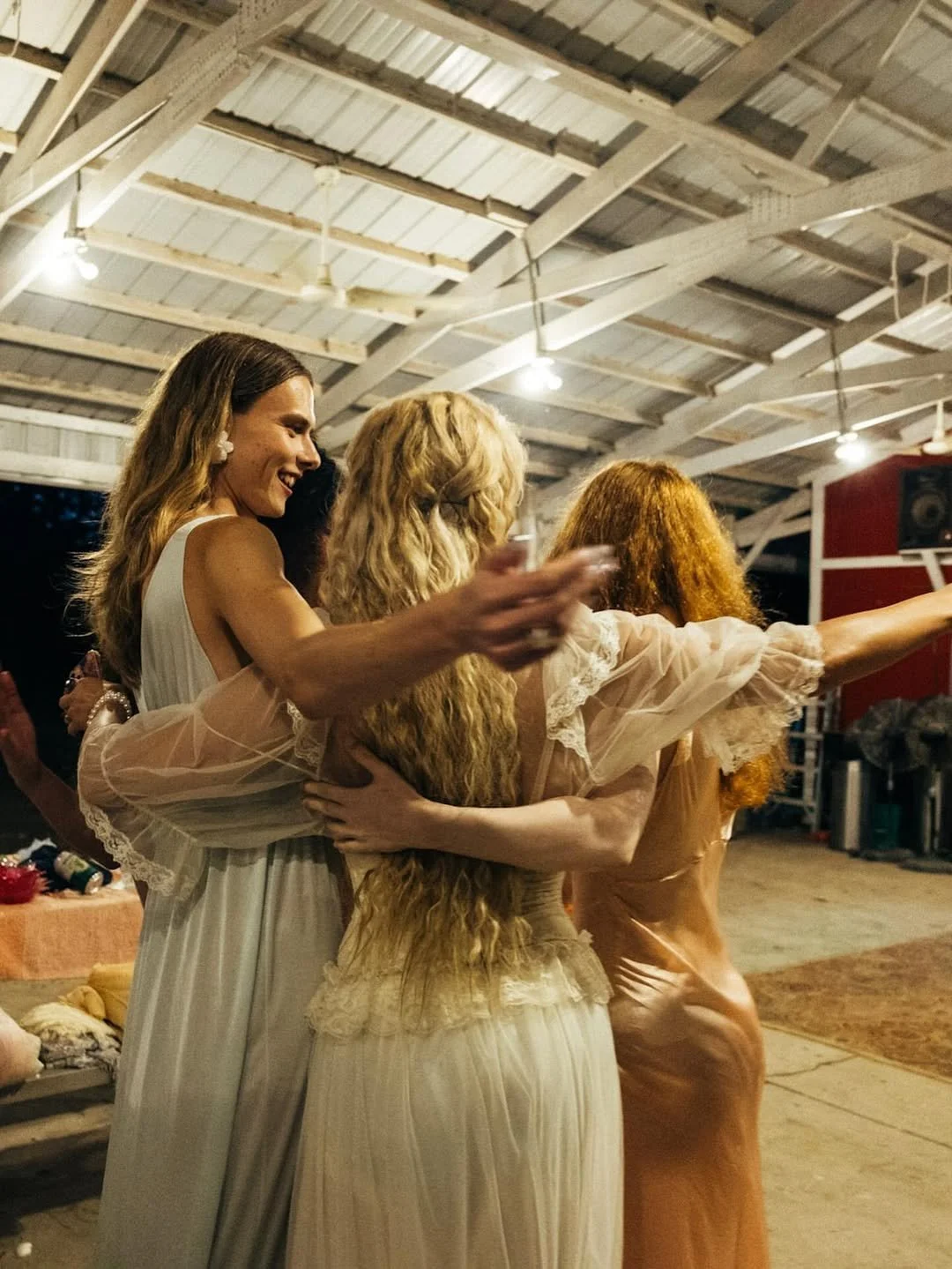
The record’s power lies in the way it braids tenderness and fury. ILUKA has been open about feeling like an outsider, and here she builds an entire universe where outsiders are the main characters, not the comic relief. Indeed, the album never lets you forget that it is both personal and political: breakups sit next to burn-it-down feminism, climate dread rubs shoulders with late-night girlfriends-at-the-kitchen-table confessions. The production leans into glossy electro-pop—synth textures, punchy drums, choruses engineered to lodge in your bloodstream—yet there’s a tactile, handcrafted warmth that betrays her roots growing up around her father’s guitars on a Blue Mountains farm. You feel that duality constantly: circuitry and campfire in the same breath.
Sonically, the album thrives on contrast. There are tracks where the drums rumble like war horses and the bass snarls, ILUKA’s vocal stacked into chant-like refrains that feel closer to protest marches than conventional pop hooks. Moreover, she isn’t afraid of grit: distortion brushes against her voice at crucial moments, emphasizing the crack in the façade when composure finally snaps. In fact, just when the record risks becoming all clenched jaw and fire, she pulls back into Rhodes-soaked balladry or slower Americana-tinged grooves, letting vulnerability hover in the room. The arrangements feel meticulously plotted yet emotionally impulsive—as if each song is a precise photograph of a feeling taken mid-explosion.
The tracklist opens with a sprint. “Witch Girls” bolts out first, a fast-paced pop spell for the weird girls, its commercial sheen carrying a charismatic bravado that turns marginalization into glamour. “Solo” follows by fusing country guitar twang with electro-pop pulse, her voice running fierce and distorted as she reclaims the word “alone” as a flex rather than a wound. “Wings” then erupts like a feminist battle cry: pounding drums, muscular melodies and biblical references weaponized against the systems that tried to clip her. It’s easy to understand why it’s become such a fan magnet—its hook feels like a tattoo.
The mid-section of the record deepens the narrative without losing momentum. “Thoughts & Prayers” glides in on soft Rhodes chords and laid-back drums, a deceptively gentle setup for a revenge fantasy dressed as a blessing, where electric guitar in the hook nudges the track from resignation into threat. “Girl on the Run” trades in pop-rock urgency: brisk acoustic riffs, quicksilver drums and a vocal shaded with just enough grit to sell the line that no savior is coming—she’s already gone. “American Beauty” slows the tempo, folding Americana and country into pop-rock; it paints a flickering portrait of a nearly-famous wild child, and you feel the ache of nostalgia in every carefully controlled snare hit.
Then the record bares its teeth. “Cry Evil!” is practically a riot in 4/4: rumbling percussion, heavy bass and a shouted, mantra-like vocal that frames female rage as not only valid but necessary. It was written as an act of reclamation in the face of threats to women’s autonomy, and you can hear that fury sharpened into something ceremonial rather than chaotic. “Wild West” reins the energy back in with tender acoustic lines and soft percussion, telling a story of surviving Los Angeles without losing your soul, before slipping into a late-song switch that feels like stepping out of grief and back into motion. “California Boys” taps straight into turn-of-the-millennium TV-theme pop: beachy, buoyant, cheeky in its takedown of a certain brand of self-mythologizing boy.
On the conceptual front, “Manic Pixie Dream Girl” is one of the album’s sharpest knives, dismantling the trope in real time. Over sleek electro-pop production, ILUKA lists the ways she shrank herself to fit a man’s fantasy, then detonates the script; by the final chorus, the character has been burned to the ground and replaced with someone gloriously three-dimensional. Moreover, “Woman Gone Mad” widens the lens, linking beauty culture, diet fads, obscene wealth and patriarchal cruelty into one system that gaslights women into thinking their justified rage is insanity.
The late stretch hits like an epilogue and a prophecy at once. “Crucify Me” uses religious imagery as social critique, transforming cancel-culture dogpiling and the public punishment of women into a pop crucifixion scene where the subject refuses to die just because the crowd demands blood. “Haunted One” brings in a more alt-pop, guitar-driven melancholy—born as a pivotal single, it showcases ILUKA’s raspy voice at its most exposed, tracing heartbreak and confusion with a road-trip kind of resilience. Closer “Hard to Love Me” feels like the 3 a.m. afterparty to all that upheaval: a slow, confessional piano-driven pop ballad where she admits her own complexities without apologizing for them, turning self-doubt into self-knowledge.
As a whole, the wild, the innocent, & the raging is less a tidy concept album than a living archive of what it feels like to be a woman refusing to be reasonable in unreasonable times. There are moments when the pop polish edges close to familiar radio territory; however, ILUKA’s writing and vocal bite keep pulling the songs back into stranger, braver shapes. In addition, the sequencing is clever enough that you rarely feel whiplash—only the natural swing between whisper and war-cry that defines real life. By the time the final chorus fades, you don’t just know ILUKA better; you’re a little more tempted to be wild, innocent and raging on your own terms too.
Enjoyed the read? Consider showing your support by leaving a tip for the writer
TRENDING NOW






CONNECT WITH US





FEATURED



Ana Golja’s new single “Can’t Walk All Over Me (Radio Edit)” is a mid-tempo Indie Pop and Adult Contemporary single built around the architecture of self-respect. The Canadian artist frames the song not as a simple breakup piece, but as a reclamation record, where patience…