
Australian Singer-Songwriter Mietta Makes Waves With Her New Album “When The Water Stills”

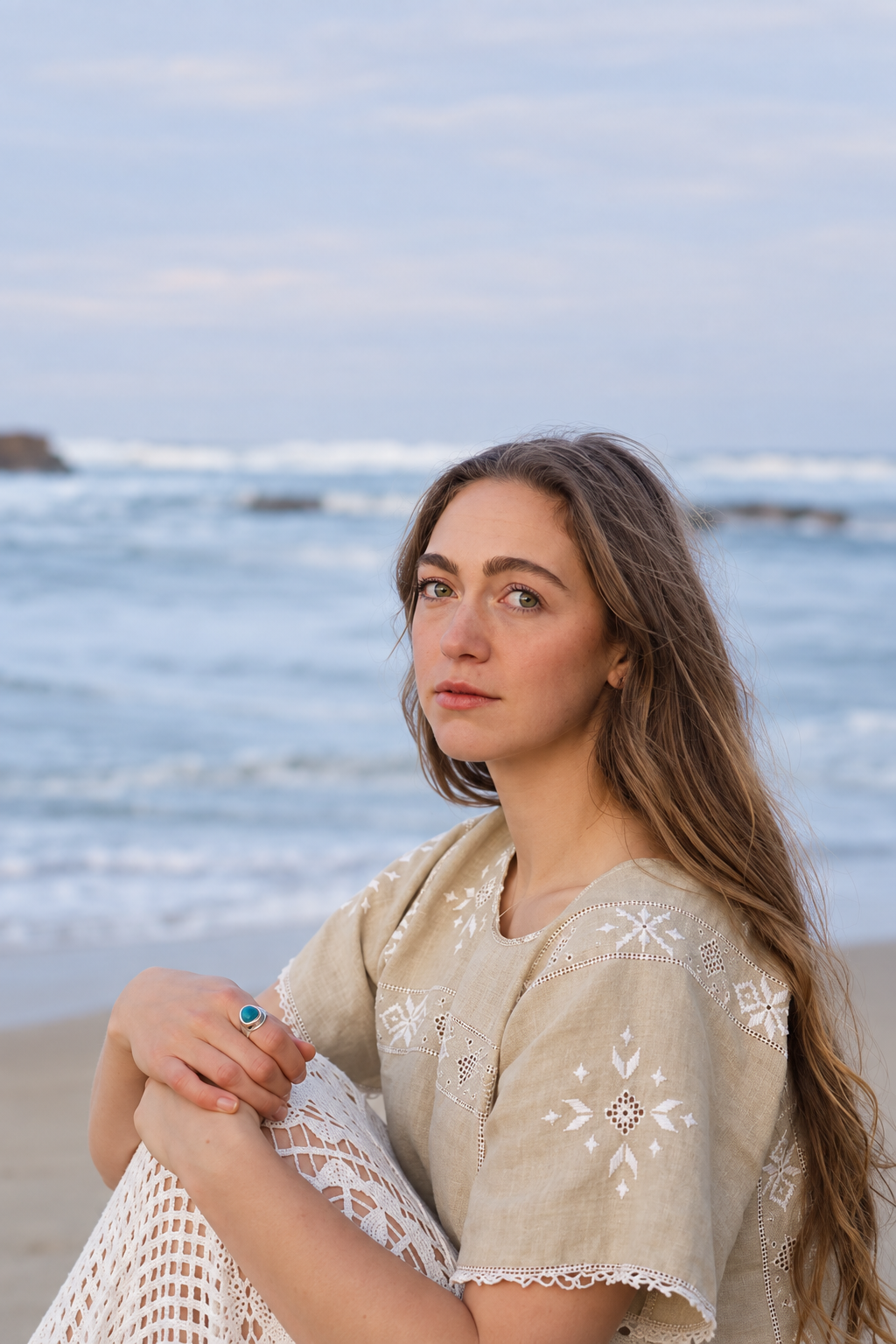
A river rarely announces the moment it changes direction; light shifts across the surface, a current bends around stone, and suddenly the landscape is moving somewhere new. Mietta’s debut album When The Water Stills carries that same patient, almost cinematic motion. Rooted in Australia’s Mornington Peninsula on Bunurong Country, the ten-track acoustic folk and indie folk record turns gardens, rivers, kitchens, smoky rooms, family homes and valleys into emotional coordinates for a larger meditation on belonging, growth and human connection. Created through a two-year community project supported by a Mornington Peninsula Shire Performing Arts Development Grant, the album feels inseparable from the people and places that helped shape it. Its early reception made that communal foundation even more significant: during the week of September 21, 2026, When The Water Stills reached No. 3 on the Australian Albums of the Week ARIA chart and No. 1 on the 100% Independent Australian Album Chart. Mietta’s response framed the achievement not as individual triumph but as evidence of what collective artistry can accomplish, writing that “what we have done together is not independent. it is community.” That statement could almost serve as the album’s thesis. These songs rarely isolate the self; instead, they constantly place identity in conversation with family, friendship, land, memory and responsibility.
Produced by Damian Cafarella, with string arrangements from Ben Edgar and Charlotte Jacke, When The Water Stills is built from acoustic foundations but refuses to remain texturally static. Mietta’s arrangement’s vision often begin close to the listener—an acoustic guitar, a soft vocal, a small harmonic detail—before gradually opening their windows. Percussion enters gently, piano adds shaded melancholy, strings widen the horizon, and atmospheric pads create depth without obscuring the organic grain beneath. Her voice is equally important to that architecture. At times clear and soaring, elsewhere sultry, raspy or almost conversational, it never treats emotion as spectacle. Instead, her delivery lets meaning accumulate slowly, much like sediment beneath water. The album’s sequencing reinforces this sense of movement. Some songs remain almost motionless, such as “Margot” and “A Kind Reminder,” while others expand into fuller indie-pop structures. That contrast gives the record its natural rhythm: calm stretches interrupted by emotional weather, then quiet again. Even when the arrangements become fuller, the album rarely chases dramatic crescendos. Its strength lies in restraint, in the feeling that every instrument has been invited into the frame rather than placed there to demand attention.

The songwriting follows a similarly tactile logic. Mietta writes through objects, landscapes and remembered gestures rather than abstract declarations. Coffee counters, old mugs, bushwalks, backyard beers, books never read, mothers answering late-night phone calls, gardens waiting through seasons and rivers clearing after disturbance all carry emotional weight. Nature is never simply scenery. It becomes teacher, witness and mirror. “Childlike Wondering” finds restoration in awe; “Eden” transforms a grandmother’s garden into a meditation on patience and inherited goodness; “The Valley Song” treats solitude as replenishment rather than absence. Elsewhere, family and friendship take center stage. “From Your Daughter” understands growing up as expansion rather than abandonment, while “Young Years” captures the fragile rituals of youth without romanticizing them. “Closed Eyes” and “A Kind Reminder” are especially strong because they resist turning love into possession. Across both songs, care can persist even when closeness is no longer sustainable. Then “Choose To Care” expands that emotional framework outward, confronting environmental anxiety, war, division and social fatigue before returning to compassion as a deliberate act. Mietta’s lyrical world is therefore not simply gentle. It contains grief, fear and disorientation, but it keeps searching for a humane response.
Track-by-Track Review
“Margot” opens the album in near-whispered intimacy. Mellow acoustic guitar and sparse harmonica leave large pockets of silence around Mietta’s vocal, making the mistaken-name encounter at the center of the lyric feel strangely profound. What begins as a small social moment becomes a question about whether familiarity actually means knowing another person. The track’s minimalism is crucial; without drums, there is nowhere for the loneliness to hide.
“Childlike Wondering” introduces motion without abandoning softness. Acoustic guitar establishes the first frame before gentle percussion, fuller indie-pop drums and subtle piano gradually brighten the arrangement. Lyrically, sea spray, frost, tall grass and dirt-stained knees become portals back to a state of uncomplicated awe. Mietta’s soaring but mellow delivery gives the song the sensation of someone rediscovering air after spending too long indoors.
“From Your Daughter” is one of the album’s most emotionally precise songs. Gentle acoustic riffs, ethereal pads, harmonies and harp-like touches surround a lyric about a daughter growing away from childhood without emotionally leaving home behind. The writing avoids sentimentality by grounding itself in recognizable details—books left unread, late-night phone calls, small family tensions. Its tenderness comes from understanding that independence and attachment can coexist.
“Young Years” shifts the palette into something more nocturnal. Glassy guitar riffs, piano, ambient synths, strings and laidback drums create a blurred late-night atmosphere that suits its imagery of smoky rooms, wine in old mugs and emotional exhaustion. Yet beneath the haze is a deeply caring song about noticing when someone is struggling. The repeated reassurance of presence gradually becomes more important than the youthful chaos surrounding it.
“Closed Eyes” begins with close-up acoustic guitar and a velvety vocal before widening through additional guitar layers, subtle bass, piano and relaxed drums. The production mirrors the song’s conflict: intimacy keeps expanding even as the narrator recognizes the need for space. Its central question—why we close our eyes during kissing, crying and dreaming—gives the track a philosophical softness, while the lyric about loving someone but needing time to grow keeps that softness grounded in difficult reality.
“A Kind Reminder” strips the album back again. Haunting acoustic guitar, additional gentle layers and cinematic pads carry the song without percussion, allowing every lyrical image to hang in the air. Unsent cards, late-night memories and wishes for another person’s healing create a portrait of care after separation. Instead of using heartbreak as a platform for accusation, Mietta writes from a place of unresolved generosity, which gives the track a quiet emotional maturity.
“Eden” is among the record’s richest arrangements. Glassy, reverberant guitars sit beside acoustic textures and ethereal pads before subtle percussion, bass, vocal layers and fuller drums gradually broaden the song. Its imagery of a grandmother’s garden gives the track an almost mythic intimacy. Patience, cultivation, goodness and mortality all grow from the same soil, and Mietta’s soaring vocal turns that family memory into something larger without losing its personal scale.
“Choose To Care” provides the album’s sharpest shift in perspective. Piano becomes the central instrument while subdued guitars, soaring vocals, harmonies and cellos slowly build a feeling of gathering pressure. Lyrically, the song confronts fires, war, failed leadership, social cruelty and exhaustion with a directness that contrasts with the record’s more metaphorical writing elsewhere. Its power lies in the ending: after the arrangement expands, much of that weight falls away, leaving the choice to care exposed as something fragile, conscious and necessary.
“The Valley Song” returns the album to earth. Warm acoustic guitar, subtle strings, soft pads and restrained percussion evoke morning light moving across a quiet landscape. The lyric is less about escaping the world than recalibrating inside it, with birdsong, autumn warmth, the creek and manna gums acting as companions. “Alone but not lonely” becomes one of the album’s clearest emotional statements, transforming solitude into renewal.
“When The Water Stills” closes the record with remarkable restraint. Gentle acoustic guitar is gradually joined by piano, percussion, harmonies, pads and strings, yet the song never erupts into a conventional climax. Instead, it flows. The arrangement mirrors its lyric about release, seasonal change, storms and calm, bringing the album’s recurring natural imagery into focus. By refusing a grand finale, Mietta ends exactly where the record has always been heading: toward reflection rather than resolution.
The album When The Water Stills ultimately works because its tracklist feels less like a collection of separate songs than a sequence of changing landscapes. Mietta allows each piece to hold its own weather while maintaining a coherent emotional climate across the record. The minimalism of “Margot” makes the gradual expansion of “Childlike Wondering” more affecting; the nocturnal ache of “Young Years” deepens the vulnerability of “Closed Eyes”; the private grief of “A Kind Reminder” gives way naturally to the generational reflection of “Eden”; and the urgency of “Choose To Care” makes the restorative calm of “The Valley Song” feel earned.
By the time the title track unveils, stillness no longer suggests absence. It becomes the state in which everything previously disturbed can finally be seen clearly. That sense of accumulated meaning also makes the album’s early chart performance feel particularly resonant. Mietta’s No. 3 placement on the Australian Albums of the Week ARIA chart and No. 1 position on the 100% Independent Australian Album Chart reflect the reach of a project she has consistently described in communal rather than individual terms. Her own phrase—“this is what community artistry can do”—captures what the record itself repeatedly demonstrates. When The Water Stills is gentle without being fragile, reflective without becoming static, and intimate without shutting the world outside. Like a river after rain, it carries traces of everything that has passed through it.
Enjoyed the read? Consider showing your support by leaving a tip for the writer
TRENDING NOW









CONNECT WITH US







FEATURED



Laeky’s “caller waiting” is built from emotional exposure, but its production refuses to collapse into fragility. The Australian artist threads syncopated acoustic guitar riffs through understated indie-pop drums, subtle bass, and soft synth textures, creating a frame that feels both restless and suspended. Her sultry, yearning vocal…